
Within the spy genre, regardless of medium, the theme of identity is an intrinsic aspect to the profile of an operative. For Philip Jennings, as portrayed by Cardiff-born actor Matthew Rhys, the co-protagonist of Joe Weisberg seminal FX spy-series, The Americans, the subject of identity, and its malleability, is a defining characteristic that has shaped a five-year narrative arc, from 2013 to 2018. From the outset of the series, Jennings has navigated a liminal existence in every aspect of his life: from his marriage, an arranged coupling by the KGB’s ‘illegals programme’ with another agent, straddling the threshold between devotion and duty; his allegiance to his native country, being both committed to and appalled by Russia’s methods and strategies during ‘The Cold War’; his status within America, enthralled by the culture’s propensity for bombast and yet desiring to return ‘home’, regardless of his memories of poverty; to, finally, his profession, divided between remaining stalwart in his loyalty at the cost of the inevitable degradation of his morality.
Further to this, Weisberg, co-showrunner Joel Fields, and the rest of the series’s writing-staff have centred the character’s development upon his handling of being at once a husband, a father and an operative. Due to the coalescence of these three intertwined roles, and the subsequent responsibilities undertaken by Jennings, Weisberg and Fields have gradually presented Philip as a morally independent agent, isolated from his government, or ‘cause’, and in opposition to both his dutiful wife, Elizabeth, and indoctrinated daughter, Paige, who is acting upon his own reservations. Within the context of The Americans’s sixth series, set in 1987, Jennings, now retired from his trade, is solely responsible for the family’s business: Dupont Circle Travel, an agency now financially floundering in the wake of the company’s declining revenue, extending beyond the seemingly initial purpose of a ‘front’ for the couple’s clandestine operations. Within the sixth season, Weisberg and Fields have once again returned to the conflict which has plagued Jennings’s conscience since January 1981, at the beginning of season one, being at once an anxious father, committed husband and reticent spy.

By beginning at The Americans’s present, in 1987 (season six), it is possible to retrospectively analyse the character-arc of Philip Jennings, assessing the key-events both prior-to and during his life as an operative within America in order to develop a holistic overview of Jennings as a husband, father and spy. These three titles will be the principle focus of three separate articles, documenting each subject individually and how all three aspects of Jennings’s life are, regardless of his efforts, inseparable. Jennings’s inability to distinguish and separate the opposing priorities of his life are central to the concluding scene of season six’s Rififi. Presently, Jennings’s struggle to keep order between his disparate responsibilities is apparent as he voluntarily returns, in aid of Elizabeth, to his life as an ‘illegal’, leaving his ‘retirement’, and his life for the previous three years, indefinitely.
When noting the character’s development over the narrative’s six year-span, the management of quotidian duties and responsibilities forms a through line status-quo for Jennings, reducing him to bouts of depression and reflection over his complicity with the Centre’s, or Directorate S’s, practices. In season six, despite his bid to cement his disengagement with active service, Jennings is drawn back to his erstwhile-life as an operative: firstly, within Dead Hand, at the behest of the minority pro-Gorbachev wing of the Directorate S division to monitor Elizabeth’s activities in the lead-up to the Washington Arms Summit and then secondly, at the conclusion of Rififi, to support Elizabeth with the extraction of a Chicago-based ‘illegal’, codenamed ‘Harvest’, now under surveillance by the FBI’s counterintelligence department. Evidently, the dichotomy between Philip’s life as both an agent and husband result in his acquiescence to his duties to aid his wife, with Philip’s phone conversation with Elizabeth upon the eve of her ‘Harvest’ operation, under the guise of discussing a difficult Dupont ‘client’ no less, revealing his sense of commitment to her:
Elizabeth: Hello
Philip: Hi
Elizabeth: Is everything ok?
Philip: Yeah, I was just calling to see if everything is alright.
Elizabeth: I don’t know, not really.
Philip: What do you mean?
Elizabeth: It’s just a… hard one.
Philip: You might lose the client?
Elizabeth: I am not sure I can accomplish what I came here for without …it’s just going to be tough.
Philip: Without what?
Elizabeth: More help.
Philip: Are you asking me to come?
Elizabeth: I’ll handle it, this is my side of the business.
Philip: I don’t think that that’s been working these last few months, and he’s not the only client in the world. Why don’t you come home?
Elizabeth: What’s happened to you?
Philip: Nothing, still the same asshole as always, doesn’t care about anyone but himself, right?
Elizabeth: I am not coming home.
Philip: Ok. I’ll come.
Elizabeth: Nobody’s asking you to do that.
Philip: I know. Just sit tight. I am on my way.
(Rififi, season six, episode six) (Emphasis added)
Here, throughout the couple’s dialogue, Philip’s position, and narrative-arc, within season six, being at once at a distance from both Elizabeth and to their once shared devotion to the Centre, is epitomised through Stephen Schiff and Justin Weinberger’s writing. Initially, as the audience listens to the pair, Schiff and Weinberger cast doubt over where Philip’s allegiance is currently held, subverting our perceived understanding of his stance not only towards his view of Elizabeth’s surreptitious objectives but also at that of the Centre’s request for him to be ‘aware’ (Dead Hand, episode one, season six) of his wife’s activities.
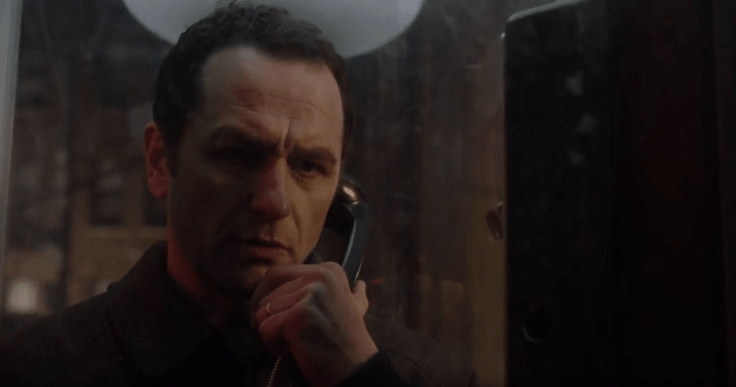
In wake of the episode’s opening, with Philip revealing his deliberate sabotage of the Kimmy Breland operation — having ended their relationship and discarding his identity as ‘Jim’ before then warning the naive teenager not to ‘go near any communist countries’ whilst holidaying in Greece — the purpose behind his contacting of Elizabeth is deliberately ambiguous. Further to this, Rififi’s concluding scene is preceded by Philip’s dead-drop with Oleg Burov — now an employee within the Department of Transportation and now tasked with working ‘unofficially’ (Dead Hand, episode one, season six) as Jennings’s handler under the orders of Arkady Zotov, a proponent of Gorbachev’s commitment to the Washington Arms Summit and acting Deputy Chief of Directorate S — and the contents of his coded message, as yet deciphered at Rififi’s close. Indeed, whilst Philip’s true intention is that of checking up on Elizabeth’s wellbeing and her progress with ‘Harvest’, it at first appears to the audience, following the Jennings’ ‘Greece’ disagreement and his unknown message to Burov, that Philip is either initiating an apology in order to resolve their ongoing hostilities over the Breland case or to resume his monitoring of Elizabeth’s ‘work’ for Burov, respectively.
It is through Philip’s call therefore that two of the three aforementioned principle attributes of the character’s identity are presented and are subsequently realigned: the first is that of his position as a loving husband and the second being that of a beleaguered spy. For the dialogue, Schiff and Weinberger’s use of interrogative lines, with Philip’s dialogue a series of succinct questions, works to convey Philip’s need to know about Elizabeth’s coping with the extraction of ‘Harvest’. It seems, through his questioning, that Philip is gauging the status of the operation, either to understand Elizabeth’s situation or to hear her assessment of the chances of the mission’s success; it is, therefore, uncertain if the information he gathers is for himself or for his handler, Burov, respectively.
However, it is only once Philip proposes, rather naively, for the stalwart Elizabeth to ‘come home’ that his intention becomes clear: he is not spying on Elizabeth, but rather protecting her from her own bullish steadfastness, a defining characteristic within season six in light of the Centre’s suspicions of Gorbachev’s approach to the Washington Summit. For Elizabeth, a course is set and she must proceed. Philip, on the other hand, when questioned himself by Elizabeth’s cutting ‘what’s happened to you?’ can only respond with the deflated ‘nothing, still the same asshole as always, doesn’t care about anyone but himself, right?’. Here, Schiff and Weinberger’s pairing of the present perfect auxiliary ‘has’ with the lexical verb ‘happened’ indicates that Philip’s conscience, in spite of his retirement from their trade, is currently unreadable to Elizabeth; in truth, and in regards to the degree of his allegiance with their cause, his current mind-set is still unknown to her. Furthermore, with his response, Philip confesses to Elizabeth a feeling of an underlying sense of selfishness. The concept of Philip’s disregard for others, his point that he ‘doesn’t care about anyone but himself’, is an admission that belies his own concern for his family: ultimately, he has contacted Elizabeth due to his disquiet, his anxiety, over her situation. Once his request for her to return ‘home’ is outrightly dismissed, Philip, due to the unknown extent of the counterintelligence’s surveillance of ‘Harvest’, sacrificially accepts his duty and his return to the field of active service. The accepting declarative statements of ‘ok. I’ll come’ and ‘I am on my way’ are taciturn and clipped, void of the emotion that Philip has often candidly revealed in his ‘speeches’ to Elizabeth (Dead Hand, episode one, season six). His imperative note instructing Elizabeth to ‘just sit tight’ highlights his focus: he will not abandon her, regardless of his own sense of morality.
Contextually, and beyond the themes of Philip’s divided fealty to Elizabeth and his country, the subject of family permeates Rififi, as is shown most notably through the arrival of Henry Jennings from St. Edwards[1], a New England boarding school, for Thanksgiving. Due to the holiday and their son’s arrival, the theme of parenthood is brought to the forefront of the episode: Elizabeth’s sudden deployment to Chicago, leaving Washington under the guise of appeasing ‘a CEO of one of our [Dupont Travels’] biggest clients’ by meeting the client in Houston, leaves the Jennings’ separated: a parent short to the Beeman-Aderholt Thanksgiving dinner. Therefore, in returning to Rififi’s closing dialogue, despite Henry’s homecoming, Philip, due to Elizabeth’s certainty in the mission’s failure, elects to leave their children in order to assist with ‘Harvest’s’ completion. Evidently, Philip sacrificing of his time with Henry evidences Elizabeth as his priority, discarding his retirement alongside any notion of selfishness.
In addition to Henry’s Thanksgiving visit, the Jennings’ late-night conversation furthers the duteous conflict between their familial ties and their lives as operatives. With the potential threat of eavesdropping ever-present Schiff and Weinberger, through the couple’s precautionary vagueness when speaking over the phone, return, once again, to the conflicting themes of ‘home’ and ‘business’. Due to the their prudence, Philip and Elizabeth blur the parameters of home and work under the pretence of accommodating the difficult ‘client’ of Dupont Travel, and, by doing so, indicates the onset of the disparate areas of Philip’s life once again coalescing. From the cover story told to Beeman and Aderholt, the business reverts to a mere front for an operation, returning, to an extent, to its original purpose: to give credence to their identities as Philip and Elizabeth Jennings, concealing their ‘illegal’ status. The prospect of Elizabeth’s return to Washington and Philip’s questioning of the importance of ‘the client’ produces a lexical field centring upon the balance between ‘home’ and ‘business’, respectively, and underlines the antithetical priorities of both: Philip is singularly interested in Elizabeth’s safety and the latter is undeterred in her commitment to ensuring the completion of Russia’s ‘Dead Hand’ protocol. With Schiff and Weinberger’s point of the Jennings’ handling, and assuming responsibility of, a ‘side of the business’ each, the concept of the couple’s partnership, alongside the discord between the pair, is highlighted. Therefore, the common noun ‘business’ is utilised as a homonym within the context of the dialogue — appearing to reference Dupont Travel rather than the extraction of ‘Harvest’ from Chicago — and blends Philip’s job as a travel agent, his life’s new focus, and Elizabeth’s operation together. Quite simply, up until Rififi Philip has been solely responsible for the management of the travel agency whilst Elizabeth continued her work as an operative alone. This point, and the eventual merging of the two sides of the ‘business’, was identified by Todd VanDerWerff, in his recap of Rififi, for Vox, when he outlined that ‘the personal is the political, and vice versa, and at this late date, there’s no way to extricate them from each other’[2], regardless of Philip’s bid to do so, pleading with Elizabeth for her to leave ‘Harvest’ to himself: to Philip, ‘Harvest’ is not unique, nor is he ‘the only client in the world’; for Elizabeth, on the other hand, his safety is paramount to the security, and sanctity, of ‘Dead Hand’. As noted by VanDerWerff, Philp attempts to emphasise the personal cost for Elizabeth’s undertaking, and the lack of success over the course of her most recent run of operations, only for the political to trump any possible deterrent or obstacle in protecting ‘Harvest’. In the wake of Elizabeth’s objection to the idea of abandoning one of Directorate S’s agents, ‘someone who is doing his job’ (Rififi season six, episode six), Philip’s capitulation, returning to Elizabeth’s ‘side of the business’ (Rififi season six, episode six), is his only course of action: for the safety of Elizabeth, ‘home’ is second to the success of their once shared ‘business’.
Beyond Schiff and Weinberger’s writing, Kevin Bray’s direction compounds the isolation felt by Philip and Elizabeth. As Philip is debriefed on the current state of the operation, Bray intermittently constricts the camera’s focus upon both Philip and Elizabeth as a means to establish the separate pressures individually harboured by the pair. Over the course of the conversation, Bray’s framing becomes more oppressive, encasing Philip within his awareness, his acceptance, that he must return to the field, and conveys an encroaching sense of confinement, as was felt throughout Philip’s time as an active-agent of the ‘illegals’’ programme.
Initially, Elizabeth’s answering of Philip’s phone-call is shot through an intimate close-up, with Kerry Russell’s countenance placed within the centre of the frame; little else is shown of her surroundings. Here, Bray’s use of the close-up is to establish Elizabeth’s evident stress of orchestrating a point of contact with ‘Harvest’ within the midst of an FBI surveillance team. However, it is only once Philip reveals the intention of his contacting of her, ‘I was just calling to see if everything is alright’ (Rififi season six, episode six), that Bray releases, to a degree, the pressure felt by Elizabeth, changing to a wider-lensed shot of her within the hotel room, as she sits to speak with Philip.


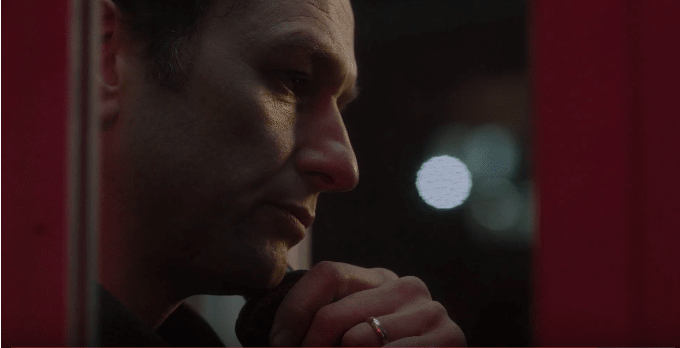
Visually, Rhys’s presence within the frame is reduced; his space is lessened to almost half of the screen as the phone-box’s panelling surrounds the parameters of the shot, and, in effect, creates two parallel bars running the width of the frame. From this image of physical constraint, the point marks Philip’s acceptance: the laconic ‘Ok. I’ll come […] I know. Just sit tight. I am on my way’ is uttered as Bray alludes to the ominous outcome of Philip’s possible apprehension and incarceration. The association with imprisonment here, however, also indicates Philip’s psychological reservation for resuming his post alongside Elizabeth, having resigned himself, three years previous, to the truth that the toll of their work was too much to bear. Within the restricted space of the phone-box, Philip volunteers his return, despite his past moral turmoil and guilt, for Elizabeth’s safety. Subsequently, through the conversation Schiff and Weinberger present, alongside Bray’s direction, the unknowable central dichotomy of Philip Jennings’s character is revisited: can he and his family lead a life void of their past duties as operatives? At the point of Rififi’s close, Philip is still yet to find an answer.
[1] http://theamericans.wikia.com/wiki/The_World_Council_of_Churches: The name of Henry Jennings’s boarding school
[2] https://www.vox.com/culture/2018/5/2/17307754/the-americans-season-6-episode-6-recap-rififi
 Words on Pages
Leave a comment