
Here, at the beginning this article, it is necessary to outline the parameters within which ‘historical fiction’ is usually defined by. With ‘historical’ denoting a concern with ‘history or past events’[1] and fiction defined as ‘literature in the form of prose, especially novels, that describes imaginary events and people’[2] there has always been an attention toward the past with the genre. If delineated to its core, the genre can be defined by its focus upon a true event or period of history being retrospectively altered by an author. While it is quite extreme to label this defining attribute of the genre as a wilful subversion of the truth, the aforementioned definition, nonetheless, serves as a simple means of categorisation for the novels of the genre. Grouping these works under the banner of ‘historical fiction’, I did not intend to streamline these novels into a singular classification. Indeed, such ordering can, and often does, mask the scale of a writer’s work. Rather, to me, these works have included, to varying extents, the defining attribute of ‘historical fiction’: they centre wholly or in-part upon an historical event or an historical figure. This is the single through line which has featured within each of these works and, despite the assorted works exhibiting a broad spectrum of characteristics typical of other genres, they all share an interest with reflecting upon the past.
Due to the genre’s penchant for reflection, the reader is, or should be made to be, aware that the text before them is a fictional account of an individual, of an era, or of an entire century, and, in most cases, the text can function as a springboard for its readership into seeking further information upon a subject. Oftentimes, authors of ‘historical fiction’ are viewed as though harbingers of an inherent dichotomy or conflict, if you will: purveyors of a false-truth, in essence. For instance, Hilary Mantel’s Wolf Hall (London: Fourth Estate, 2009), the first novel of an ongoing trilogy centring upon the political ascension and subsequent fall of Thomas Cromwell within the 16th century, whilst receiving the lacerating ire of historian David Starkey[3], has resulted in a stage production and a BBC drama of her novel and its sophomore companion, Bring up the Bodies (London: Fourth Estate, 2012). Both publications have gone onto claim a plethora of awards, from the Walter Scott Prize for historical fiction for the former to the Man Booker Prize for both novels, in 2009 and 2012, respectively, and have benefited from the critical plaudits with a meteoric commercial rise, with a 463% increase in sales during the week of the Booker Prize[4] panel announcing its winner, in 2009. Here, it must be noted that despite her controversial depiction of Henry VIII’s principle advisor being chastised as a deliberately inaccurate portrayal, Mantel has offered, with the novel, a new and evidently intriguing retelling of an historical figure’s career. As with all fiction, this is a subjective view of a character within a narrative, rather than objective overview of Cromwell himself. The lure of historical fiction lies within the prowess of a writer’s ability in seeking to add another perspective to a well-documented subject.
Writers’ interpretation of the phrase ‘historical fiction’ has given way to some of the most notable examples of literature throughout the centuries, from Homer’s The Iliad (8 B.C), an epic-poem retelling the events of the Trojan War, to Margaret Atwood’s Alias Grace, a tale based upon the murder-trial of the titular character, in 1843, and a novel which Francine Prose of the New York Times labelled ‘in its scope […] the book evokes the high Victorian mode’[5]. An initial point within history is taken and, as is the prerogative of a fiction writer, moulded to suit a narrative.
With the following list, I have tried to include a variety of subjects from a cast of authors whose works have deftly evoked a particular era within history. These novels, ranging from the tumultuous years following the assassination of Julius Caesar, in Augustus, to a WW2 internment camp ‘near Voroshilovgrad’, in Russia, in A Whole Life, are fictional renderings of defining events within world-history. It is due to this that I feel that these works qualify for both the genre and the list itself. As noted previously, whilst hopefully engaging your interests with these novels, I hope you will further explore these writers’ oeuvres more fully.
1. A Long Long Way: Sebastian Barry (London: Faber & Faber, 2005)
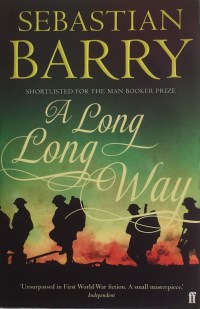 Sebastian Barry’s fifth novel, A Long Long Way, centres upon the brief life of Private William ‘Willie’ Dunne, an apprentice builder from County Wicklow whose experiences as a recruit in the Royal Dublin Fusiliers portrays the abject horror of trench-warfare during WWI; the socio-political divisions within Ireland at the time over the prospect of Home-Rule, from 1914-1918; and the individual’s attempts to preserve their humanity in the presence of incessant and unceasing conflict. For Dunne, while the reasons for an Irishman’s enlistment within the war effort are noted by Barry for their complexity, with decisions made based upon familial attitudes towards the hope of or the objection towards Ireland’s Home Rule, his voluntary joining of the Royal Dublin Fusiliers is based upon an issue of self-confidence and insecurity pertaining to his ‘damnable’ height (6). From the age of sixteen, his perceived meek stature produces a shame that comes to shape his existence, with his inability to follow in his father’s footsteps and join the Dublin Metropolitan Police, or the DMP, as abbreviated, attributed to being below ‘the regulation height for a recruit’ (6) at five foot, six inches. Here, Barry reduces the impetus for Dunne’s decision to enlist to a single truth: ‘For if he could not be a policeman, he could be a soldier’ (15). Whilst seemingly trivial by comparison to other young Irish recruits volunteering within the ‘maze of intentions’ (15), with both Unionists enlisting in order to support the British Empire and Nationalists committing themselves under the promise of ‘self-rule’ (14), Dunne’s identity drives his decision, a proud son attempting to reach the height of a proud father.
Travelling from the training depot in Fermoy, County Cork, to the North Wall in Dublin, the Fusiliers then pass through England and France before reaching Flanders, where Dunne endures his first instances of life within the trenches. From this point onwards, in 1915, over the next three years, Dunne is plunged into a successive series of encounters upon the Belgian battlefields, facing a ferocious, ‘Viking’-like enemy (114) though a malaise of fear and unpredictability. However, A Long Long Way is not simply a ‘First World War Novel’, as Barry draws the narrative to the social and political turmoil of Ireland, with the populace divided over the issue of Home Rule. Bearing witness to the Easter Rising, in 1916, and living the life of an itinerant soldier, journeying between the frontlines of Belgium and, when on leave, his home within Wicklow, Dunne comes to believe himself to be stateless. Due to this, Dunne, once an apprentice builder, becomes a waif-like presence within the novel, struggling to find his identity within the midst of a war upon two fronts.

Through these moments of introspection, and in addition to his writing of the soldiers’ dialogue, Barry delivers the language of the narrative through the dialect of the serving Irishmen; therefore, by bleeding both his narration and the dialect of his characters together, Barry’s prose grounds the reader within the world of these men, as though the narrative itself is being told from a personal account of the 16th regiment’s story: the narrators of Barry’s fiction are always adept orators and skilled storytellers themselves. Further to this, through fleeting instances of omniscient narration, Barry details not only the confused thoughts of Private Dunne but also the consciences of his fellow soldiers. One soldier in particular, the acerbic sergeant-major of the company, Christy Moran, is one of Barry’s most notable characters. Moran’s arc within the novel, being at once a redoubtable solder and guilt-ridden husband, owing to his sense of remorse at having abandoned his wife for the war, serves as a support for Dunne, leading the young enlistee through their encounters along the frontlines. It’s an example of the nuanced portrayals which characteristically populate Barry’s fiction, as the author defines his characters with such touches of realism and emotional depth. As mentioned within the previous ‘Recommended Reads’, Barry’s literature is, when viewed holistically, a chronicle of two families[6]: the McNultys and the Dunnes. A Long Long Way is far more than another log within Barry’s chronicling of the Dunne family as it is a thorough and visceral portrayal of the true horrors of war and the endurance of the human spirit.
2. Lincoln in the Bardo: George Saunders (London: Bloomsbury, 2017)
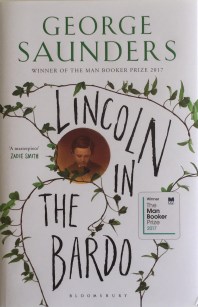 I have two admissions about my reading Saunders’s first foray into novel writing: the first is that I haven’t yet finished Lincoln in the Bardo and the second is that I haven’t actually read it, but, rather, I have listened to it. This is not a pretentious ‘the novel speaks to me’ confession; instead, due to the novel’s cast of over one hundred and sixty six speakers[7] — Saunders combines excerpts from historical documents, the fictional recollections from the living and the memories of the deceased throughout the novel’s narrative — an audiobook of the text was created, under the supervision of Kelly Gildea[8], featuring a voice cast from Academy Award winner Julianne Moore through to members of Saunders’s own family. The cast-list of the novel is a sight in itself: http://www.penguinrandomhouseaudio.com/lincolninthebardo. With such an undertaking by Saunders and Gildea, and their intention of accurately portraying these characters, it would be remiss of me, and you, not to experience the novel’s audible format.
It is evident, therefore, that Saunders’s novel reads more like a play-script, in which the liminal characters of the titular purgatory, the Bardo, narrate and discuss their existence with one another. Within this purgatory, a young-boy, Willie Lincoln, recently interred at Oak Ridge Cemetery, Illinois, must navigate a landscape populated with an eclectic assortment of denizens from society’s upper-echelons to the impoverished and, in some cases, the nefarious. All these spirits have risen from their ‘sick-boxes’ in order to disclose their thoughts to anyone who will listen. Willie Lincoln however, while central to the narrative, is not the protagonist of the story. Instead, and while featuring the voices of the other one hundred and sixty three characters, Saunders has three principle shades (193) narrate the narrative: Hans Vollman (Nick Offerman), a middle-aged business man mourning the intimacy and passion he forwent with his new bride after being struck and killed by a falling beam; Roger Bevins III (David Sedaris) a young homosexual man who, after having been denied a clandestine affair by his partner, Gilbert, commits suicide; and the Reverend Everly Thomas (George Saunders himself), while labelled a bore by Bevins, is a wise presence which the narrative is partially tethered to. These three ghosts, distorted apparitions all, accompany Willie as the child explores his new world.

Indeed, while President Lincoln is a character within the novel, and is such an iconic figure that most writers would shy away from portraying, his intermittent appearances present a father grieving for his son, rather than the head of state attempting to preserve the unity of the United States. His first appearance within the novel is a notable instance of Saunders’s portrayal of Lincoln’s character: with the populace of the graveyard looking on, Willie Lincoln receives a gift from his father, President Abraham Lincoln, which has been previously unseen by the dead: his father holds the boy’s body and promises to ‘come again’ to see his son’ (63). To the ghosts, it is ‘a miracle’ (63) that the boy has been so delicately cared for after his passing. It is an intimacy that the spirits of the Bardo behold and contemplate as the man leading their country is shown not as a leader, but rather as devastated man wishing to privately cradle his son. Saunders, in his rendering of the Bardo, explores the subject of grief and of how, upon reflection, an individual may understand themselves and others through loss. While a revered short-story writer, particularly for his 2013 short-story collection, Tenth of December, this experimental novel evidences Saunders’s deft skill as a writer of the long form also. Lincoln in the Bardo, having won the 2017 Booker Prize, presents the malleability of the novel itself, as Saunders, with his first novel no less, has created a benchmark; itself a level for other writers to aspire to reach. For us as readers, it is simply a unique and unforgettable experience.
3. A Whole Life: Robert Seethaler (London: Picador, 2015)
 While strictly speaking not an ‘historical novel’ in that the page count is more akin to that of a novella, Robert Seethaler’s International Man Booker Shortlisted work (2016), translated by Charlotte Collins, is an elliptical retelling of one man’s life. The man in question is one Andreas Egger, a stoically silent man whose defining attribute, as Seethaler outlines early within the novel, is that of his versatile ability as a labourer:
Andreas Egger was considered a cripple, but he was strong. He was a good worker, didn’t ask for much, barely spoke, and tolerated the heat of the sun in the fields as well as the biting cold in the forest. He took on any kind of work and did it reliably and without grumbling. He was as good with a scythe as he was with a pitchfork […] He never went to the inn, and he never allowed himself more than a meal and a glass of beer or a Krauterer [24]
From this excerpt alone it is clear to note that Seethaler’s protagonist is a taciturn worker who is characterised by a determined grit. This attribute serves Egger well throughout his often isolated existence within the mountain ranges of the Austrian Alps[9]. Undoubtedly while no raconteur, Egger leads an adventurous life, as Seethaler’s novel is told through a series of succinct vignettes, each of which sew together the entirety of the protagonist’s seventy-nine years (140): from his abusive childhood he works as a construction worker, a logger, a soldier and a tour guide, surviving an avalanche and then, during his later years, the Second World War (140-141). In each instance, Egger’s life is one rooted within the natural landscape of the valley, as he ekes out his livelihood from the land around him.

One vignette in particular stands out from the rest of Seethaler’s novel in its portrayal of Egger’s bond with and his place within the landscape: following a devastating avalanche, Egger, whilst maintaining the Bittermann & Sons’ steel-cables above the valley, surveys the landscape from the perilous seat at the end of a ‘thin tope’ (71) swinging from the construction company’s elevated cables. Here, Egger, in a break from his work, views the natural landscapes from a uniquely isolated perspective, hanging hundreds of metres above the valley floor. The environment beneath him is iridescent in its seasonal changes, with Egger working throughout both the winter and spring months, and yet, despite the apprehension of his co-workers, his work there serves as a means to calm Egger during his period of mourning. Regardless of this challenges, Egger performs his work, stoically continuing with his purpose without complaint or question. The beauty of this novel lies here with Egger’s understanding of his surroundings; the landscape is tandemly admired and worked by Egger, as his shaping of this environment comes to shape and define him. Like John Edward Williams’s third novel, Stoner (1965), — which the Irish Times stylistically compared to Seethaler’s novel — A Whole Life is a chronicle of one man’s tumultuous life throughout the 20th Century.
4. Butcher’s Crossing: John Edward Williams (London: Vintage Books, 2003 [first published 1960])

A few years ago, I found John Edward Williams’s second novel, Butcher’s Crossing, islanded upon a table within Waterstones. From the pile of books surrounding a ‘Modern Classics’ stand, the cover of Williams’s novel drew my attention immediately due to its apparent representation of the western genre. With its emboldened saloonesque typeface headlining the novel’s cover, it appealed to my ‘western’ sensibilities. Further to this, the title itself had an obvious, albeit coincidental, affiliation with the Coen brothers’ film Miller’s Crossing, another feature which worked, for me, in its favour. Turning to the novel’s blurb, an unnamed New York Times critic had contextualised the influential importance of Butcher’s Crossing upon the work of my favourite novelist, Cormac McCarthy. Despite having not previously heard of Williams’s literature throughout my time at university, nor having read of McCarthy’s awareness of the Texan-born novelist during my research of the former’s prose, I bought the book. Years later, only occurring to me after having read Williams’s subsequent and arguably most acclaimed novel, Stoner, I vaguely recalled seeing both the author’s name and Stoner’s cover within a spherical stamp adorning the cover of another book I owned; within the stamp, William’s authorship was proudly pronounced: ‘By the author of Stoner’. For a second time, Butcher’s Crossing was brought to the forefront of my reading list and so I was steadfastly committed to reading it.
The novel follows the Boston-born William Andrews, the son of a ‘lay minister in the Unitarian Church’ (15) and an erstwhile Harvard student, who, upon travelling west to the ‘hide town’ (17) of Butcher’s Crossing and speaking with a former acquaintance of his father, a J.D. McDonald, now a buffalo furrier, sets out with a team of hunters in order to further understand, or come to ‘know’, the country. After financing the operation, Andrews buys himself a stake within the industry, entrusting the team’s leader, the taciturn Miller, with half of his savings. The hunters, with Andrews in tow, travel into the Rocky Mountains of Colorado in order to pursue a ‘three, four thousand’ (33) strong herd of Buffalo, a herd believed to be either a figment of Miller’s imagination or already hunted in the years since the hunter’s sighting of them. As Andrews quickly comes to understand, there are no certainties with the dying trade. Here, due to its attention to one of America’s bloodiest trades, the novel falls into the category of ‘historical fiction’; Williams documents the final years of the buffalos’ slaughter with an attention to accurately portraying the sickening violence of the industry. In the following extract, Andrews’s contemplates the lifeless body of the leading bull of a herd:
Andrews regarded the felled buffalo with some mixture of feeling. On the ground, unmoving, it no longer had that kind of wild dignity and power that he had imputed to it only a few minutes before. And though the body made a huge dark mound on the earth, its size seemed somehow diminished […] The hooves were surprisingly small, almost delicate, cloven neatly like those of a calf; the thin ankles seemed incapable of having supported the weight of the great animal [150]
This is a writer wishing to detail the extermination of the American buffalo herds of the country’s planes: the prose is precise in its description as Andrews is complicit in the act of slaughter. The clarity of Williams’s language establishes his intention: Butcher’s Crossing is both a critique and evaluation of the trade which profited from violence.

With regard to Williams’s oeuvre, the author’s first novel, Nothing but the Night, was, as is noted by John McGahern within his Introduction to Augustus, ‘discounted’ by the writer himself. Therefore, Butcher’s Crossing itself, while Williams’s second work, is typically seen as his first official novel. However, when focusing upon the subjects of the novels succeeding Butcher’s Crossing there is seemingly, from a surface level, few commonalities shared between them. Stoner (1965) charts the personal and professional life of its titular character: beginning with his childhood upon his family’s farm, near Booneville, Missouri, the book then becomes a ‘Campus Novel’[10] as William Stoner, following his undergraduate and postgraduate studies, becomes a professor of English at the University of Missouri, his alma-mater, and remains in his post up until his death, in 1956. Following Stoner, Williams published Augustus (1973), an epistolary-novel which documents Octavian Caesar’s ascension to the title of Emperor, contending with the conspiracies of ambitious rivals and the management of an empire. Williams has said, as quoted by McGahern, that with both works he was ‘dealing with governance […] and individual responsibilities, and enmities and friendship […] except in scale, the machinations for power are about the same in a university as in the Roman Empire or Washington’ (ix). The point of ‘governance’ is also central to Butcher’s Crossing. In pursuit of the elusive, almost fairy-tale, herd, Miller leads the team through Colorado’s barren landscapes, facing the threats of dehydration, starvation and exposure to an encroaching winter. Miller’s qualities as a leader are as frequently called into question as the existence of the buffalo herd they are tracking. Further to the subject of governance, each of Williams’s works detail, in some way, the protagonist’s coming of age: here, Andrews gradually transforms from a naive would-be scholar in to a hardened and skilled hunter, a progression not unlike Octavian Caesar development into a politically astute leader and respected statesman.
Beyond the shared theme of leadership, each of Williams’s novels is composed with his economical prose, as each sentence is sculptured without superfluity. Reading Williams is a lesson in the skill of brevity: his proficient ability at constructing a narrative is categorised by John McGahern in his Introduction to Stoner, as he notes Williams’s prose as ‘plain’[11], defined by its ‘clarity (xv). Throughout all three novels — Butcher’s Crossing, Stoner and Augustus — Williams’s deft control often understates the beauty of his writing. There is a defined precision to his portrayals of his protagonists — William Andrews, William Stoner and Octavian Caesar, respectively — that unites all three works.
Despite finding both worldwide acclaim and a worldwide readership posthumously, Williams died of respiratory failure[12], in 1994, with Stoner championed by authors Julian Barnes, Ian McEwan and Tom Hanks, to name a few, Williams’s preceding novel, Butcher’s Crossing, is an equally captivating read, not only for the beauty of its prose but also for its unflinching reflection upon America’s bloodied history.
5. Augustus: John Edward Williams (London, Vintage Books, 2003 [first published 1973])
 ‘Send the boy to Apollonia’ (3). This instruction comes from Julius Caesar, in 45 B.C, in a letter to his niece, Atia. The boy in question is the eighteen year-old Gaius Octavius, and his time in Apollonia will be spent, as instructed by his great-uncle, under the tutelage of two teachers: Athenodorus and Apollodorous, improving his philosophy and Greek with the former and his ‘knowledge of literature’ (4) and rhetoric with the latter, respectively. As noted, at the centre of this letter is one Gaius Octavius, later characterised by Maecenas, a close friend, as ‘a pleasant stripling, no more, with a face too delicate to receive the blows of fate’ (15) and disparaged as a ‘pompous, unimpressive little fellow’ (36) by Marcus Antonius, one-third of a triumvir formed, in 43 B.C., alongside Octavian himself. Indeed, the man in question is unanimously deemed more suited to scholarly pursuits than to the consulship of the Roman Empire, as his adoptive father, Julius Caesar, had envisioned.
This seemingly unremarkable youth, however, proves his political prowess in the tumultuous wake of his great-uncle’s assassination, in 44 B.C, as, whilst encamped at Apollonia alongside his close associates — Marcus Agrippa, Cilnius Maecenas and Salvidienus Rufus —, Octavian devises his retribution. This moment, however, is documented as a recollection from Rufus, a witness to Octavian’s vow, rather than from Caesar’s heir himself. Whilst a possible subject for a book itself, Caesar’s assassination and his great-nephew’s vengeance occupy only the majority of Book I of the text, as Williams’s divides the narrative into three sections: Book I charts Octavian’s ascension to and preservation of his position of Rome’s first emperor, battling both the duplicitous senators of the Roman government who murderer his adoptive father and the Egyptian forces under Cleopatra and her beholden husband, Marcus Antonius; Book II follows Octavian’s reign, focusing particularly upon his strained relationship with his spirited daughter, Julia, and her liminal position as both his kin and his political asset; finally, Book III marks the first instance of Octavian’s own narration, writing to his only surviving friend, Nicolaus of Damascus, in 14 A.D., aboard his yacht bound for Capri over a three day journey. From this three-part structure alone it is evident that Augustus, in its documentation of Octavian’s consulship, produces a holistic overview of the emperor’s reign.
With Williams delaying the emperor’s own perspective until the final Book of the novel — here, Octavian recounts his own outlook upon his life’s successes and its failings —, the authors of these writings are far more than mere interlocutors between the reader and Octavian. As you will have gathered, Augustus, Williams’s final novel, is a book of correspondences, a work which the author has structured from an assembled collection of fictionalised letters, memoirs and reports. With its epistolary form, Williams’s narrators are a varied assortment of writers who encompass all echelons of Roman society: the social statuses of these individuals range from Octavian’s closest advisors to his enemy conspirators; from his daughter to his childhood wet-nurse; from the Queen of Egypt to aspiring Italian poets. Indeed, despite the work’s title of Augustus, itself the title assumed by Octavian, in 13 B.C., this is not a novel from the titular character but is rather a novel about them.

Whilst I have spoken of the brevity of Williams’s prose and his precision in his construction of his narratives, Augustus’s achievement lies in his portrayal of this cast of characters, as, due to the sheer number of writers, Williams has formulated an objective overview of Octavian from the subjectivity of their words. Here, credence is equally found within the lines of a conspirators note as it is in the correspondences of the Emperor’s devotees. The reader is tasked with elucidating their own opinion from these letters, memoirs and reports of those opposing or supporting Octavian Caesar. However, it is not until Book III that we are granted an intimate, confessional perspective from Octavian. At this point, drifting listlessly ‘southward toward Capri’ (279) and toward the complete relinquishment of his power to his distrusted son-in-law, Tiberius, Octavian Caesar accepts his fate. This final Book III reads as one man’s efforts to understand his legacy, as he struggles to delineate his identity from the myth which permeates his emperorship. However, it is here that Williams, during Octavian’s composing of his final collection of letters, having recently written an account of his life based upon his memory and the biographies of several scholars, notes the dichotomy between the historical and the personal; the individual and the personal; and the myth and the truth. Ironically, Octavian finds the truth of historical writing to be founded upon ‘lies’ (279), as he, having read his biographies, struggles to find himself within the historians’ words: ‘I can hardly see him now; and when I glimpse him, he recedes as in a mist’ (279). Further to this, Octavian laments the passing of his friends, who, he has found, died ‘at the height of their powers’ (290), whilst he, in a languid state, finds a fruitlessness to his achievements. However, beyond the matter of his own personal chagrin towards individual moments within his legacy, there lies an inherent pragmatism to his elevated state, having been labelled by his people as a ‘mortal god’ (287): he has always understood the necessity of playing a ‘role’ (287), concealing his true nature, his fallibility as a man and his weaknesses, in order to maintain his control. It is an admission that, beyond showing Octavian’s perception of his title, reveals the human cost of his rule, particularly to his ‘Little Rome’, Julia.
Despite the fallibility of memory being brought to the forefront of the narrative, an issue that historical writing, in all of its forms, must counter, Williams’s final work is a book which will remain with its reader for years to come. Unlike those read by his protagonist, Williams’s novel, whilst fictionalised, is a vivid portrayal of Octavian Caesar, both as a citizen and as the once leader of the world, combining his personal responsibilities, particularly as a father, with the often overlapping duties of leadership. In truth, this is the intention of the historical fiction writer: to destill the historical figure from history itself.
References
[1] https://en.oxforddictionaries.com/definition/historical
[2] https://en.oxforddictionaries.com/definition/fiction
[3] https://www.telegraph.co.uk/news/bbc/11369868/Wolf-Hall-is-deliberate-perversion-of-history-says-David-Starkey.html
[4] https://www.theguardian.com/news/datablog/2012/oct/10/booker-prize-2012-winners-sales-data
[5] https://www.nytimes.com/1996/12/29/books/death-and-the-maid.html
[6] https://www.theguardian.com/books/2016/oct/28/days-without-end-by-sebastian-barry-review
[7] https://www.youtube.com/watch?v=KVxVRXgB444
[8] https://www.youtube.com/watch?v=KVxVRXgB444 and https://www.wired.com/2017/02/george-saunders-bardo-white-house-audiobook/
[9] https://www.panmacmillan.com/authors/robert-seethaler/a-whole-life
[10] https://en.wikipedia.org/wiki/Campus_novel
[11] McGahern, John, Introduction, in Stoner (London: Vintage, 2012), p. ix
[12] https://www.nytimes.com/1994/03/05/obituaries/john-williams-71-a-novelist-editor-and-professor-of-english.html
 Words on Pages
Leave a comment