
Martin Kurtz is as much a beguiling director as he is a ruthless spymaster, and within John le Carré’s tenth novel, The Little Drummer Girl, the seemingly disparate professions undertake a coalescence through the ‘theatre of the real’: the title given to the performance enacted by an undercover spy. The central narrative of The Little Drummer Girl focuses upon one such performance: a young middle-class British actress must infiltrate a Palestinian terrorist cell upon the behest of her Israeli recruiters. It is, for Charlie — herself a conceited radical activist, having attended a ‘’revolutionary school’ (199), and who is also ashamed of her father’s imprisonment and the ‘disgrace’ (178) brought upon her family through destitution — ‘an acting job’ (158), but it is a role unlike any other that the talented actress has ever committed herself to. It is, itself, a commitment that will divest her of any political unaffiliation and superficiality she once held.
Overseeing the performance is Martin Kurtz, an auteur, if you will, who has devised an operation to, by way of Charlie, dismantle a terrorist cell, which is indiscriminately targeting influential Jewish figureheads, from within itself. Kurtz’s ploy is equally prescriptive as it is descriptive, rigid and yet malleable, even as he outlines to Charlie that ‘We [sic] handle the plot, Joseph — an acolyte of Kurtz’s with wavering fealty for his master’s methods — does the dialogue. With a lot of help from you’ (160); in Charlie’s terms, it is memorising an improvised script. However, what distinguishes Kurtz from the preceding and succeeding spymasters of le Carré’s oeuvre is the dichotomy between his ruthlessness and his care for his operatives; the professional and the familial collide within Kurtz, who himself is a man independent from and yet trapped within a bureaucratic hierarchy.

While le Carré’s penchant for exploring the theme of identity is principally portrayed through Charlie’s submersion into the role of Salim’s — codename: Yanuka (42) — lover and protégé, Kurtz’s identity is shown to be as equally amorphous. Indeed, while born Martin Kurz, he adopted the added ‘t’ to his patronym after he was bequeathed it by a British officer (40), he is also ‘Schulmann’ to Alexis; ‘Mr. Gold’ to Ned Quilley; ‘Mart’ to Charlie; Mr. Raphael to Deputy Commander Picton; and Mr. Spielberg, a clear affirmation of his position as a director, to Professor Minkel and his wife, Mrs. Minkel. It is the director with more appellations than that of the cast of characters beholden to him. Take, for instance, le Carré’s description of Kurtz as the operative sheds his identity as Schulman and becomes himself again:
He arrived in Munich from Tel Aviv by way of Istanbul changing passports twice and planes three times. Before that he had been staying for a week London, but in London particularly maintaining an extremely retiring role. Everywhere he went, he had been squaring things and checking out results, gathering help, persuading people, feeding them cover stories and half-truths, overriding the reluctant with his extraordinary ruthless energy and the sheer volume and reach of his advance planning, even when sometimes he repeated himself, or forgot a small instruction he had issued. We live for such a short time, he liked to tell you with a twinkle, and we are far too long dead. That was the nearest he ever came to an apology and his personal solution was to relinquish sleep. In Jerusalem, they liked to say, Kurtz slept as fast as laboured. Which was fast. Kurtz, they would explain to you, was the master of the aggressive ploy. Kurtz cut the impossible path, Kurtz made the desert bloom. Kurtz wheeled and dealed and lied even in his prayers, but he forced more good luck than the Jews had had for two thousand years.
Succinctly, and yet still advancing the narrative, le Carré establishes Kurtz’s actions and his reputation. From this excerpt alone, Kurtz’s elided movements convey an inexhaustible resolution to his operation. Here, le Carré’s proclivity to provide a detailed overview of his subjects and their identities is at its very finest and is done so through two focuses: the first centres upon portraying the character’s current actions before drawing his attention to the individual’s reputation. To begin, Le Carré’s stringing together of a series dynamic verbs, ‘squaring’, ‘checking’, ‘gathering’, ‘persuading’, ‘feeding’, ‘overriding’, and ‘planning’, evidences Kurtz’s nature: he is confirmed to hold a ‘extraordinary ruthless energy’. While, at such summative points, le Carré outlines the foundation of Kurtz’s scheme, his omniscient narrator then draws the reader into a one-sided discourse, a monologue, to an extent: ‘you’, as the listener, are le Carré’s addressee, as though the narrator is, in a brief interlude from Kurtz’s scheme of ensnaring his prey of Salim, assessing, overviewing, Kurtz’s legacy with you, almost as a passing remark, a fleeting aside: ‘we live for such a short time, he liked to tell you with a twinkle […] Kurtz, they would explain to you, was the master of the aggressive ploy’ (41) [emphasis added); such rumours are disclosed to the reader as though we are being introduced to the professional life of Kurtz from the inside of his organisation, as the unidentified ‘they’ are of Mossad’s corridors, and the reported gossip is from those unseen peers of Kurtz. As is with all of le Carré’s narratives, and as is evidenced here, the personal life and the professional reputation of the individual are inseparable, and it is with le Carré’s narrator’s direct address that we, the reader, are initiated into the hearsay and rumour surrounding Kurtz’s legacy, seemingly by one who has met the character. The aphoristic assessments that have been pinned to Kurtz have been laid bare before the reader, and, by doing so, le Carré has created an identity for his spymaster as one defined by action and sheer will.

Beyond the skill of his stratagems, the team, or ‘private army’ (47), Kurtz ‘hastily’ (45) assembles is identified as a ‘family’ (45). Of the recruited, Kurtz’s own ‘Sayaret’ (35), if you will, is divided into two sections: desk and field. The first group serve as a collection of forgers, or Kurtz’s ‘Literacy Committee’ (47), consisting of Schwili, ‘the grandfather’; Leon, the ‘London University’ graduate; and Miss Bach, the ‘business lady’. The second, are operatives of surveillance — watchers and followers — and includes ‘the kids’ Dimitri, the ‘driver’ (137); Rachael, ‘the comely one’ (149); Raoul, ‘the flaxen hippy boy’ (128); Rose, the ‘South African’ (149); and Oded, the tempestuous ‘baby’ (45) of the clan. Supervisors within Kurtz’s ‘army’ come in the form of two operatives who are shown to know their leader beyond his official posting: the ‘seasoned warrior’ (326) Gadi Becker and the stalwart ‘sidekick’ Shimon Litvak (44). Le Carré positions Kurtz between the two acolytes and their assessments, in terms of the morality and practicality, of the operation. With Becker, Kurtz has a ‘masterful, high-minded, incisive’ (208) agent who, while renowned and revered for his covert work in Egypt and Libya, is a distant ‘ewe-lamb’ (532) separate from the fold. As for Litvak, he is Kurtz’s ‘intermediary’ and a ‘sabra, an apparatchik trained to his fingertips’ (45) with little time for ‘inefficiency’ (57), or Becker’s patience, and with a forthright disposition.
Le Carré’s portrayal of this triad is beautifully constructed: Becker serves Kurtz’s to implore compassion, to find his empathy, while Litvak is his decisive resolution; their approaches continue to clash, while Becker comes to voice his own heart to Kurtz, Litvak brings only his desire to strike. In preparation for ‘Yanuka’ and Larsen’s, his Dutch lover’s, death — the team orchestrate the murder of the pair to look as though the explosives that they were transporting within their Mercedes detonated by accident along an autobahn west of Munich, and so allowing Charlie to infiltrate the Palestinian terror cell as another of ‘Yanuka’s’ girlfriends — Kurtz’s is at a liminal point between the two.
For the preparation of the explosion, Kurtz presides over Litvak’s frantic call for the operation to proceed, ‘”a dead end is what she [Larsen] is,” he agreed, with a mirthless smile’ (373), the knowing reference to her death foreshadowed here. Litvak, at this point, is ferocious in his volatility towards Becker, ridiculing his teammate as a Lothario and romantic with the interrogative ‘”So what’s the hero’s way?” he demanded. “I should enchant her maybe? Have her fall in love with me?” (370). However, Becker is of a different mind to Litvak’s reading of him: though conferring that, for Charlie’s sake, if Kurtz’s was to ‘spare’ Larsen, the self-confessed bomber of Godesberg, the Palestinian’s would ‘never accept Charlie’ (372), he, nevertheless, holds a ‘willed allegiance’ (372) (emphasis added) to the operation. Here, le Carré presents Litvak’s critical opinion of Becker as a ‘hero’, as though from a fairy-tale detached from reality, only to then, through Becker’s response, subvert such a reading: Becker is calculated, who pragmatically views the operation from the perspective of Charlie: if it hinders her chances of infiltrating Khalil’s organisation — the leader of the group—, then they must remove the obstacle of his younger brother, Salim, and his ‘comfort girl’ (371). At the conclusion of the scene, the end of Part One —‘The Preparation — of the novel, Becker is silently aligned with his master.

With Kurtz and Becker alone, the pair’s conversation becomes personal and centres upon the operative’s flailing clothes business, and the seemingly insolvent ‘Poles’ Becker was working with. Becker meets the comment and Kurtz’s final question of ‘You wish to tell me something, Mr. Becker? You have a moral point to make that will ease you into a nice frame of mind?’ (378) with silence. It is the only instance within the scene from the novel at which Kurtz, livid with an anger towards his protégé, uses the Becker patronym, ‘the German version of the Hebrew version of the German version of his name’ (59), as a note towards where ‘Gadi’ belongs: it is a cruel reminder that Becker’s foray into the garment business is failing and he needs to return to and remain with his people; the formality of ‘Mr. Becker’, alongside the patronising note towards his ‘morality’, casts the man as an outsider, an isolate: he is a ‘sabra’ who has abandoned his name for his ‘employers’ wishes (57), much to the chagrin of his Israeli colleagues. Kurtz’s rhetorical chide reminds Becker of his new nature: to Litvak, he is a ‘hero’, but to Kurtz he is naively idealistic in his search for a ‘nice’ outlook.
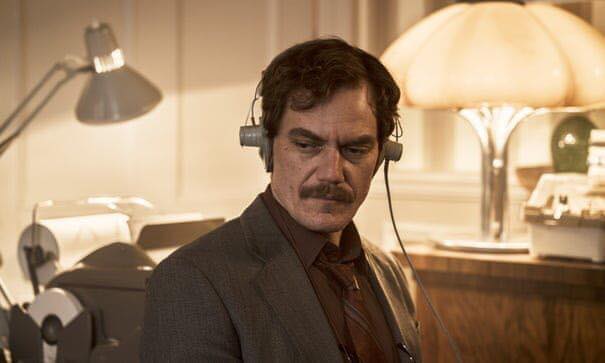
Within episode three of South-Korean director Park Chan-wook’s altogether faithful and thorough adaption of the novel, the scene, written by Claire Wilson, is slightly altered: split over the course of a day, rather than a single night, Kurtz (Michael Shannon) and Litvak (Michael Moshonov) are joined by Becker (Alexander Skarsgård) during a conversation over Anna’s — renamed form Larsen within the novel — volatile, ‘insane’ nature; Litvak turns against Becker: when the latter critiques the methods of the team, ‘so, we hurt girls too these days?’, the former retorts with a reference to Becker’s ‘expert’ handling of Charlie (Florence Pugh); intercutting the conversation are brief vignettes of Charlie drinking through a bout of paranoia and Litvak transporting the drugged Salim and Larsen to the rigged Mercedes; and the omission of Kurtz’s three phone-calls, first to his wife, Elli, then to his agent, Dr. Alexis, before he contacts his boss, Misha Gavron. The most notable difference, however, is with the extended, revelatory dialogue between Kurtz and Becker in the moments preceding the explosion:
Kurtz: There’s coffee, of a kind. Dammit, stop staring at me, Gadi! Am I that pretty? […] You can see another option?
Becker: I am sure that you have considered every possible option. Made every possible promise.
Kurtz: No innocents! That is what I promised you, Gadi. No innocent people.
Becker: I misheard.
Kurtz: Yes, you misheard.
Becker: Like always.
Kurtz: We have another player confirmed: Rossino. That is another step closer to Khalil. Charlie is in place. What can you not see here?
Becker: The surgeon.
Kurtz: The girl is exposed.
Evening
Kurtz: I asked each boy and girl personally if they wanted to stand down. They all begged me to go through with it.
Becker: You remember at the Munich Olympics when the German Police voted among themselves to… when they chose to abandon their rescue operation because it was too dangerous?
Kurtz: What would you have me do?
Becker: If you are paying me to be your conscience, Marty, you should ask for your money back.
Wilson’s adaption of the scene draws out Kurtz’s conflict: he is ordering the death of two people, while Becker passes judgement over his careless strategy. While le Carré situates Kurtz as the controlling force within the Salim and Larsen’s murder — his ordering of Litvak to ask the ‘kids’ if they want to ‘stand’ down, his conversations with Alexis and Gavron, and his goading of Becker all demonstrate his authority — Wilson inverts this: it is Becker that is calm, stilled in his waiting for the operation to commence and, by doing so, seemingly revels in his master’s crisis of conscience. Shannon, therefore, portrays Kurtz as a man under interrogation. He is unable to bare Becker’s long-stare, ordering his acolyte to refrain from looking at him, as though the operative is seeing through his mater’s scheme to his doubt. Indeed, le Carré does convey Kurtz’s indecisiveness by his open-request to the room of “’Tell me a different method,” he suggested, addressing himself by the pose of his head to Becker’, but Wilson’s writing and Shannon’s performance show a more beleaguered Kurtz. The lack of precision of the operation is what Becker bemoans, and references a possible sobriquet of Kurtz’s, The Surgeon, for his clinical accuracy. However, unlike the novel, Becker takes issue with the haphazard-nature of the plot, only for Kurtz to stress that he is acting from a position of a guardian: Charlie is ‘exposed’; she is in danger. For Kurtz, the justification lies within the need to act.
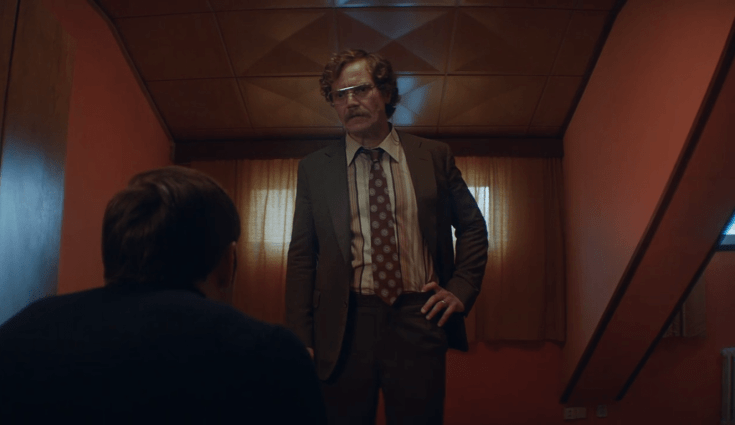
The final exchange between Kurtz and Becker before Michel and Anna’s — Salim and Larsen’s — fatal drive inverts the former pair’s parting within the novel. While Becker is ridiculed for what is seen as a search for a moral justification and ‘a nice frame of mind’ (378) with Mossad’s approach to such objectives, it is Kurtz within the series who now seeks rationale, if you will. Becker, like within the novel, maintains his moral standing and position between Kurtz and Litvak, but it is Kurtz who now desires his disciple’s advice, with the deflated ‘what would you have me do?’ addressed to Becker alone. It is a stand-point — of Kurtz’s trust within Becker — that is subtly implied throughout the novel by le Carré: however, Kurtz’s often praise of Becker for his ‘discretion’ and his prowess as an agent must be noted within the context of the operation, which was ‘democratic, if you ignored Kurtz’s natural tyranny’ (211). Over the two scenes between Kurtz and Becker, Chan wook keeps the camera locked upon the former, as Shannon is repeatedly held tight within the frame, as though confined within the room and his wavering morality in light of what is to come. The pressure is evident. As for Becker, Skarsgård is positioned out of focus. While Shannon occupies the foreground of the scene, Skarsgård lingers like a silhouette within the background or off to a side; his clothes ominously shadow black. Le Carré’s note of Becker’s acceptance for the operation, with him stating that the team has ‘no alternative’ (372) to Kurtz’s scheme, is omitted here for Becker remaining taciturn, silent almost. When Chan wook is not centring his lenses upon Shannon’s countenance, he uses wide-angles to the chasm between the two men, a point which Vikram Murthi of the AV Club notes upon the start of their conversation, as the pair are framed ‘against the depression in the ceiling, which literally halves the room and allows for Shannon and Skarsgård to hide from the other’[1]. Their opposition keeps them from close proximity. Unlike the novel, Chan wook, Wilson and Shannon disclose within this scene the underlying thread which tethers Kurtz and Becker together: there was once a deep trust between the two men which has now, over time, become threadbare. Here, however, Becker is not silent to Kurtz’s question: he rejects his master’s call for him to condone the bombing, outlining simply that he is no ‘conscience’ to Kurtz. What Wilson has achieved is discerning Becker’s position beside Kurtz: while he is searching for morality, but he has none to give.


Michael Shannon’s filmography evidences the Kentucky-born actor as an eclectic, multifaceted performer: from his fleeting first on-screen credit as Fred, an ebullient newlywed, in Harold Ramis’s fourth directorial feature, Groundhog Day, to his recent turn as the gaunt, cancer-stricken Detective Bobby Andes, in Tom Ford’s neo-western sophomore drama, Nocturnal Animals. Typically, articles about Shannon’s performances, and the actor himself, note his towering stature, his intensity and his taciturnity in his discourse. It is with this that Kurtz’s aspect of being ‘squat, Slav […] and far more European than Hebrew’ (19) does not immediately call Shannon to the forefront of the casting-line for possible actors to assume the role, but it is for this reason that he is perfect for Martin Kurtz. Le Carré repeatedly references the indeterminate point about Kurtz’s age: he is ‘ageless and prophetic’ (206) and capable to shift the tide of age even when his ‘Slav eyes lost their sparkle, he looked his age, whatever that was, at last. Then one day, like a man who has shaken off a long and wasting illness, he retuned’ (634), rejuvenated in his battle with his superior, Misha Gavron. Throughout the series, Shannon portrays Kurtz with a still calmness, his voice, at points, is little more than a restrained whisper that can, when disturbed, snap into a ferocity which ascends into a grandiose fury. Take, for instance, the scene in episode one, written by Michael Lesslie, where Kurtz, scanning the retrieved items and debris from the Godesberg bombing, shows this underlying rage:
Kurtz: This was everything that was retrieved?
Guard: Ja, herr Schulmann.
Kurtz: Nothing elegant, absolutely everything?
Alexis: Everything related to the bombing.
Kurtz: (In German) Related? Or relevant?
Alexis: (In German) Relevant.
Lesslie’s point here of Kurtz demanding a distinction between to the two points of related or relevant is impressed through Shannon’s delivery: turning to Alexis (Alexander Beyer), Kurtz faces his addressee with a directness that is searching. Such loose phrasing for Kurtz is unacceptable and so Shannon, raising his gravelled voice to an abrasive roar, breaks the silence within the room. Like the audience, Alexis is under no illusion as to Kurtz’s ‘driven urgency’ (20), as termed by le Carré.

There is an unpredictability beneath Kurtz’s quiet mien. As a spy master, as is shown through Chan wook’s adaption, Kurtz, an elusive figure even within le Carré’s oeuvre, is shown to be an operative that has carved his position out of sheer will. The ‘ageless’ quality of Kurtz, being aged anywhere between ‘forty and ninety’ (19), evidences his ability to remain mystifying even within present company. But it is as an auteur director that Kurtz orchestrates the ruination of Khalil’s terrorist cell, entrusting his operatives, his travelling trope of actors, with a performance that creates the ‘Theatre of the Real’. As Kurtz’s Mossad colleagues opine, Kurtz is not only their agency’s ‘master of the aggressive ploy’, but is also, arguably, the ‘master of the aggressive ploy’ within le Carré’s theatre.
 Words on Pages
Leave a comment