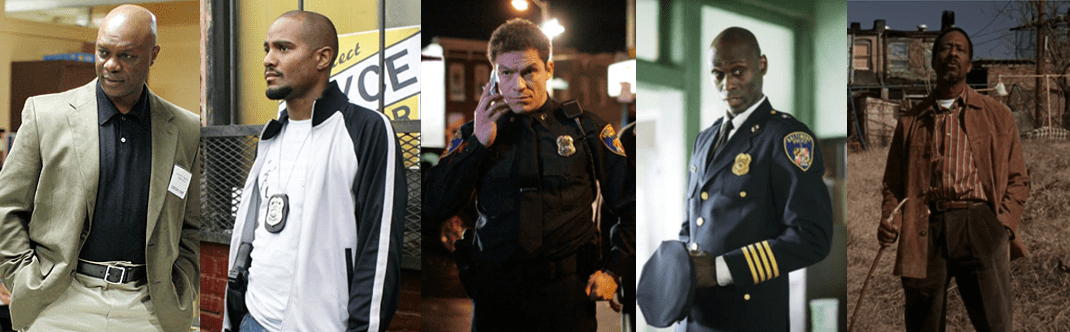
Above all else, The Wire is a study of governance, and of how the collective institutions of a city are interlinked, and threaded together: from the dogged ‘pawn’ drug-dealers of season one to the impoverished middle-school students of Edward J. Tilghman of season four; from the dwindling powers of the Baltimore Stevedores union of season two to the beleaguered city-desk staff of The Baltimore Sun who seek to report with integrity to a dwindling readership of season five; from the police department beset with bureaucratic wrangling to the warring factions of Baltimore’s expansive drug-trade; each collective is intertwined.
Below are five police officers. By the end of the series, however, only one remains an officer for the BPD (Baltimore Police Department). However, The Wire is not a series that can be succintly summarised within a list of five important characters, and so, while each character has a number next to their names, it is more for the purpose of order, rather than any indication of value.
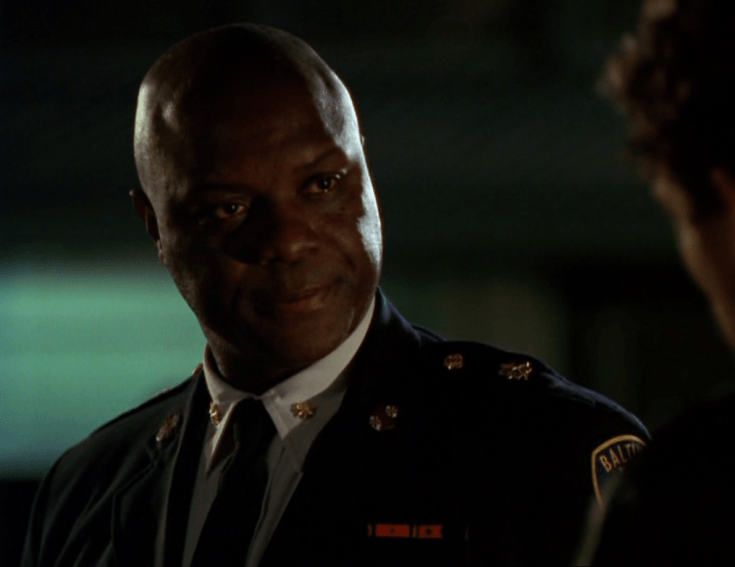
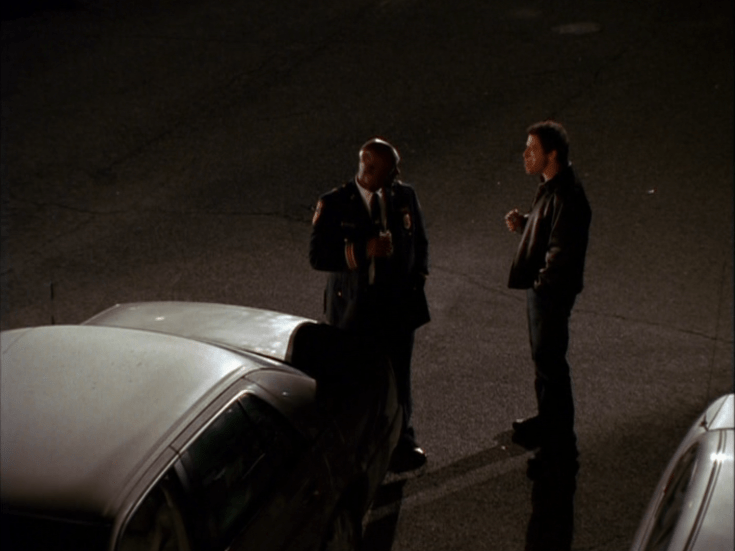
5. Howard ‘Bunny’ Colvin (Robert Wisdom)
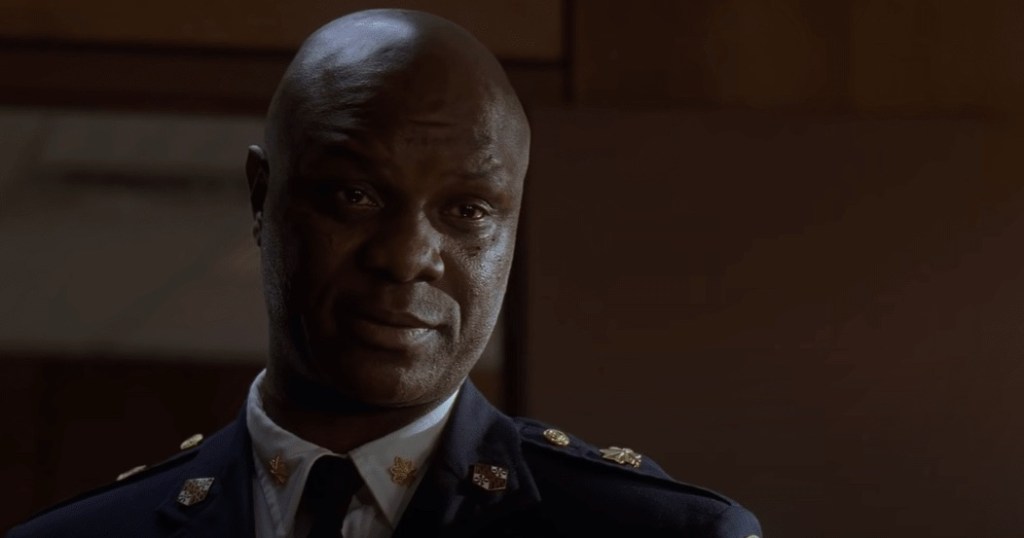
— ‘I mean, you call something a war and pretty soon everybody gonna be running around acting like warriors.’ (Reformation, season three, episode 10)
Of all of the officers peripheral to the investigations of the Major Crimes Unit, Howard ‘Bunny’ Colvin is arguably the most influential, principally, through his implementation of a controversial deployment.
Colvin, in attempt to outmaneuver the debilitating and systemic ‘stats’ game enforced by lickspittles Ervin Burrell (Frankie Faison) and William Rawls (John Doman), enacts his own contingency plan: three zones, locally known as “Hamsterdam” — a mispronunciation of ‘Amsterdam’ —, are set-up within three derelict districts of West Baltimore for dealers and their customers to conduct their trade with minimal police intervention. It is a scheme which permits community outreach, time for quality policing, and gives a 14% decrease in the crime-rate. However, Colvin’s actions are not without reproach: conversely, the ploy is evidently a short-term solution, a ‘tactical deployment’ without adequate deployment nor an end-goal. It is at once productive and haphazard; unique and untested; promising and dangerous. Colvin’s decision to electively ‘ignore’ (Reformation, season three, episode 10) dealing is a course taken out of frustration and exasperation with the ineffective method of policing ordered by beleaguered ‘bosses’. As a result, season three’s attention to the construction of “Hamsterdam” encapsulates Simon’s sympathies with middle-management: in a bid to solve the persistent, ineffective and wide-reaching strategy devoted to the ‘numbers-game’ by making low-level ‘street-rips’, the stalwart Colvin is forced to fall upon his sword, whetted and honed by the very men he served.
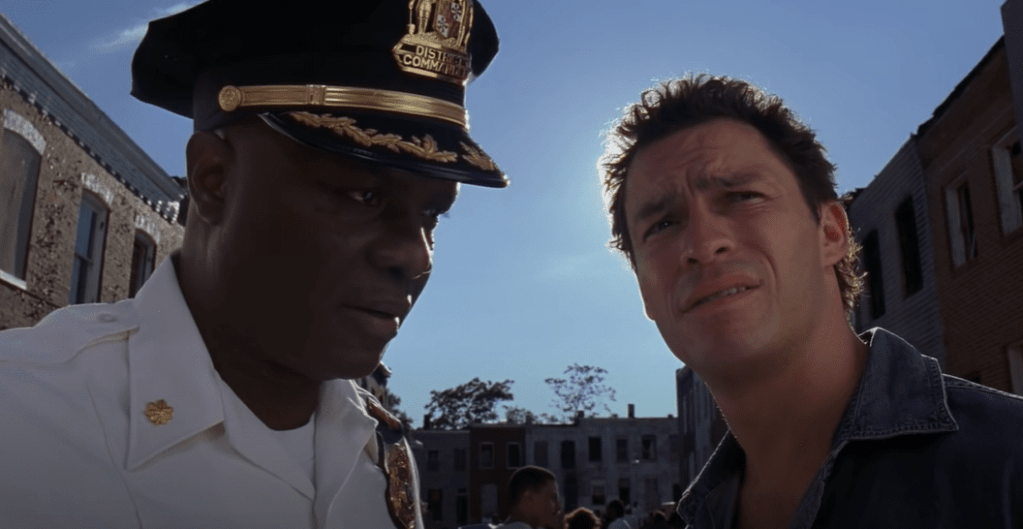
Cast out of the police department as a maverick, Colvin, for a short-period, is employed as the head of security at a hotel. Enjoying the benefits of ‘three-day shifts, no weekends’ and a ‘take-home car’, Colvin, however, cannot again endure yet another bureaucracy: he leaves the post after the hotel manager ‘insists’ that he turn a blind-eye to a business man’s indiscretion of assaulting a prostitute. Upon the advice of the Deacon (Melvin Williams — the real-life inspiration behind Avon Barksdale), Colvin’s conscience, the erstwhile major serves as a ‘field researcher’; with his ‘Hamsterdam’ project gaining plaudits within academic circles, Colvin serves as a guide to both Dr. Parenti (David DeLuca) and us to the children of the school system: being wither ‘stoop kids’ — those fearful to leave the front step of their house in order to disobey their mothers — or ‘corner kids’ — those found selling drugs. Throughout season four, working at Edward Tilghman High Colvin is tasked with working with disenfranchised and confrontational eight-grade students, with ten ‘corner kids’ selected. By its end, the project is shunned, and Colvin, once again, is left furious and disillusioned at the behest of Carcetti’s Chief of Staff Michael Steintorf (Neal Huff).
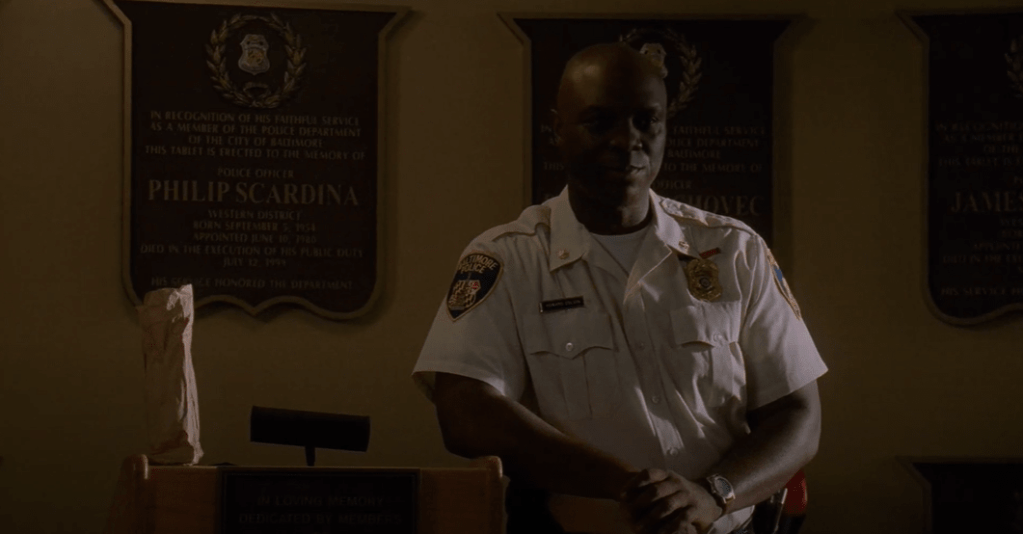
Despite Colvin’s alienation from his command at the Western District, Colvin is, arguably, one of the most talented officers of The Wire. While shown to be discouraged with both sectors of law enforcement and education, he remains highly regarded for his care and attention to those in his charge: McNulty (Dominic West), Carver (Seth Gilliam) and the wayward Namon Brice (Julito McCullum). For McNulty, Colvin served as his first district commander; for Carver, Colvin effectively educates the young sergeant at how useless his policing is, opining that Carver’s ‘whole generation’ is dedicated to a fighting a ‘war’, rather than being a police officers; finally, for Brice, Colvin is a lifeline out from beneath his life as a dealer. More than anything else — and despite Colvin declaring to the Deacon that he is singularly a police officer — Colvin is a teacher, and is one who, due to his challenge of fucking ‘with the program’ (Hamsterdam, season three, episode 4), upsets the desperate order of things. By his final appearance, Colvin is defined as a scapegoat for Carcetti. For a man who can speak so eloquently, Colvin has nothing to say to his mayor. Instead, he smiles and leaves Carcetti with an outstretched hand. Ultimately, Colvin has learned the skill of endurance in the face of bureaucratic wrangling and personal gain.
Defining Scene: Mission Accomplished, season three, episode 12
To Colvin, his “Hamsterdam” deployment, was undertaken because, as he expresses to McNulty, ‘it felt right’ (Mission Accomplished, season three, episode 12) to him, regardless of the disciplinary outcome. As erstwhile protégé and mentor discuss a recent case in which Colvin, in his last act of police work, provided the name of a confidential informant, he chastises McNulty for his corner cutting, including the name of the deceased informant within the warrant in order to ‘tighten up the PC’. Colvin, however, despite his consternation in hearing of his acolyte’s insubordination, is defenseless to McNulty’s riposte: reminding the major of having ‘cut a few’ himself. Unbeknownst to both men, McNulty is charted upon a similar course to the outcasted Colvin. The cycle is set to continue.
4. Ellis Carver (Seth Gilliam)
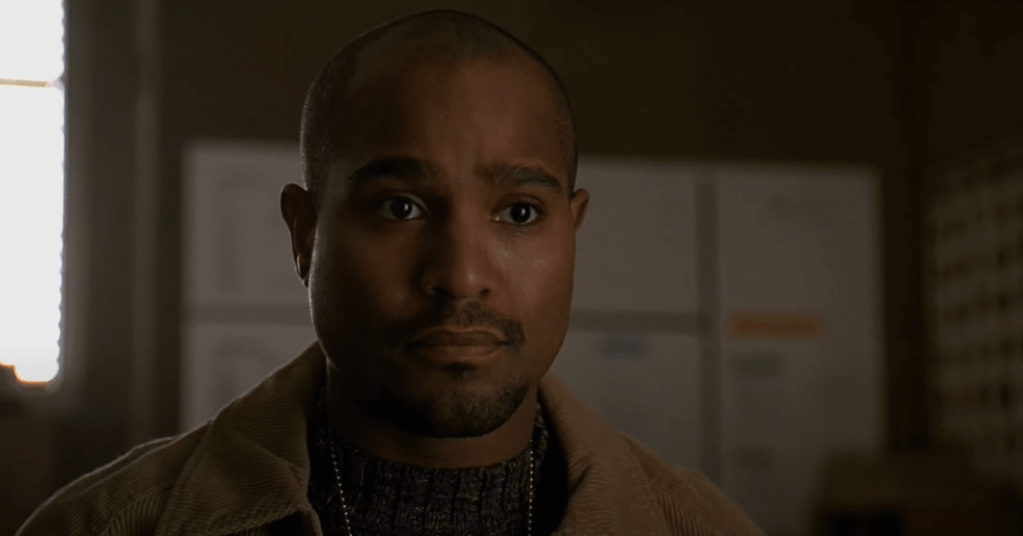
— Just Words (Boys of Summer, season four, episode 1)
From a narcotics detective, to a sergeant (and also SIC of the Western District), before finally reaching the rank of lieutenant, Ellis Carver transformed himself from one-half of baton-wielding narc-duo alongside the hulking Thomas ‘Herc’ Hauk (Domenick Lombardozzi) to a respected and adept lieutenant. Under the tutelage of the righteous Lieutenant Cedric Daniels (Lance Reddick) and then the inspiring Major Howard Colvin, Carver sees the error of his approach: having transferred out of the Major Crimes Unit, Carver fast becomes wise to the advice that he has been ignoring: a police officer needs informants. His approach — gung-ho in chase of a statistics — is admonished by Colvin: simply put, Carver is loyal, but he ‘ain’t shit when it come to policing’ (Reformation, season three, episode 10). He behaves like a ‘warrior’ — baton and Glock in hand — and, as result, he has little to show for his work, until he listens.
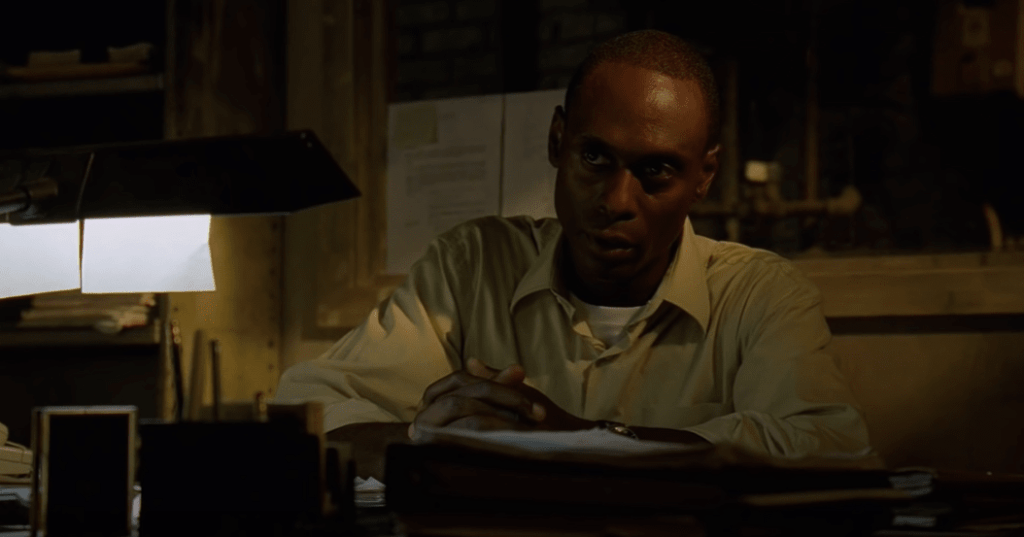
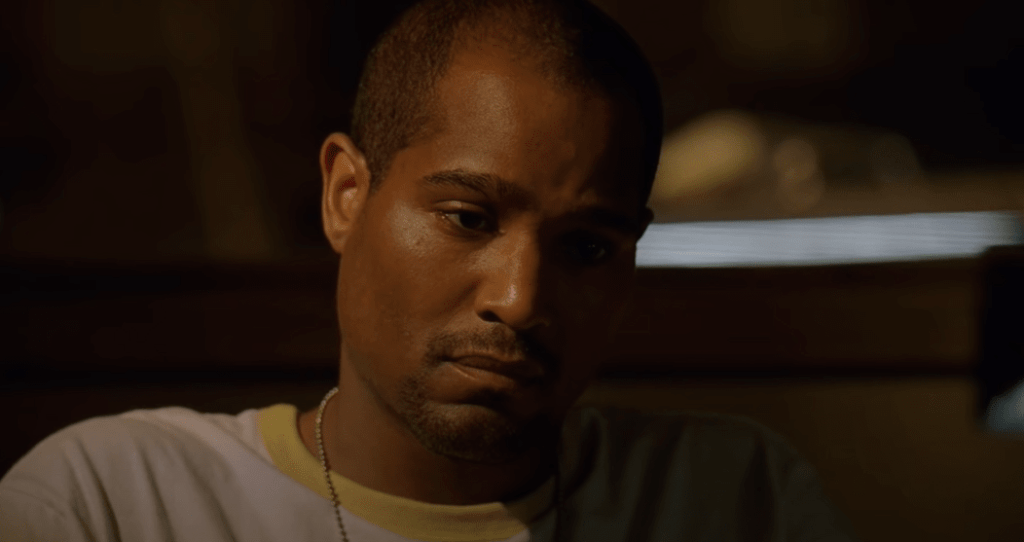
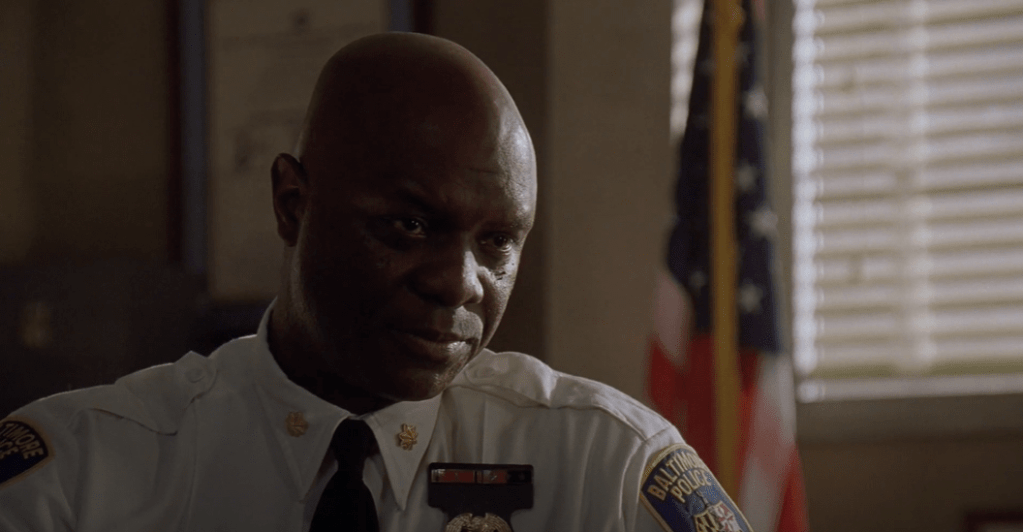
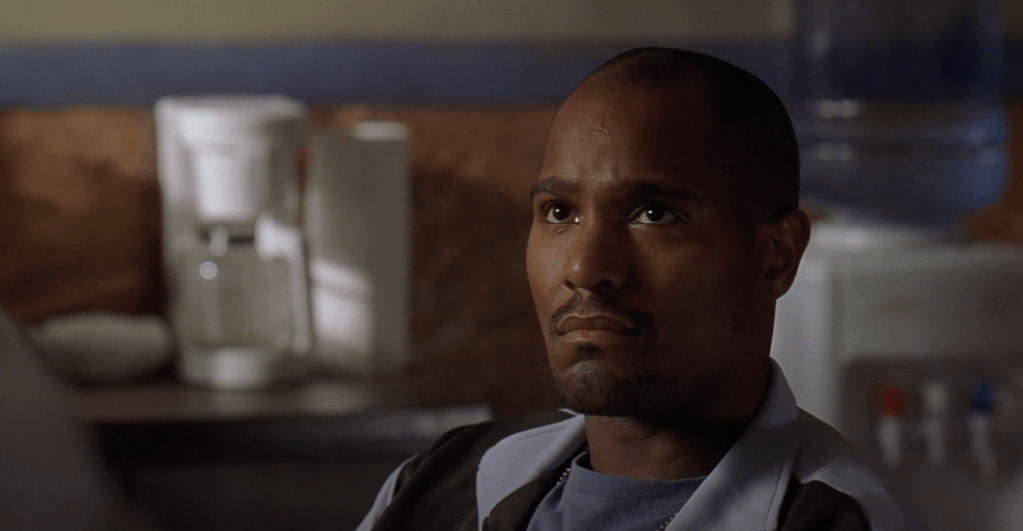
From the beginning of his assignment to the ‘Barksdale Detail’ Carver feels underappreciated: he either voices frustration at having to constantly surveil ‘The Pit’ or at how Kima Greggs (Sonja Sohn) reduces both him and Herc to lowly subordinates. By the end of his term under Daniels, Carver serves another master: Ervin Burrell, the then Deputy Commissioner. Rather than admonish Carver, Daniels educates his detective: Carver is to be an example to those he leads, if he plays a ‘game’, then ‘that is the game they will play’. Disclosing that he himself learnt the job over in the ‘Eastern’ from such men, Daniels warns that the stain of such actions and associations are ‘hard to live down’. It is Carver’s first lesson. One that he eventually understands. By the opening of season 4, Carver, arriving at Bodie Broadus’s (J.D. Williams) corner, simply speaks with the one dealer who would typically be the victim of the officer’s ere. Leaving the scene, having explained to McNulty, passing-by as a patrolman, that he has arrived just for ‘words’ with Broadus, he explains to the volatile officer Anthony Colicchio (Benjamin Busch) a simple truth: ‘bust every head, who you gonna talk to when the shit happens? (Boys of Summer, season four, episode 1).
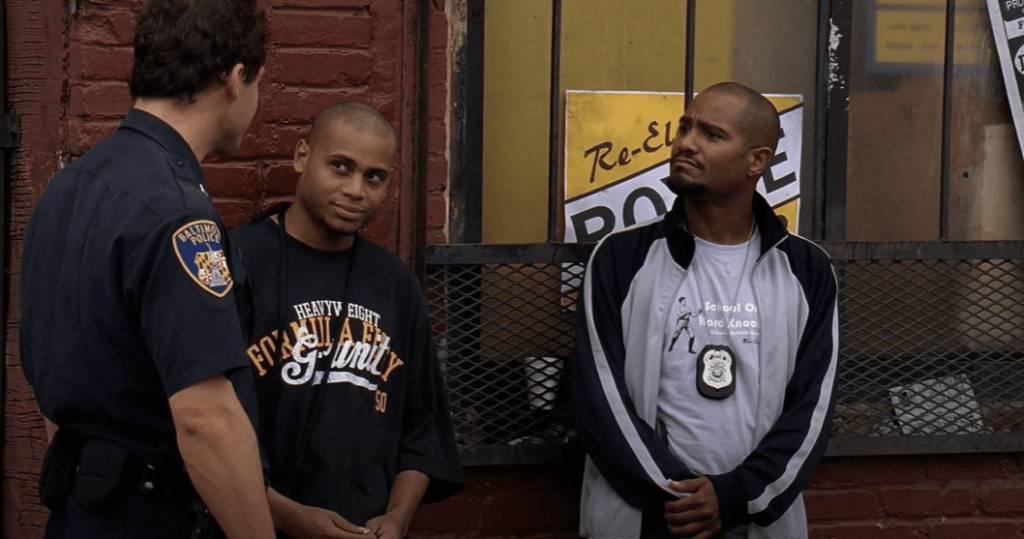
Later, Carver is aptly defined by his ‘discretion’, selected by Daniels, the now Western District Commander, to keep watch over Randy Wagstaff’s (Maestro Harrell) house. After his time as narcotics detective, Carver is eventually seen as a respectable and efficient leader, and one who, after Daniels and Colvin’s educations, actually begins to ‘serve’ his community. Most notably, through his work policing ‘Hamsterdam’ and alongside Denise ‘Cutty’ Wise (Chad Coleman) in recruiting for a local-boxing club. On a more personal level, he even attempts to save the excluded Wagstaff from a future in a violent group home. However, Wagstaff’s plight is beyond his control, leaving Carver infuriated and guilt-ridden over his handling of the case. It is in the brief moment of Carver pummeling his steering wheel after leaving Wagstaff, that we see his true change: he understands that what he does as an officer actually matters. No longer is he indifferent to the work of ‘policing’. Rather, he understands it; now, frustrated and livid at his failings, Carver has become something more than one half of the ‘Herc & Carver’ duo. Finally, he is the example he was taught to become.
Defining Scene: Misgivings, season four, episode 10
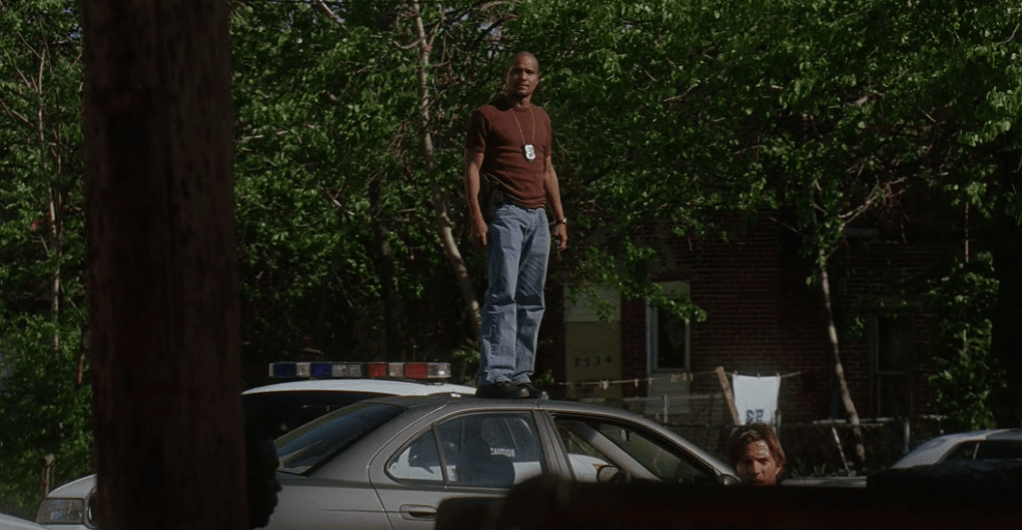
Carver’s speech atop an unmarked patrol car to the backstreets of Baltimore is typically listed as his defining moment:
Now listen to me you little fuckin’ piece of shit; I’m gon’ tell you one thing, and one thing only, about the Western boys you’re playing with: We do not lose! and we do not forget! and we do not give up! Ever! So I’m only gon’ say this one time: If you march yo’ ass out here right now and put the bracelets on, we will not kick the livin’ shit outta you. But if you make us go into the weeds for you, or make us come back out here tomorrow night, catch you on the corner, I swear to fuckin’ Christ, we will beat you longer, and harder, than you beat your own dick!
Exhausted at having given chase through alleyways, the speech is one of sound and fury! The tribal mentality — threatening to ‘beat’ the runner — is testament to what Carver once was. In truth, as his fellow officers scour and search the backstreets, Carver’s speech is simply a war-cry, nothing more. In his speech, he does not see the futility of his pursuit: who would give themselves up to such a group?
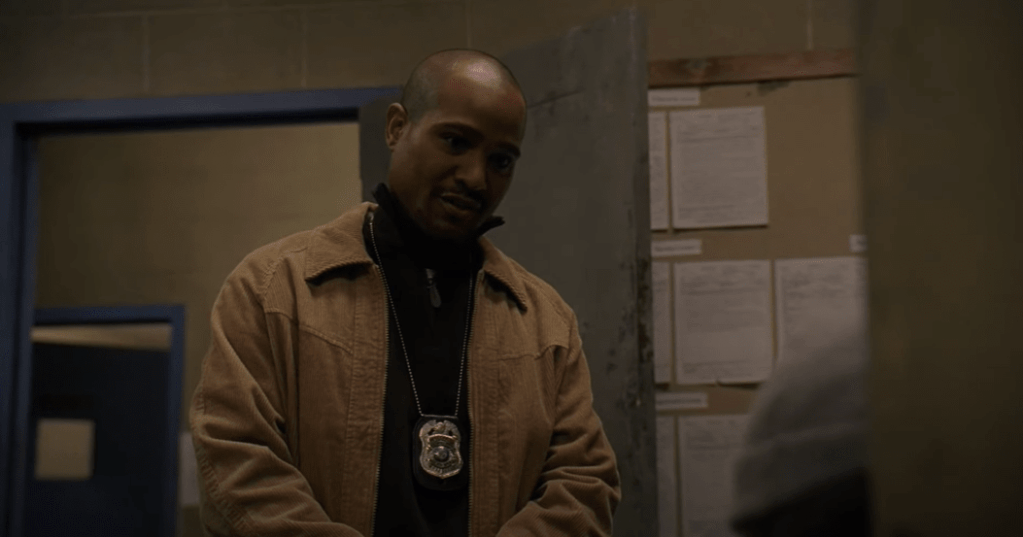
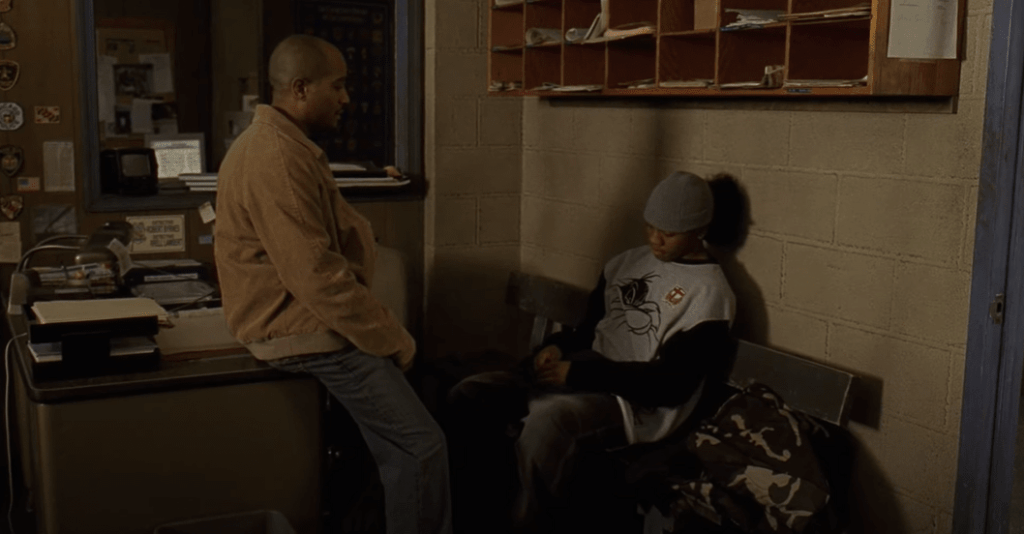
Therefore, personally, Carver’s most important scene throughout the entirety of The Wire comes when he speaks with Namond Brice after arresting him. Initially, Carver takes the approach of mocking Brice, instructing that ‘he better have a toothbrush’, as he will be spending the night in ‘baby-booking’. Once Carver notices that the young Brice is terrified of such an eventuality, he immediately changes tact: he sits, asking him if he has ‘no other family?’ and eventually relents, permitting Brice the opportunity to spend the night upon a bench within the office. Eventually, Namond reveals that he has one lifeline left: Mr. Colvin, his ‘teacher’. Having permitted the boy leniency for the night, it is fitting that, the following morning, the man who educated Carver on how to be an effective officer is then named once again. Carver, hearing Brice speak of his erstwhile commander, brings a smile to his face. Here, Carver has finally listened.
3. James ‘Jimmy’ McNulty (Dominic West)

— The Prodigal Son (More with Less, season five, episode 1)
James ‘Jimmy’ McNulty is first and foremost a police officer, be it as a detective in the Major Crimes or Homicide Units; a patrolman of the Western District; or even as an officer for the Baltimore Marine Unit. From the list alone, it is evident that McNulty is a journeyman, and a true journeyman at that; unable or unwilling to remain in one division without being transferred or, ultimately, removed from duty altogether. Indeed, McNulty is principally assigned to Major Crimes, and is only intermittently reassigned elsewhere, either as a result of a personal-vendetta (he is assigned to the Marine Unit at the behest of Rawls due to his relationship with Judge Phelan (Peter Gerety)); at his own request (he returns to his old stomping-ground of the Western District to have a life outside of his work); or due to a lack of funding (Major Crimes is scaled-back into obscurity at the order of Carcetti’s cuts). As McNulty navigates the multiple halls of the Baltimore Police Department and its subdivisions, he is forever drawn back to his purpose: after all, he is frequently espousing his title as ‘natural police’, so what else is he to do?
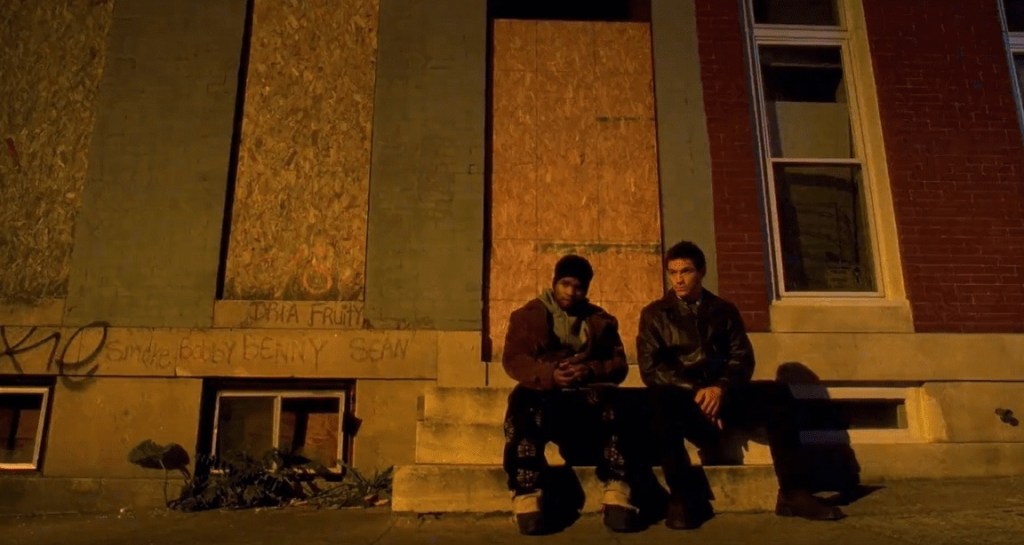
However, what actually drives McNulty is often ambiguous and ever-evolving at that: to Daniels, it’s a matter of hubris, confessing that the Barksdale operation was a way to show ‘everyone how smart [he] was and how fucked up the department is’ (Cleaning Up, season one, episode 12); To Moreland (Wendell Pierce) and Freamon (Clarke Peters), McNulty ‘needs’ a ‘good case’ (Duck and Cover, season two, episode 3), as if dependent upon one; To Rhonda Pearlman (Deirdre Lovejoy), McNulty’s on-again off-again lover, the detective will ‘use anyone’ aslong as it benefits his cause; later, it is a matter of winning, declaring that, as he was promised that the investigation into Marlo Stanfield (Jamie Hector) would continue, ‘he [Stanfield] does not get to win, WE get to win! This case doesn’t go away just ’cause the bosses can’t find the money to pay for it! These are fuckin’ murders!’. In any case, the case eventually becomes about McNulty: either to bolster his ego or vanity, his obsession is typically self-centred to the detriment of his relationships, alongside his private-life.
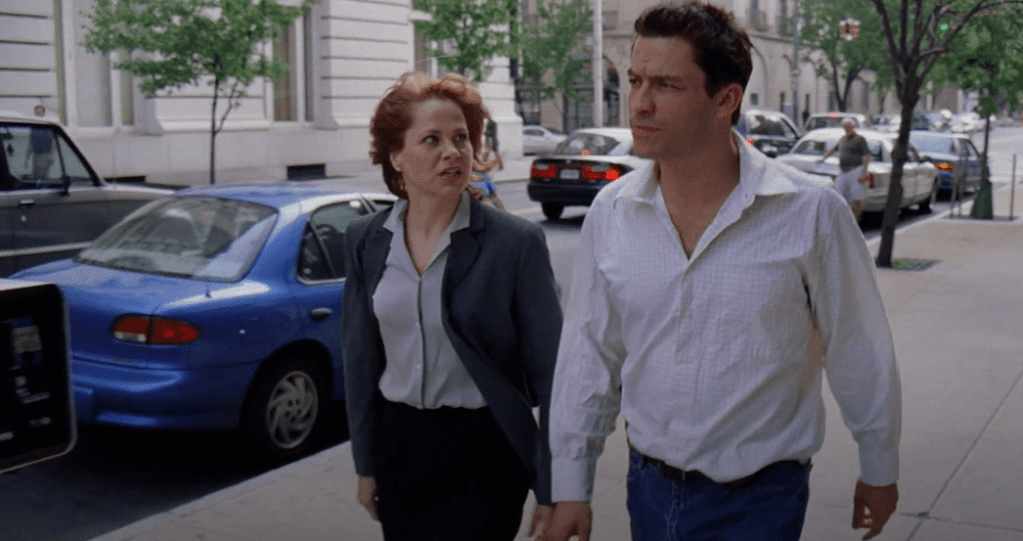
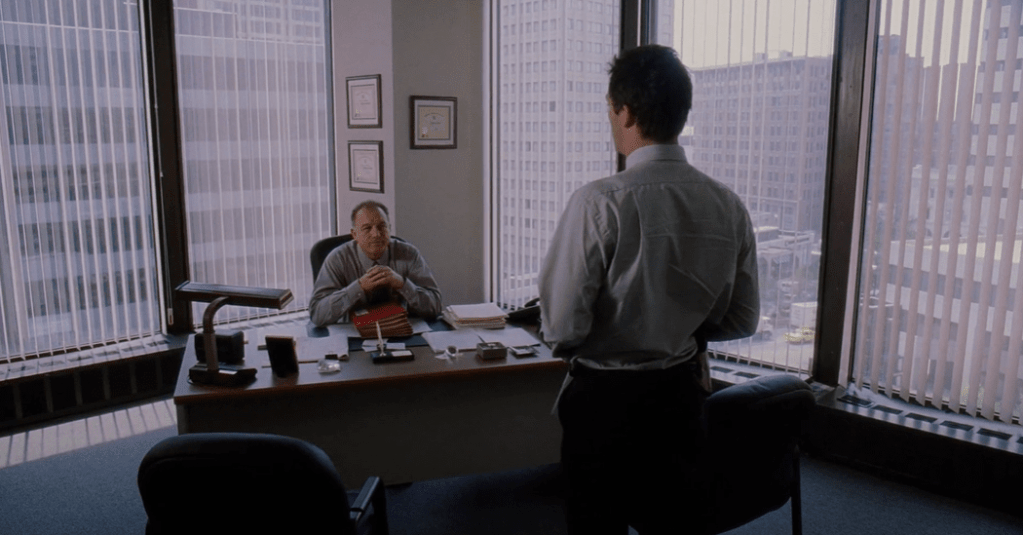
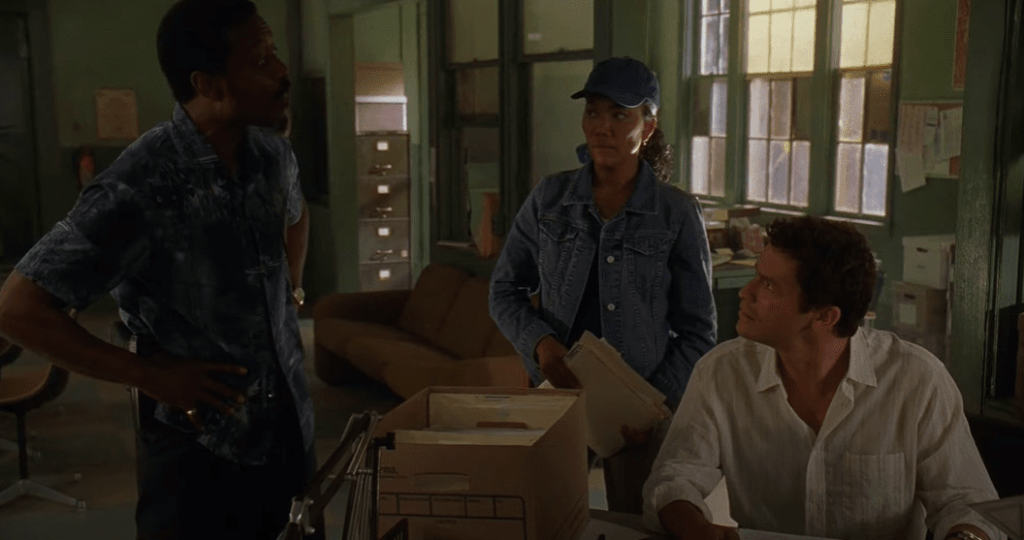
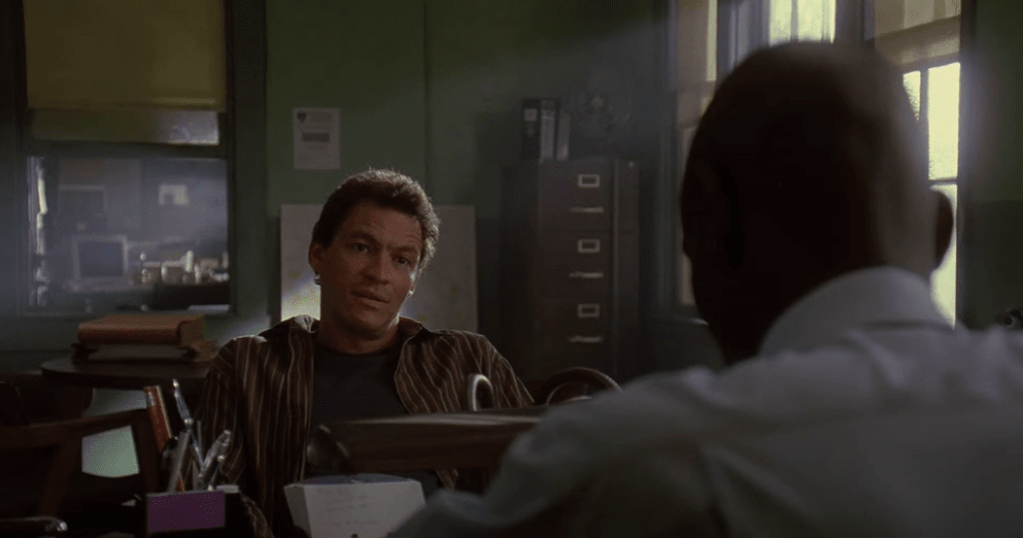
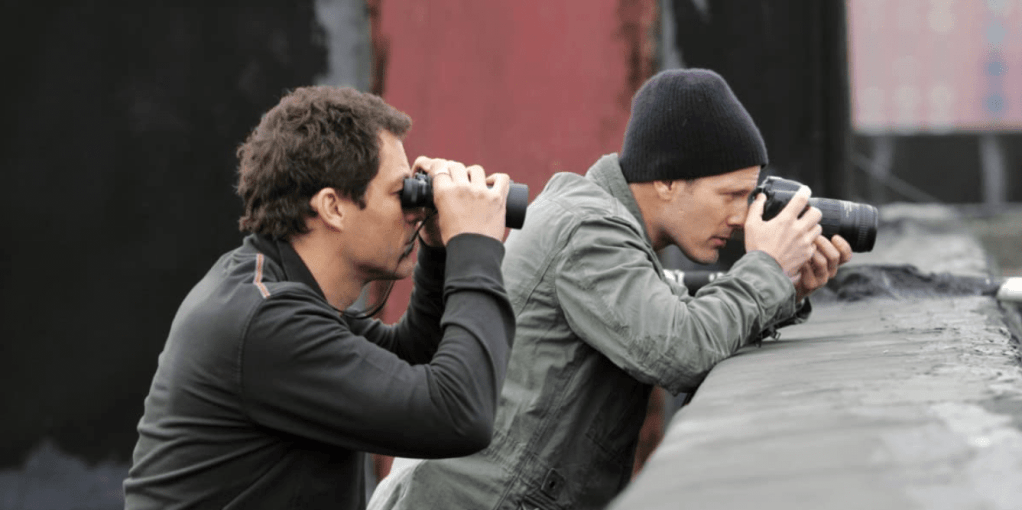
Indeed, Lester’s metaphor of McNulty leaving a trail of scorched-earth behind him is evident with his life away from the job. His libertine escapades are something of a defining feature of the detective; several have even ascended beyond rumour and into a mythos surrounding. Take for instance, Kenneth Dozerman quizzing McNulty of the latter’s vice operation and his bravado for recording that he was ‘brought to the point of a sexual act’ (Stray Rounds, season 2, episode 9) within the report. McNulty simply dismisses the tale simply with ‘do you believe everything that you read?’ (More with Less, season five, episode 1) — a discrete nod to the final season’s attention to storytelling and the liberties taken by some. As Bunk clearly notes, McNulty, with the operation alone, is set to become a ‘BPD legend’ (Stray Rounds, season 2, episode 9), a legend that, ultimately, comes to define a part of McNulty’s career, even if he attempts to quieten such stories.
Professionally, with the exception of his work as a patrolman, McNulty’s approach is chaotic and haphazard; Freamon scathingly critiques that his partner puts ‘fire to everything’ he works and then leaves ‘while it burns’ (Hamsterdam, season three, episode 4). Or, he shoulders a ‘crusade’ (Cleaning Up, season one, episode 12) only to buckle beneath it as the scale of the operation grows larger than he alone can bare. A penchant most evident in his final grand-scheme: giving Baltimore a serial-killer.
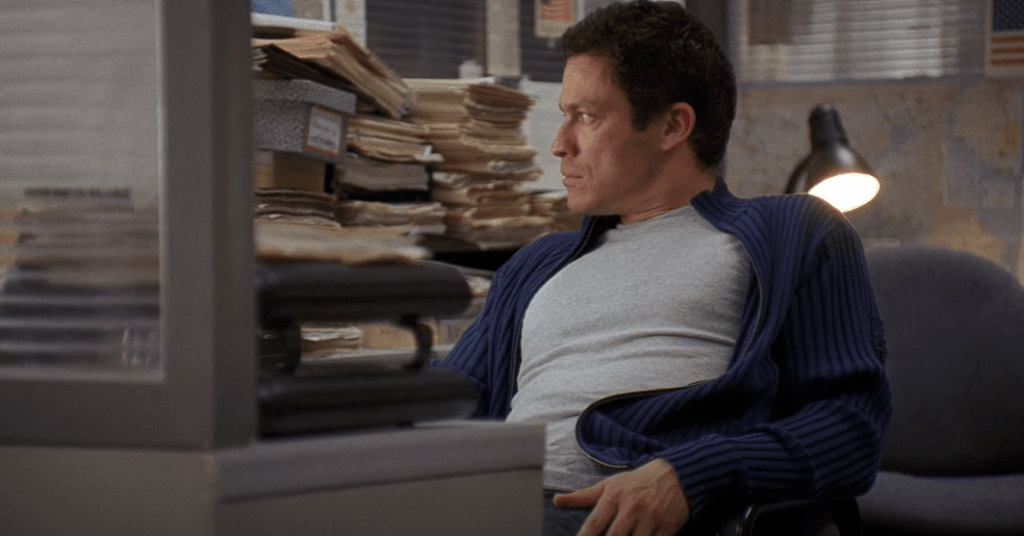
For McNulty, while typically seen as an anarchic egotist, his act of defiance comes as a result of a personal endeavour. A journeyman and the department’s prodigal son, McNulty is rerouted back to the impoverished homicide department under the belief of being assigned to a Major Crime’s investigation; as a response, McNulty devises a scheme to draw the stricken department’s attention back to drug-kingpin Marlo “Black” Stanfield (Jamie Hector). In an echo of Colvin’s “Hamsterdam” stratagem, McNulty plots and shoulders a gambit; but, in place of the major’s response to the force’s draconian adherence to a statistics game, the gambit is for City Hall to actually fund the police department; the plan, unlike the practicalities of enacting it, is simple: to give Baltimore a serial-killer. While not taking up the role himself, McNulty begins to manipulate crime scenes, linking several deceased homeless-men, dead of natural causes, as ‘ribbon jobs’ (-30-, season five, episode ten). From the funding diverted to the homeless-killer case, McNulty and his accomplice, the erudite Lester Freamon (Clarke Peters), channel the subsidies into a clandestine wire-tap operation for major-crimes, alongside other investigations for fellow detectives.
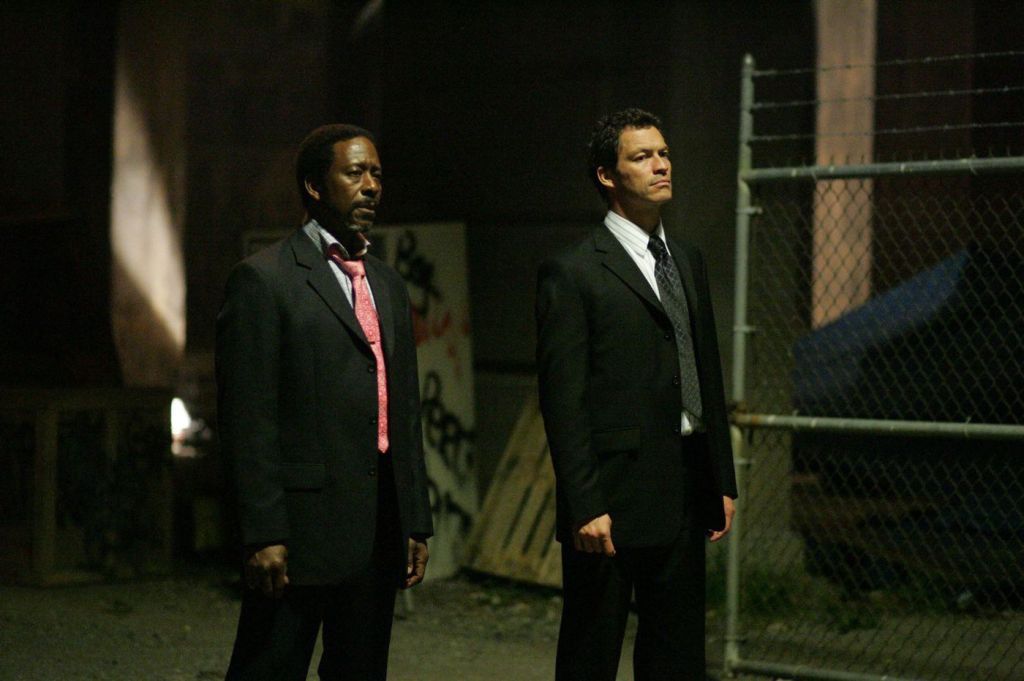
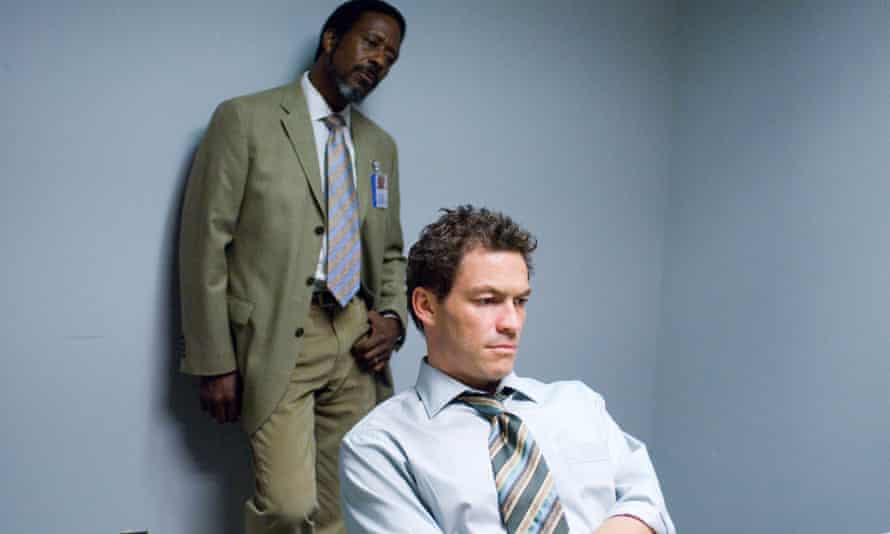
It is the devil’s-work, with an ever-growing number of complications — such as an unknowing detective being assigned to the ruse and a copycat killer — that ultimately come to haunt McNulty.
But, here, McNulty’s actions are tethered to his effrontery at the department’s rescinding of its promise to him: beyond his personal slight, he acts out of rebellion against the ‘bosses’ and their disregard for the twenty-two murders committed by the ruthless Stanfield organisation. McNulty’s subterfuge, itself, evidences his frustration both towards the toil borne by the department and then towards his own crusade. Ultimately, these ‘ghetto murders’, to him, still count, despite their impact upon an assigned clearance-rate, as he complains in his Stanfield ‘does not get to win’ speech. Note, the collective pronoun ‘we’ is omitted and replaced by the singular ‘I’, and so the ‘we get to win’ eventually centres upon himself and his anger at having come ‘back’ to homicide. To McNulty, and as akin to Bunny Colvin, a case ‘doesn’t go away’, it remains a crime regardless of the lack of resources. This is not to exalt McNulty’s altruism, but rather to show how, amid the dirge of cutbacks and austerity, Simon portrays the desperate measure undertaken by an individual and the toil borne by them against the system. And above all else McNulty is that: a challenge to authority, regardless of the cost.
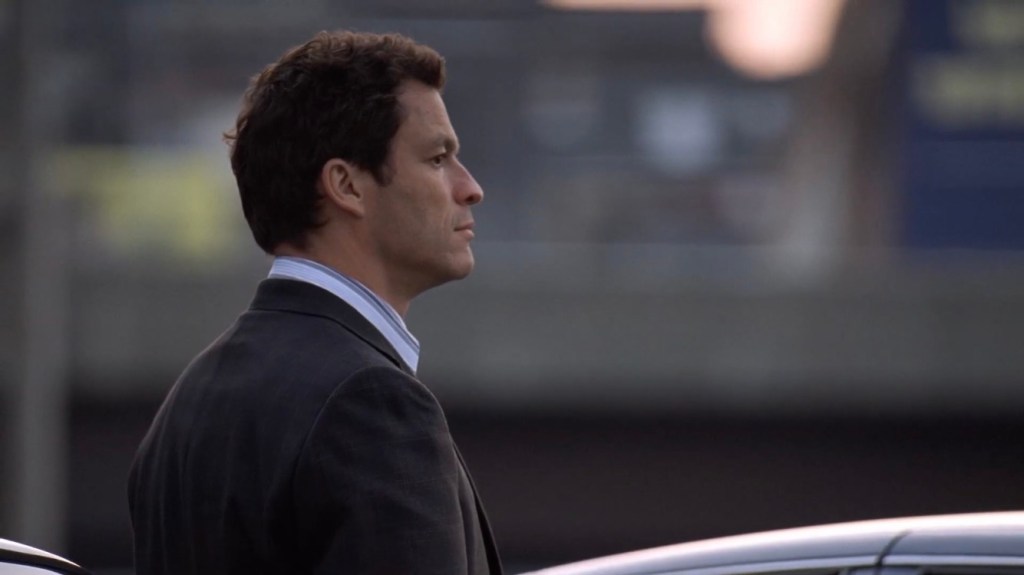
Defining Scene: -30-, season five, episode ten
To pick one defining moment for Jimmy McNulty is a near impossible task. Not only has McNulty been the subject of multiple articles, vlogs, and podcasts, but he is, arguably, The Wire’s principle character. Beyond the multiple occasions of McNulty’s philandering; of his self-destructive drinking alongside Moreland, his partner-in-crime; and of indomitably facing-off against his superiors with little more than a high-sense of self-worth, there have been simply too many perfect moments to succinctly summarise McNulty within one. And so, the final episode has been selected. As McNulty’s career is unquestionably doomed, he delivers a scathing assessment of himself and of the obsequious and unprincipled Baltimore Sun reporter, Scott Templeton (Tom McCarthy).
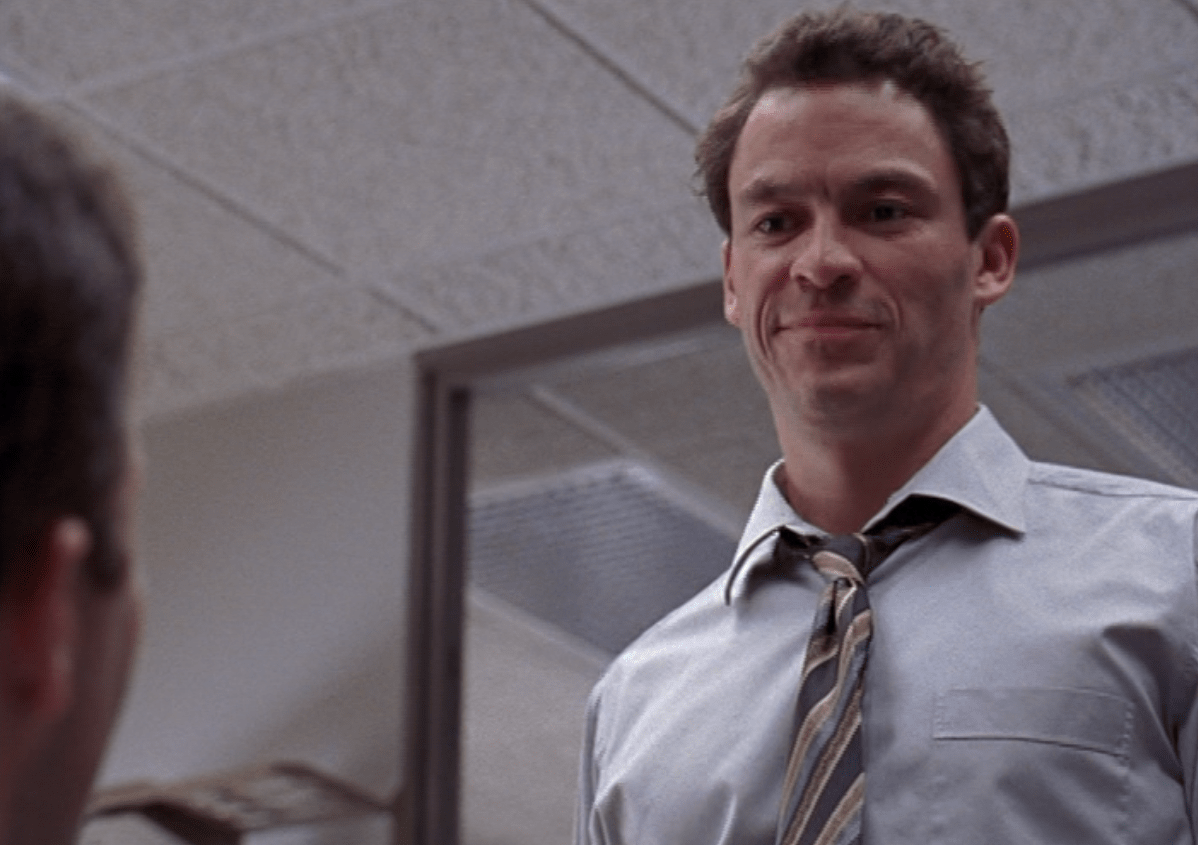
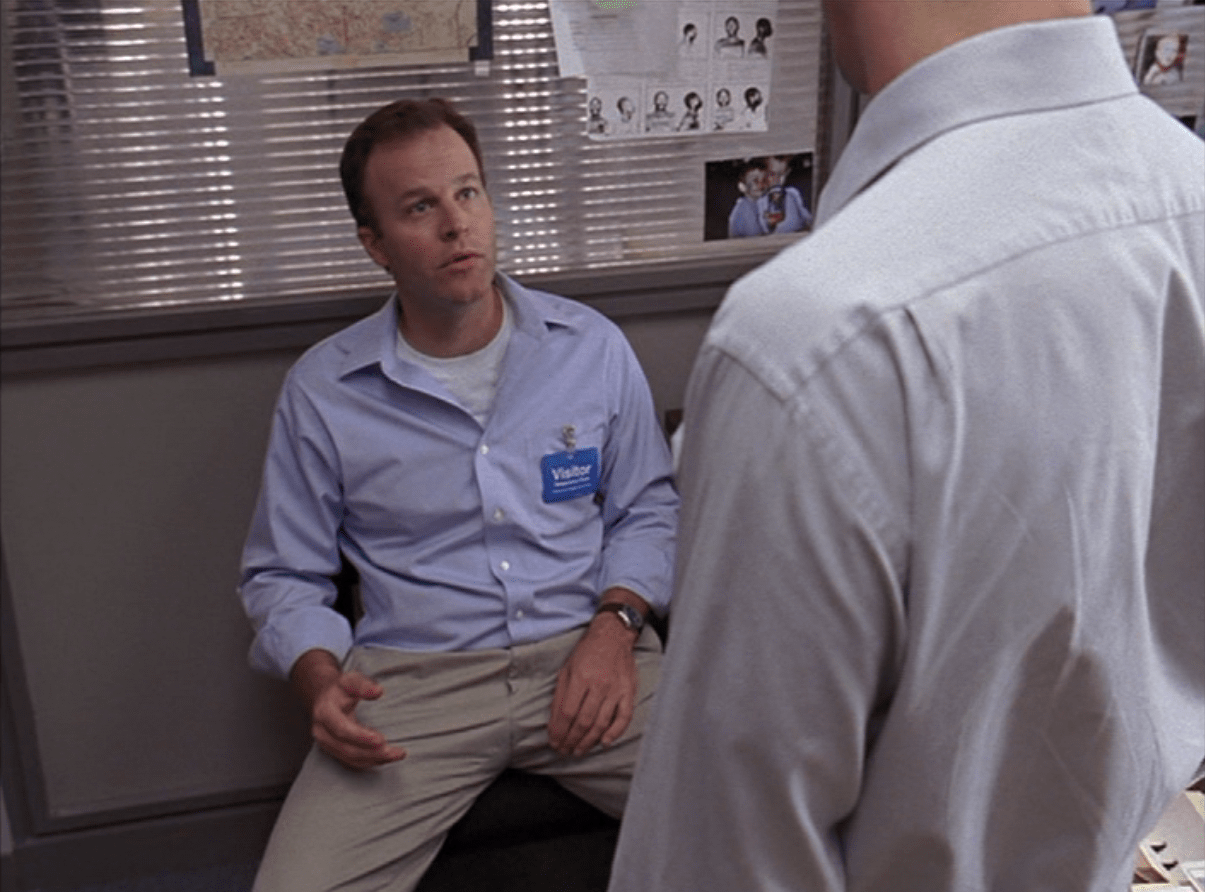
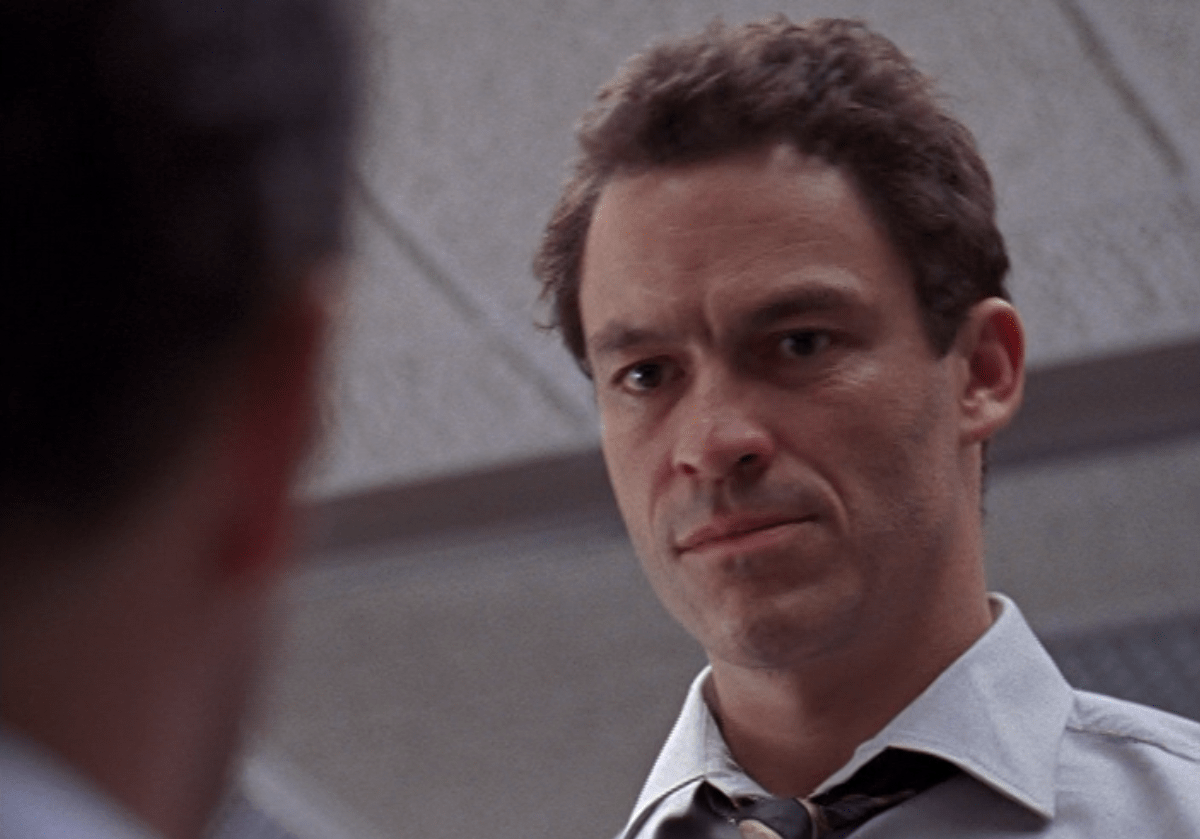
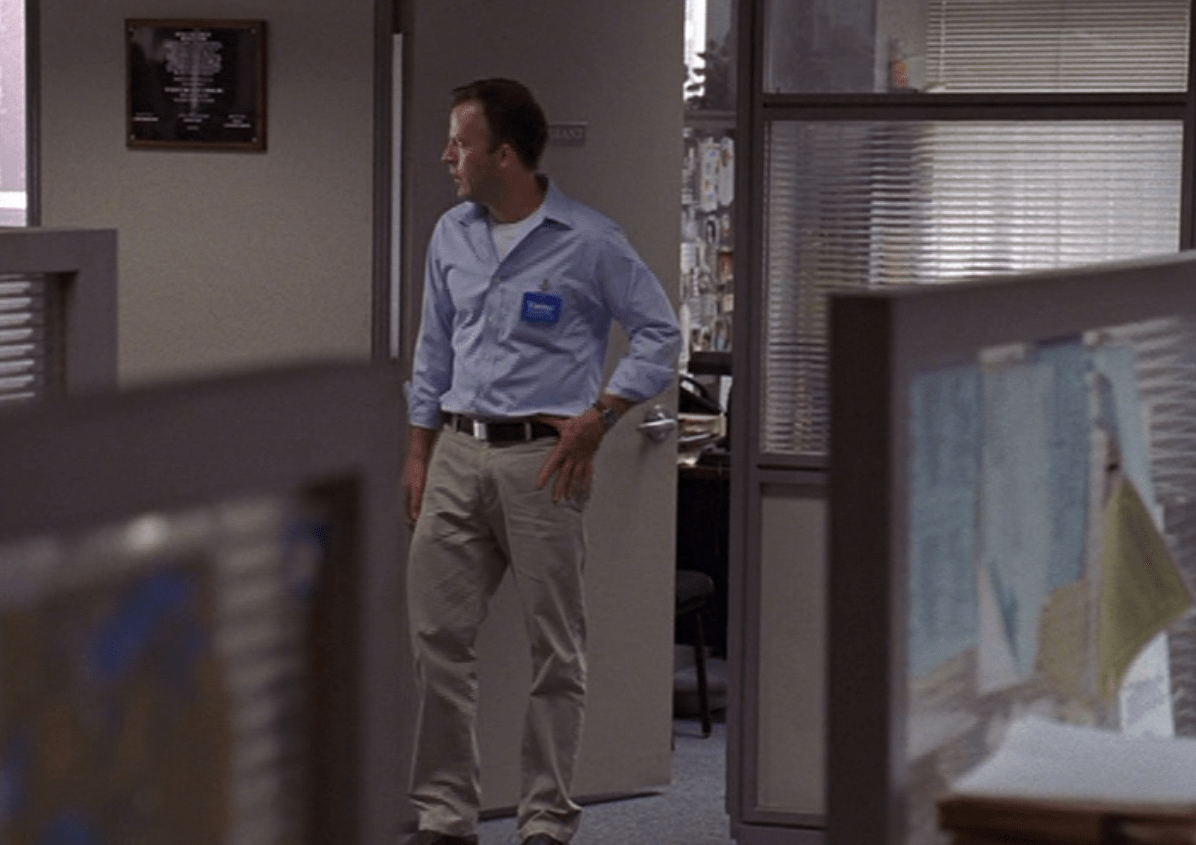
Here, McNulty denounces the unscrupulous ambition of Templeton, fabricating sources and stories to McNulty’s original falsehood of the serial-killer targeting Baltimore’s homeless. During his chastisement, McNulty confesses his own deceit in order to reveal Templeton’s. It is a concise, powerful rebuke critiquing two liars: one, a detective desiring to solve an ongoing but buried murder investigation, and the other, an ambitious journalist wishing to ascended beyond his self-perceived lowly station. Pride and ambition coalesce. In their entwined exploitation of an original lie, McNulty and Templeton’s selfish machinations emboldens them both with the power of resources and the power of fame, respectively. It is an irony which highlights the varying reasons for someone to break the chain of command, be it through exasperation or ego. But it is McNulty’s self-denouncement as a ‘fucking joke’ that evidences his own self-hatred. After everything McNulty has done in pursuit of a career case, bolstering his ego and pride along the way, he now sees the great irony of it all: to solve a crime, he has had to invent one. By the end of the scene, one is attempting to absolve himself while the other is left reeling from humiliation, but still resolved to continue his pretence all the same. And this is the central defining point of the detective: by The Wire’s end, McNulty is left seeking atonement. For the years that he has pursued either Barksdale or Stanfield, he now seeks only to amend. And, with his final words of ‘Let’s go home’, perhaps he can with a new tribe: his family.
2. Cedric Daniels (Lance Reddick)
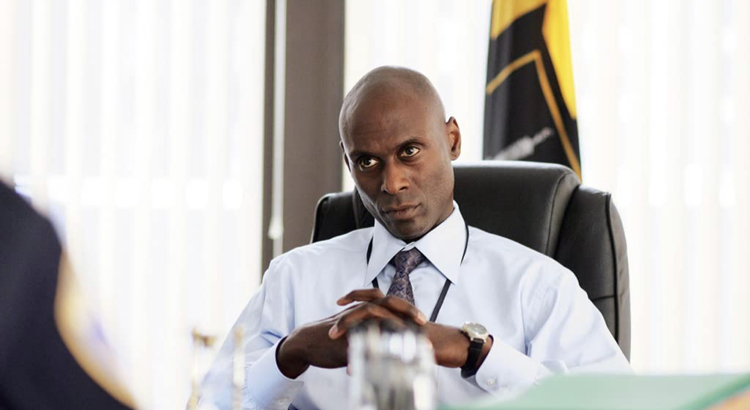
— ‘Bend too far, and you’re already broken’ (-30-, season five, episode ten)
If this was a ranked list designed around identifying The Wire’s ‘most important’ players, rather than a list of the simple musings of its writer, then Cedric Daniels would take first place. As noted, to watch The Wire once is to do its narratives a disservice. To a first-time viewer, Daniels can be easily misjudged due to McNulty’s contempt for any boss, and Daniels is exactly that, a boss. Typically, with McNulty serving as our map-reader for the course through the BPD, anyone foul of McNulty’s judgement then runs the risk of running afoul of ours. And to McNulty, Daniels is initially ineffective and, possibly, even corrupt — purportedly, according to FBI agent Fitzhugh (Doug Olear), Daniels made near on $200,000 in liquid assists from his time at the Eastern District. Further, Daniels is shown to be ignorant of the case at hand: he is, after all, completely unaware of Avon Barksdale despite being a lieutenant within the Narcotics Department. This fact shows more so the proficiency of the Barksdale organisation, but the point still stands.
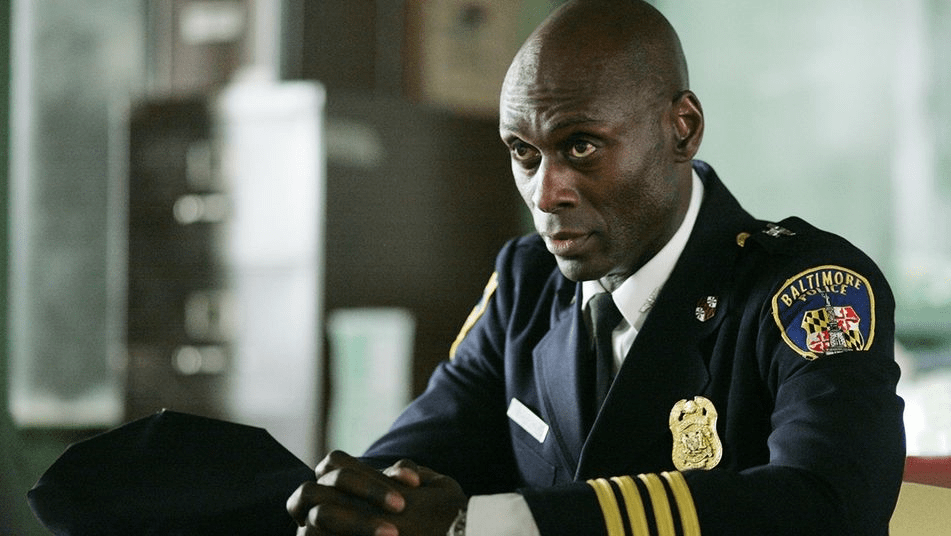
Further, Daniels is, initially, shown to be something of an aspiring careerist: incurring the ere of Judge Phelan — as a result of McNulty’s clandestine meetings — Deputy Commissioner Burrell wants a show: enough work to satisfy the judge so as not to ‘go public’ (The Detail, season one, episode 2) in expressing his concerns for the safety of state-witnesses. Daniels is explicitly instructed to work quickly, arresting whoever they need to with ‘strip-rips’ tactics: in Daniels’s own words, ‘quick and dirty’ and ‘fast and clean and simple’ (The Target, season one, episode 1). As an intermediary between the Deputy and his detectives, Daniels is initially short-sighted and naïve: ignorant of the complexity of the case before him. However, his reticence to enact a sprawling investigation is clear; in conference with his politically-aspiring wife Marla Daniels (Maria Broom), she advises him to follow orders:
Cedric Daniels: I always heard it that you can’t win if you don’t play.
Marla Daniels: The department puts you on a case it doesn’t want. You’re given people that are useless or untrustworthy.
Cedric Daniels: Correct.
Marla Daniels: If you push too hard and any shit hits the fan, you’ll be blamed for it.
Cedric Daniels: Correct.
Marla Daniels: If you don’t push hard enough and there’s no arrest, you’ll be blamed for that, too.
Cedric Daniels: Correct.
Marla Daniel: The game is rigged. But you cannot lose if you do not play–
Here, is the perfect summation of Daniels’s predicament: neither approach is winnable, and, before long, Daniels is working the case with the wire, pushing ‘too hard’. And it is as the case expands that Daniels is shown to be not only politically agile but also adaptable and fair. His tight-rope act is one that is continuous, and it is through Daniels that The Wire explores the ruthless machinations of the BPD and City Hall. Beginning as a lieutenant — leading the MCU before then serving as Western District Commander — he then is elevated to the rank of colonel — becoming Deputy and then Commissioner of operations. And, due to his shrewd intelligence, his ascension is one fairly bloodless, as he retains the respect of his detectives and the attention of a certain Mayor elect. Even to Valchek, Daniels earns an appropriate sobriquet: ‘the anointed’ (New Day, season four, episode 11). A fair title, considering Daniels has risen from a lieutenant to ‘full bird’ in little more than a year.
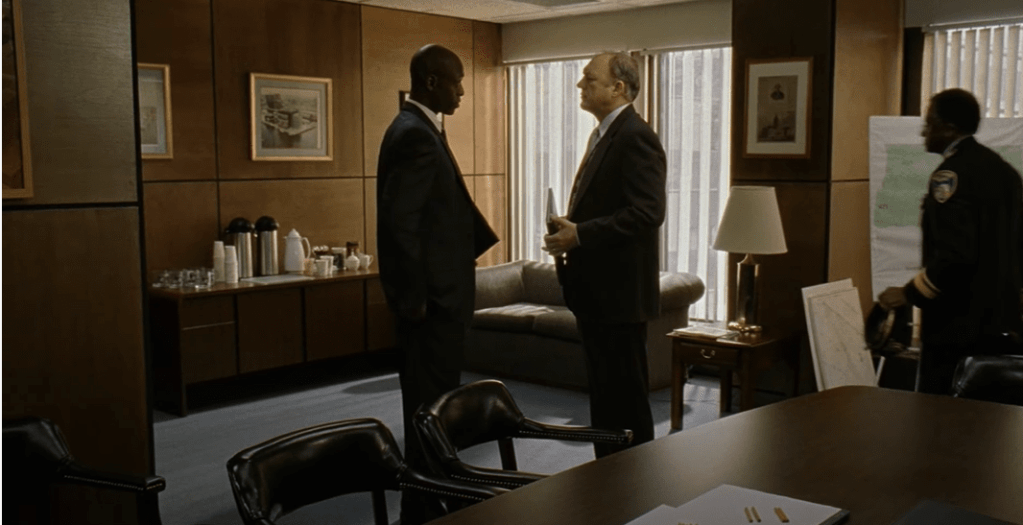
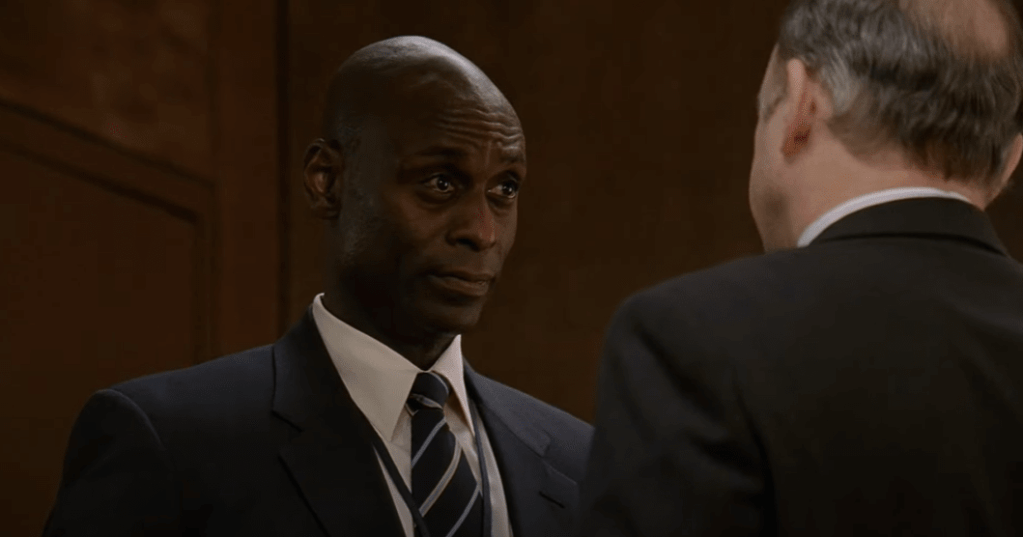
Above all else, Daniels understands the complexities of governance: in one exchange between Daniels and Rawls following the discovery of Stanfield’s missing bodies, the former educates the Deputy on how to spin the find:
Cedric Daniels: My feeling is that City Hall should be brought into the loop. We pull the bodies now before New Year’s, and the stats go to Royce’s last year in office. Matter of fact, it gives Carcetti an advantage with regards to next year’s crime rate.
William Rawls: You mean–
Cedric Daniels: Tell the mayor that now is the time to empty those houses, not next year, when it’s on his watch and he has to eat the stats.
William Rawls: Colonel, I see you’ve thought this through, politically, I mean.
Cedric Daniels: I’m learning as I go.
William Rawls: I bet you fuckin’ are. Colonel, keep this conversation close. That’s a direct order.–
It is with such machinations that Daniels not only shows his loyalty but also how he reads a situation and plans for his advantage. There is something of an exaggeration in Daniels simply dismissing the notion that he is calculated: hardly is he ‘learning’ with each step, especially when you consider how both he and Marla, when together, approached the tangled issue of the Barksdale investigation. To survive the Chain of Command, one must understand the benefit of an action to the situations of those higher than them. And Daniels is both wise and adeptly equipped to devise such ‘political’ stratagems.
However, this is not to say that Daniels is constantly looking for the next rung upon the ladder. Typically, Daniels’s priority is for the care of those close to him or to those in his charge. To Carver, Daniels’s educates the young detective upon his approach to leadership — delineating that Carver will be the standard by which his detectives will measure themselves by — and even permits Carver to return to the MCU after his disloyalty during the Barksdale investigation, serving as Burrell’s ‘little bird’ (Cleaning Up, season one, episode 12). Later, despite McNulty’s penchant for betraying those senior to him, Daniels remains sure of the detective’s uses as an investigator. For Pryzbylewski, Daniels soothes the bitter fury of the detective’s father-in-law, Valchek, after he punches the cantankerous commissioner (Storm Warnings, season two, episode 10). Later, after Pryzbylewski shoots an undercover officer, it is Daniels who, as his commanding officer, instructs Pryzbylewski to get a lawyer. Regardless of his rank, Daniels remains fair, and, ultimately, leaves the police department in consideration for those around him. Indeed, by the time of his return to the courtroom as a criminal defence attorney, Daniels leaves with his conscience intact. His final act: to award promotions to several sergeants, one being Ellis Carver. By the end, he has seen his protégé heed his lesson and follow his example.
Defining Scene(s): Cleaning Up, season one, episode 12 & -30-, season five, episode ten
The investigation into Daniels by the FBI is one that overshadows his career. While Daniels’s actions are never fully disclosed, the dossier of the investigation serves as Burrell’s means of blackmail against his lieutenant. For Burrell, the dossier is an axe over Daniels to be honed and readied whenever he sees fit. And, while demanding that the Barksdale investigation is ‘done’, Burrell plays his hand. The ‘FBI field reports’ documenting Daniels’s alleged corruption during his ‘wild’ days within the DEU (Drug Enforcement Unit). However, Daniels, in a masterstroke of political wrangling, blunts Burrell’s edge:
Cedric Daniels: The money is part of my case. There might have been a time I was willing to say otherwise, to let your friends hide some of that dirt, but not now.
Ervin Burrell: You want to talk about dirt? Have at it. Talk about your Eastern district days. Talk about what was going on when you ran wild in the DEU.
Cedric Daniels: That’s just talk.
Ervin Burrell: Just talk? (Removing dossier from his desk draw). FBI Field Reports. You came into a lot of money, quick. And you can go to jail just as quick if I start asking the right questions. This case ends, or you are done. Hell, I don’t even need you to lock up Barksdale. I’ll have your major debrief your detectives and type the warrants himself. This case is done.
Cedric Daniels: You do what you feel. You wanna pull Avon in on half a case? You go ahead. You wanna put my shit in the street? Feel free. But the Eastern had a lot of stories. Mine ain’t the only one. A lot of people came through that district. If you were gonna do me, I’d already be done. But there ain’t nothing you fear more than a bad headline now, is there? You’d rather live in shit than let the world see you work a shovel. You can order warrants, and I’ll serve them. But as long as I have days left on those dead wires, this case goes on.
As Daniels leaves, he gives Burrell a perfunctory, half-hearted salute: owing to his rank, Burrell receives it as customary, but the blackmail threatened by the Deputy makes a mockery of his station. As does Daniels’s limp show of custom. The salute perfectly encapsulates Daniels’s judgement of his superior: he serves Burrell, but he does not respect him. Again, the fear of the press and the fear of upsetting a politician — Senator Clay Davis — directs Burrell into closing Daniels’s case. It is corruption, plain and true. And, with the threat of finishing the career of Daniels for his ‘friends’, he underestimates his opponent: Daniels can talk, too. And, hearing Daniels’s pin-point critique, the lieutenant has a stay of execution, even if he is looked over for promotion.
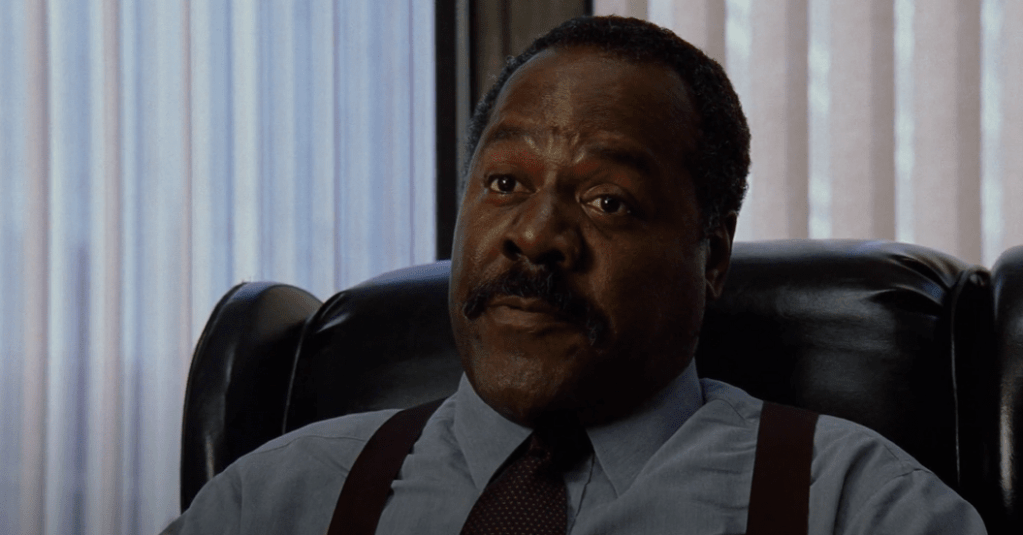
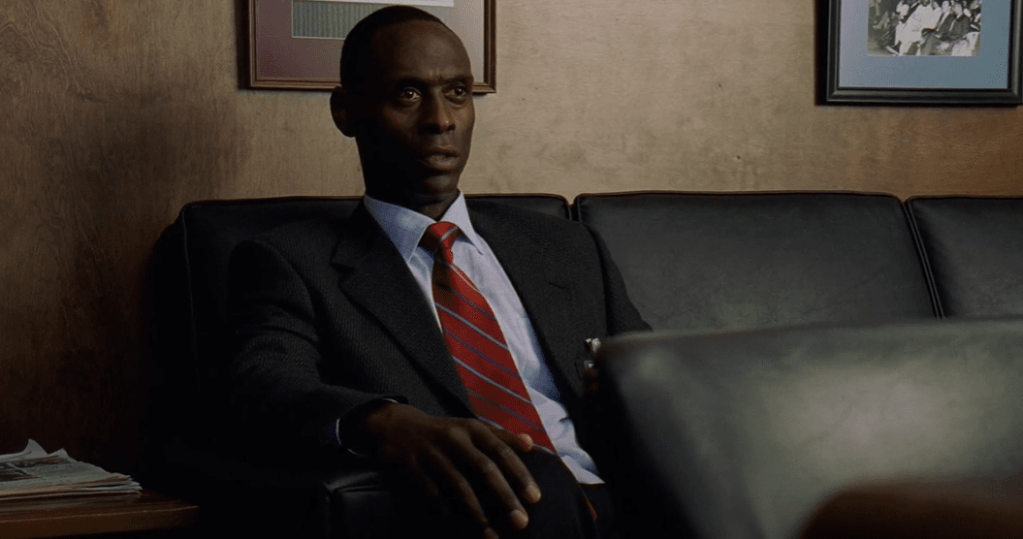
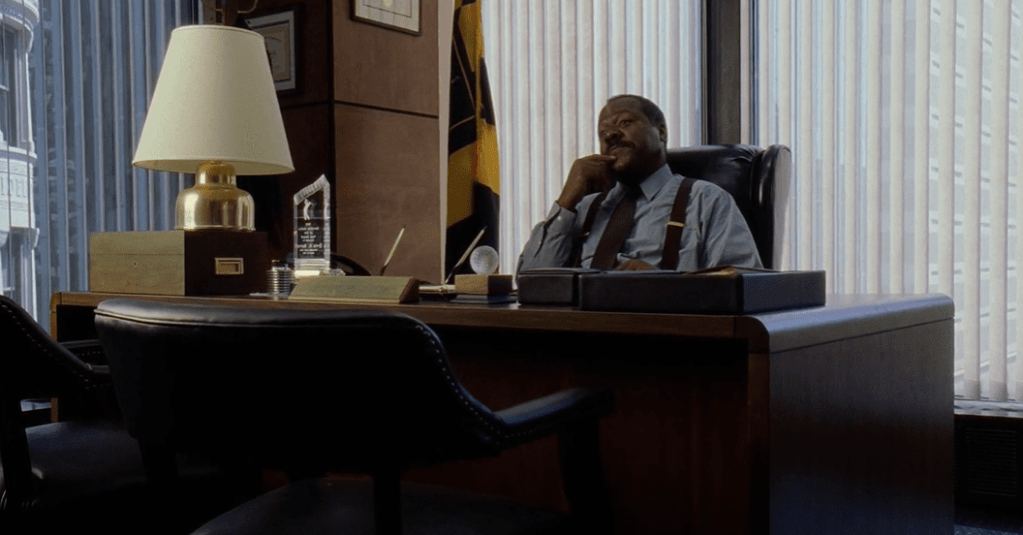
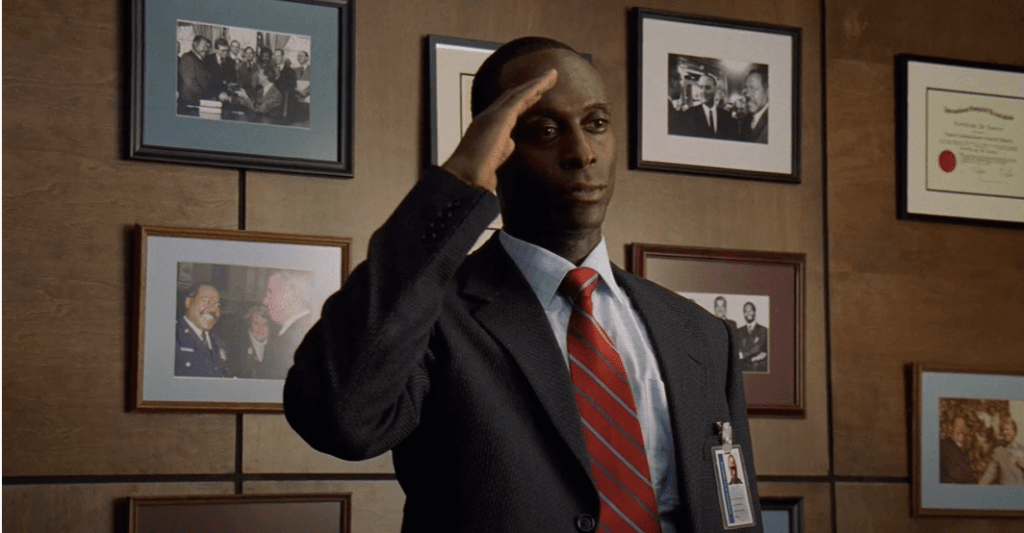
Later, however, the dossier is once again exhumed by a vindictive Burrell. Now the new commissioner, Daniels is already disenfranchised with his station and is ultimately exhausted by the rampant corruption proliferating the corridors of both the BPD and the Mayor’s office. Carcetti’s electoral promises are, typically, meaningless as, once again, the police are forced to adhere to ‘the numbers game’: to ‘juke the stats’ at the behest of Mayor Campbell. The dossier becomes again the honed axe above him; but, rather than risk the careers of those close to him, Daniels simply resigns. It is a quiet exit, but it is one which does not remove the strength of Daniels’s character. He, unlike the commissioner before him, leaves on his terms.
1. Lester Freamon (Clarke Peters)
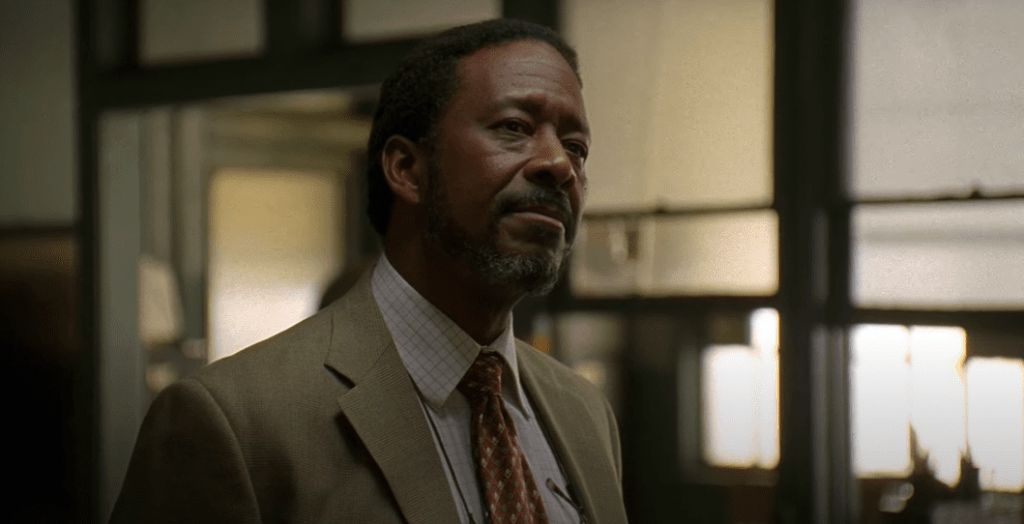
— It’s a discipline (Old Cases, season one, episode 4)
With his doll-house miniatures, the ‘brash, tweedy impertinence’ of his wears, and his history — ‘thirteen years, and four months’ long — of being buried within the Pawn Shop Unit, McNulty can hardly be blamed for writing-off Detective Lester Freamon. But, here, beneath his unassuming aspect is a wonderfully intelligent man, capable not only of being ‘natural police’ (Old Cases, season one, episode 4) but also one who has navigated the machinations of a ruthless organisation without falling into despondency or self-loathing — unlike some other ‘natural’ of the job. Initially an outcast due to his stalwart dedication to ‘police work’ (Old Cases, season one, episode 4) — he incurred the ere of the then Deputy of Operations Muller by involving the son of ‘newspaper man’ to testify at trial after being instructed the exclude him altogether — Freamon’s involvement within all Major Crimes’ investigations is revelatory.
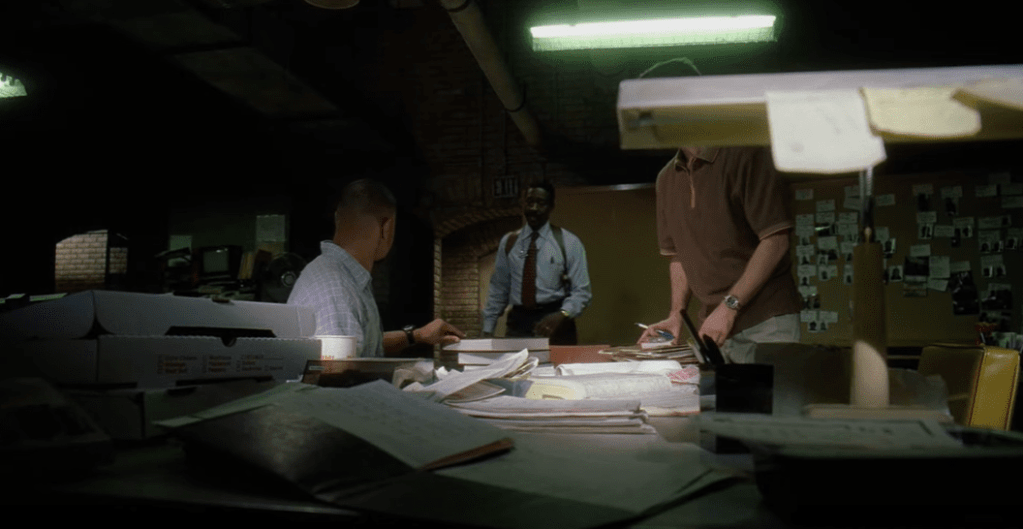
Freamon’s approach is simply methodical. Defined by his willing ability to approach any case with the same level of determination and commitment, Freamon understands what is required to ‘start from scratch’ (The Wire, season 1, episode 6) to build a case. To Freamon, ‘all the pieces matter’ — an adage so synonymous with The Wire that Johnathan Abrams’ bestselling account of the seminal programme took it as its title. Truthfully, this point is best evidenced with a simple observation: Freamon is forever by a desk, be it when monitoring the wire’s incoming calls all when filing paperwork. Unlike most detectives looking depleted and exhausted with an ever-mounting stack of documents before them, Freamon is at home under such pressures. In one notable exchange, Freamon patiently tutors detectives Leander Sydnor (Corey Parker Robinson) and Roland ‘Prez’ Pryzbylewski (Jim True-Frost) upon how to follow the money: he draws both officers into a new world, away from ‘drugs and drug-dealers’, and into political corruption: even when Freamon, himself, arrives at the desk of the board of elections requesting ‘campaign and finance reports’ the sheer volume of the paperwork is welcomed! He, being told that ‘it’ll be a couple hundred pages’ is intrigued rather than over-faced: simply saying, ‘really, I’ll take all of it’ (Game Day, season one, episode 9). And ‘all of it’ is Freamon’s boon!
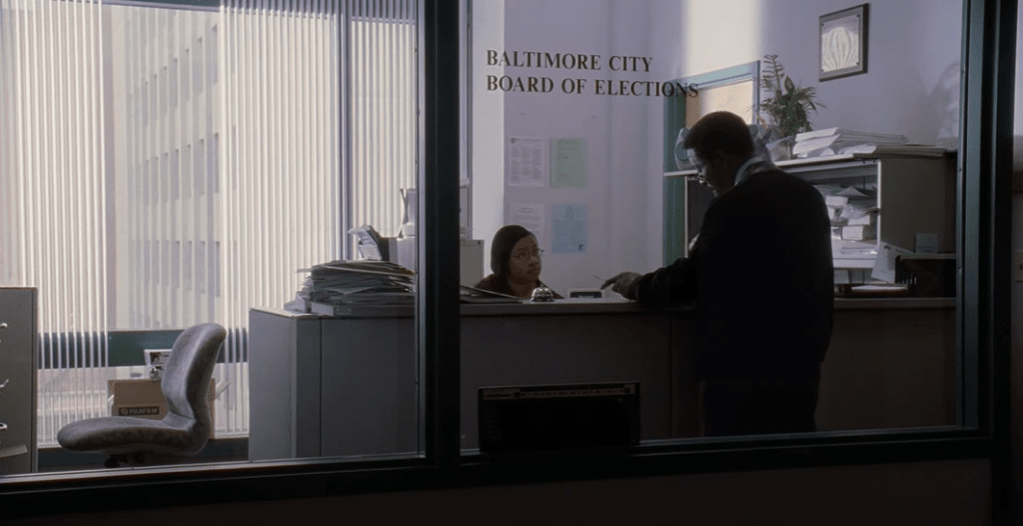
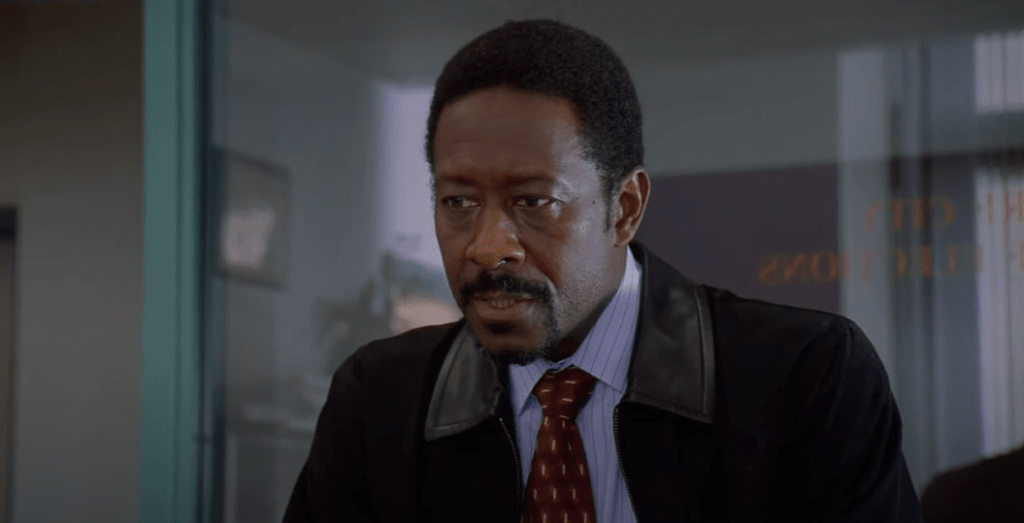
The Wire’s study of the varying ‘tribes’ of Baltimore society necessitates repeated viewing. The first time through, the key players and objectives are established: waypoints to guide you through. However, by returning to it, seemingly subsidiary investigations are key to narrative as a whole, none more so than Freamon’s investigation into Senator Clay Davis (Isiah Whitlock, Jr). Following the money through Russell ‘Stringer’ Bell’s (Idris Elba) B&B Enterprises, Freamon, under the authority of the politically astute State Attorney Rupert Bond (Dion Graham), subpoenas Davis and property developer Andy Krawczyk (Michael Willis). The senator’s sensationalizm and grandiose performance in court leads to a defeat for Bond and Rhonda Pearlman (Deirdre Lovejoy). However, Freamon senses an opportunity: before long, the garrulous senator serves the detective as an informant, revealing the corruptions of both a Grand Jury Prosecutor and his client, the unscrupulous lawyer Maurice Levy (Michael Kostroff).
Like McNulty, Freamon is another journeyman: Homicide detective, to the menial duties of the Pawn Shop Unit, before then reaching Major-Crimes, and then, intermittently, flitting between Homicide and the MCU. However, wherever Freamon is stationed, he earns both esteem and regard from his colleagues, even the insidious Deputy Commissioner Rawls. Following Rawls’s scheme to impede Freamon and his wire-tap by assigning the ‘unit-killer’ Charles Marimow (Boris McGiver) to the MCU, the pair hold court. Here, the pair’s mechanisations — Freamon, flying ‘his paper’ in an election year and Rawls’s ‘Trojan Horse’ (Home Rooms, season four, episode 3) — are recognised by both: Rawls’s note that Freamon ‘has a gift for martyrdom’ is a wonderfully apt summation: Freamon has been buried before and he has no issue with being buried again, ever the revenant. Instead, however, Rawls’s threatening both Sydnor and Greggs’s careers and Freamon is, seemingly, defeated. And yet, in recognition for his abilities as an investigator, Freamon is rehomed, rather than reburied: again, he finds himself within Homicide. Even the cunning Rawls cannot fault Freamon’s ingenuity and skill.
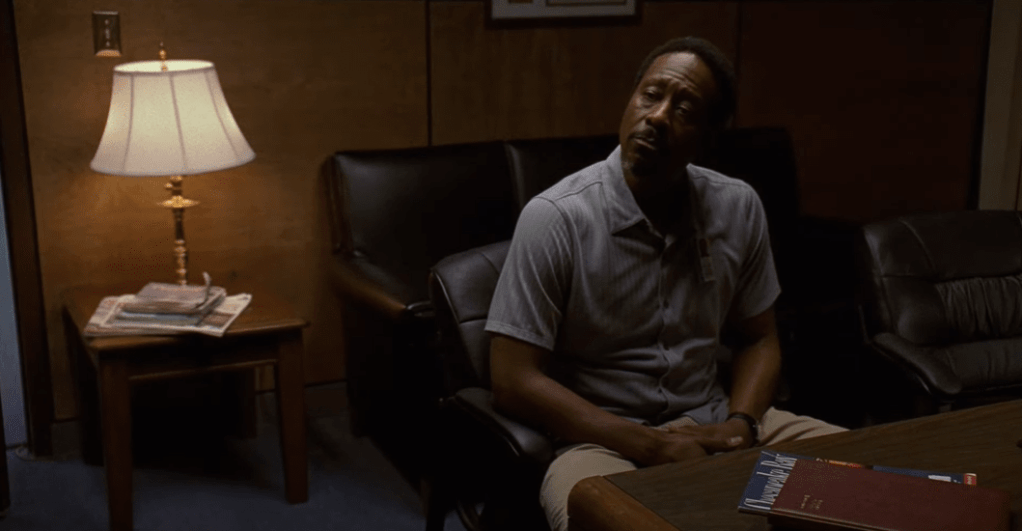
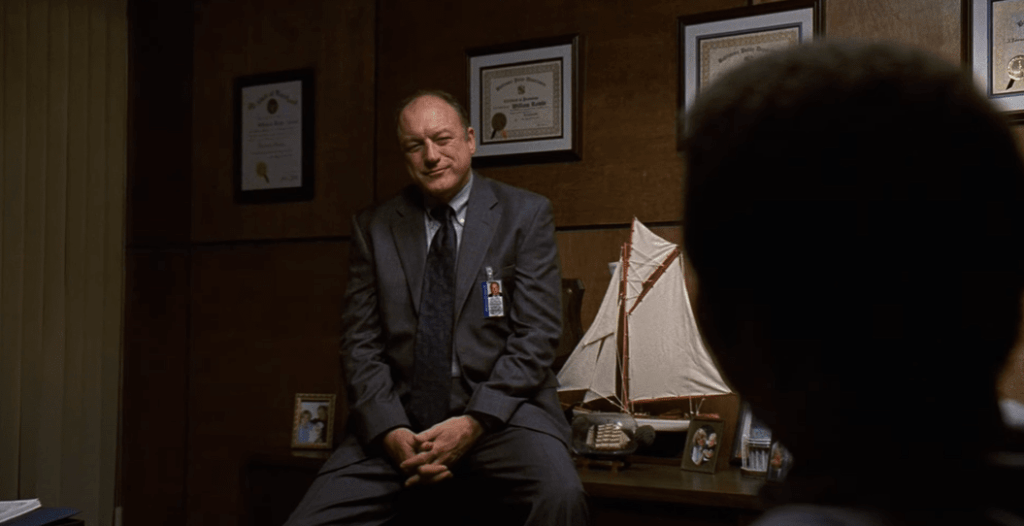
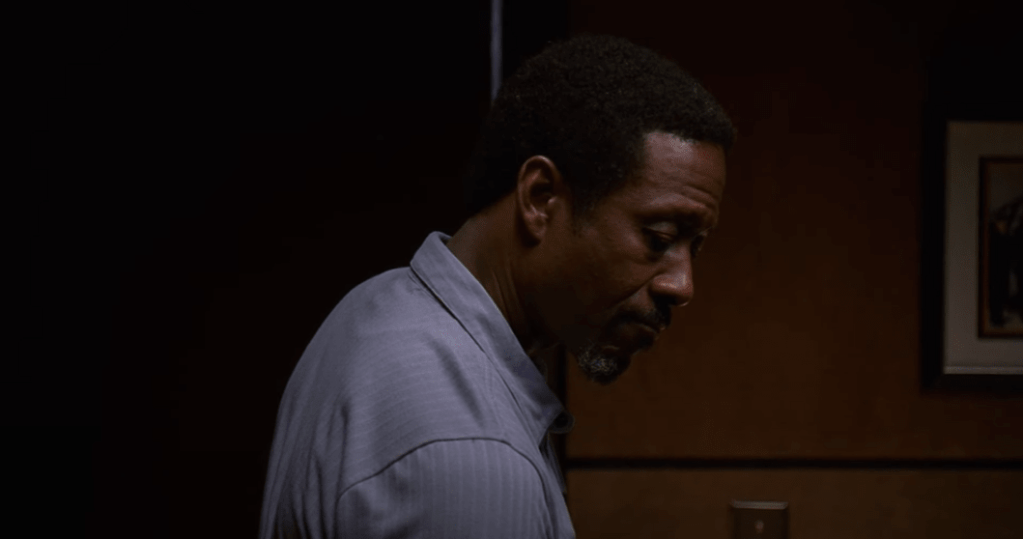
Finally, Freamon serves as McNulty’s co-conspirator of the Baltimore serial-killer. At first, due to Freamon’s typical adherence to the stringent protocols of an investigation, his scheming seems uncharacteristic and even improbable. For instance, Phil Hoad, writing in The Guardian, opines that the serial-killer arc is ‘worst of The Wire’s run’[1], and the critic is not alone. Simply research the season and critics at the time held the consensus that McNulty’s invention damaged the realism of the series’s ‘observational realism’. And yet, now, the headline grabbing nature of society and its dependency upon ‘click-bait’ is beautifully prophesied here. Forewarned by Simon. To Moreland, Freamon’s ‘wisdom’ (Not for Attribution, season five, episode 3) is what the stubborn and unlawful McNulty needs to hear.
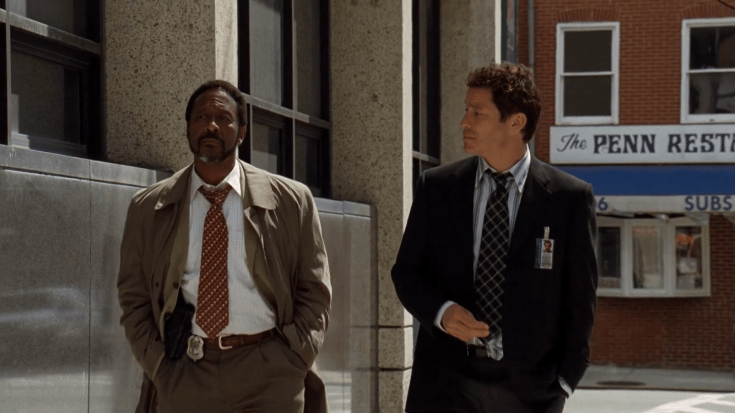
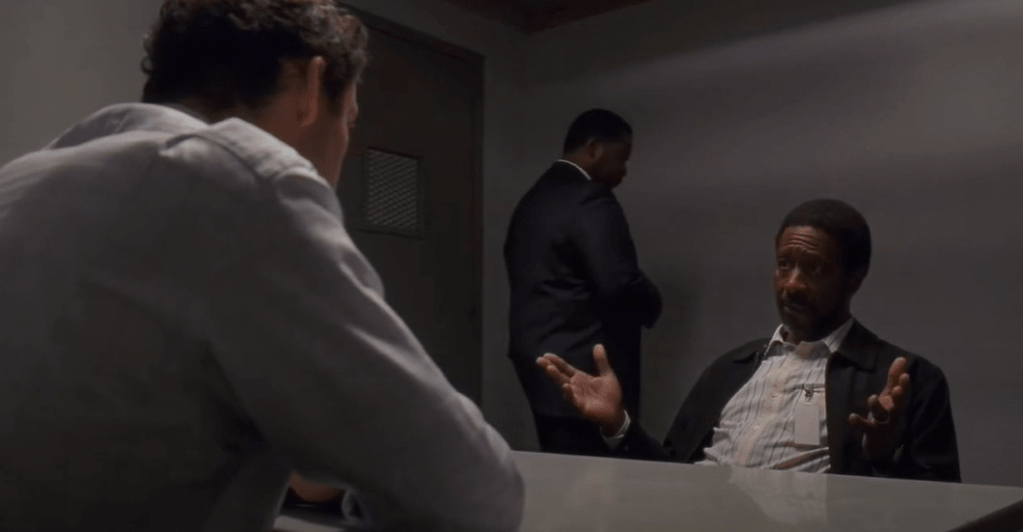
Instead, only encouragement comes from Freamon: his advice is not to stop, but rather to ‘sensationalise’ the crimes. However, within the context of the MCU, Freamon is desperate: he needs a few weeks, that’s all, to catch Stanfield. Above all else, Freamon has endured the inner-workings of the BPD and its adherence to political movers for nearly over thirty-years: now, Freamon needs time and resources, and McNulty, with his desperate-scheme, can be his benefactor! Freamon’s inclusion makes perfect sense: who better to fabricate a crime than a ‘natural police’! The wider ramifications of false-hoods are eventually faced, but not before Freamon has what he wants.
His complicity with McNulty brings a something of a tarnish to Freamon’s career. But, it is of no matter. Unlike his peers — Rawls and Burrell — Freamon was no careerist: as long as the work was done, then it was enough. Even in fabricating a case, Freamon was attentive to the details. And above all else, both Avon Barksdale (Wood Harris) and Marlo Stanfield’s (Jamie Hector) empries eventually fell to his brilliance: after all, ‘all the pieces matter’.
Defining Scene: A New Day, season four, episode 11
Without question, Freamon is a natural detective. In search of Curtis ‘Fruit’ Anderson’s (Norman Jackson) remains, Moreland, assigned the case, and Freamon, on a ‘hypothetical’ search for the bodies of Stanfield’s opponents, scour Baltimore together. Checking the morgue, Leakin Park, and the sewer-systems, the pair are at a loss. Freamon, however, remains undeterred: his hypothesis that Stanfield is murdering his opposition and then ‘disappearing’ their remains is enough for him.
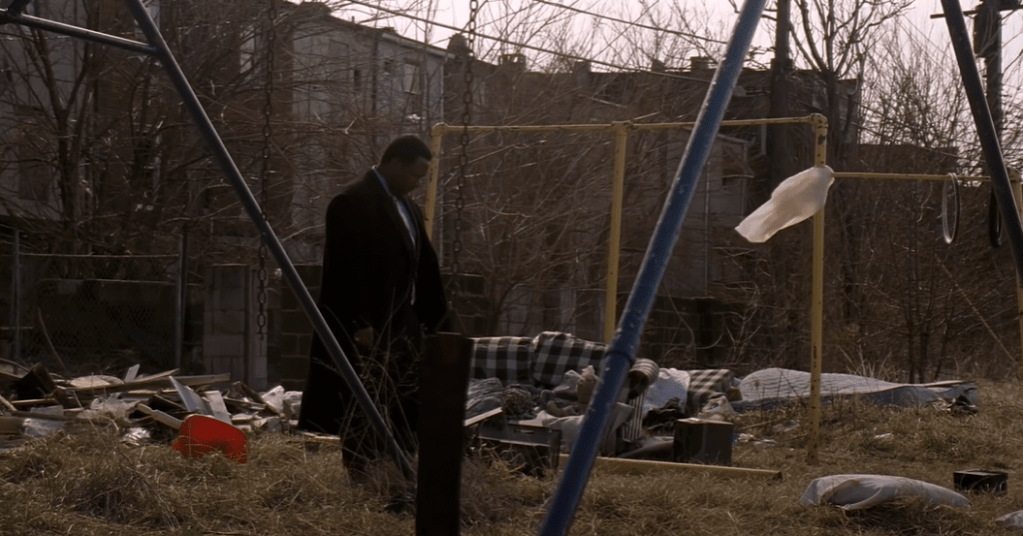
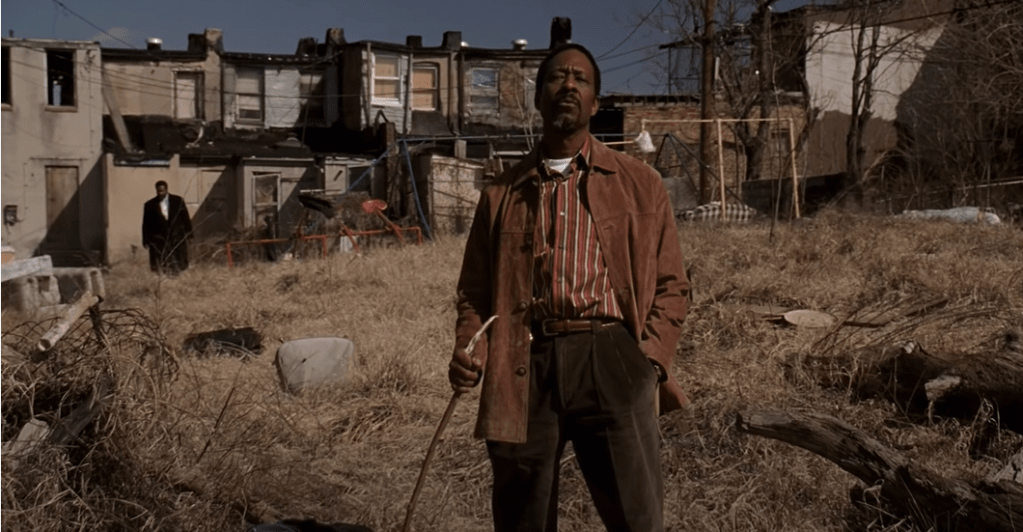
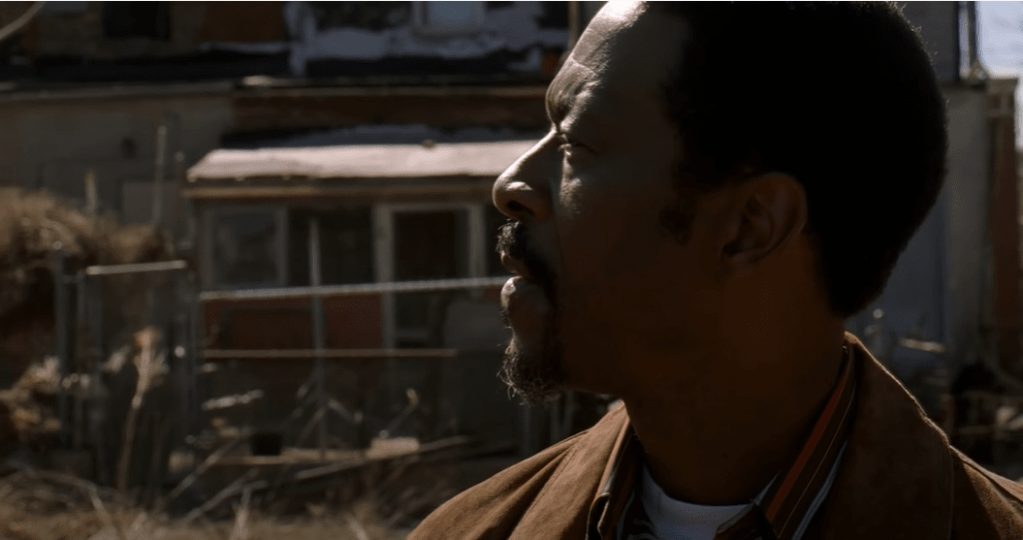
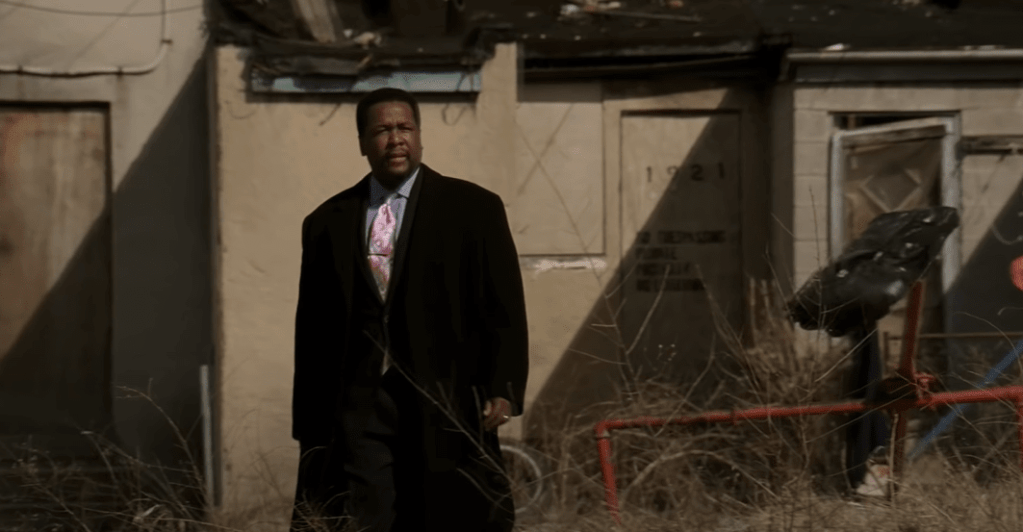
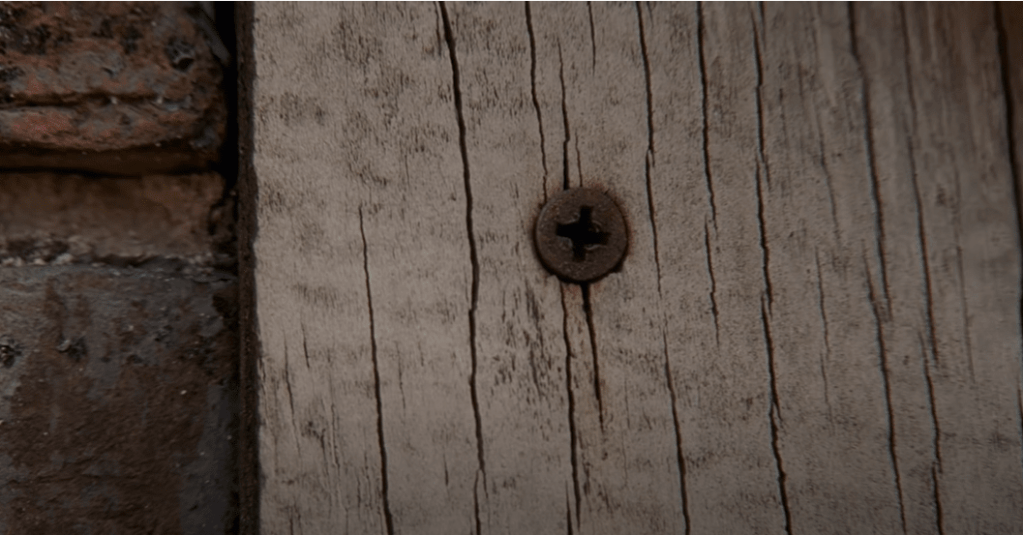

Eventually, Freamon, evidencing ‘soft eyes’ approach to a scene, scans a row of vacant-housing. To the eye, it is a site derelict and condemned. To Freamon, after inspecting the different nails securing the plywood-boards of vacant houses, he sees the truth clear before him: the houses with boards not nailed with screws from H.C.D. are ‘tombs’. Interred within are the decomposing remains of at least twenty-two victims, unidentified ‘John Does’, of the Stanfield organisation. What follows, after Freamon leaves the park, is a reading akin to McNulty and Bunk’s investigation of Deirdre Kresso’s murder — the pair returning to the cold case when investigating the Barksdale organisation. There, as here, little is said between the two detectives.
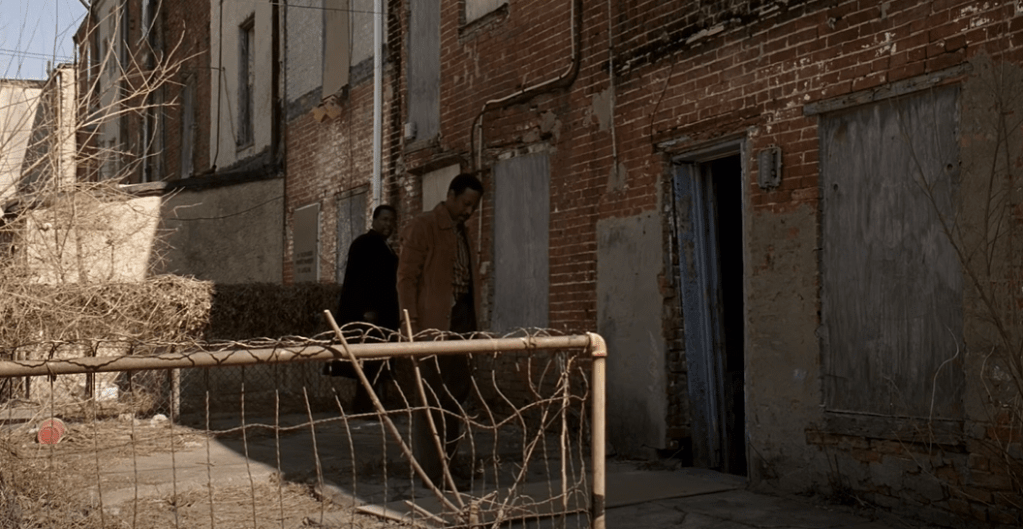
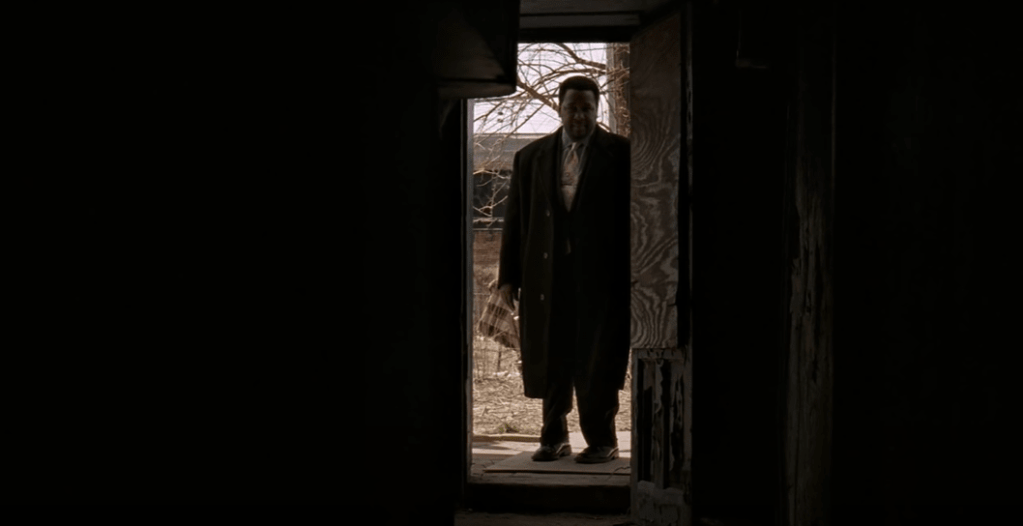
As Freamon and Moreland scour an abandoned park, littered with rubbish and overgrown, the former, looking off to the houses around him, sets off toward one boarded-up building. Moreland, following his partner, is unsure as to what Freamon has seen. Checking three boards, before returning to the second, Freamon simply observes that they will ‘need a crowbar’. Moreland, uncertain still, is lost. Freamon’s read is then given: to the vacant they are stood before, Freamon observes that ‘this is a tomb. Lex is in there’. Without needing to see a crime-scene, Freamon is so sure, so certain, that he needs not to say more. He has found what he and Moreland have searched the city and its outskirts for. However, as Freamon’s discovery is processed by Moreland, the latter may only watch as his partner leaves the scene. In a striking sign, Freamon is, quite literally, ten steps ahead of his fellow-partner, who trails slowly away from the house, partly in disbelief at what has just happened, but also, reeling from the scale of the what faces the department.
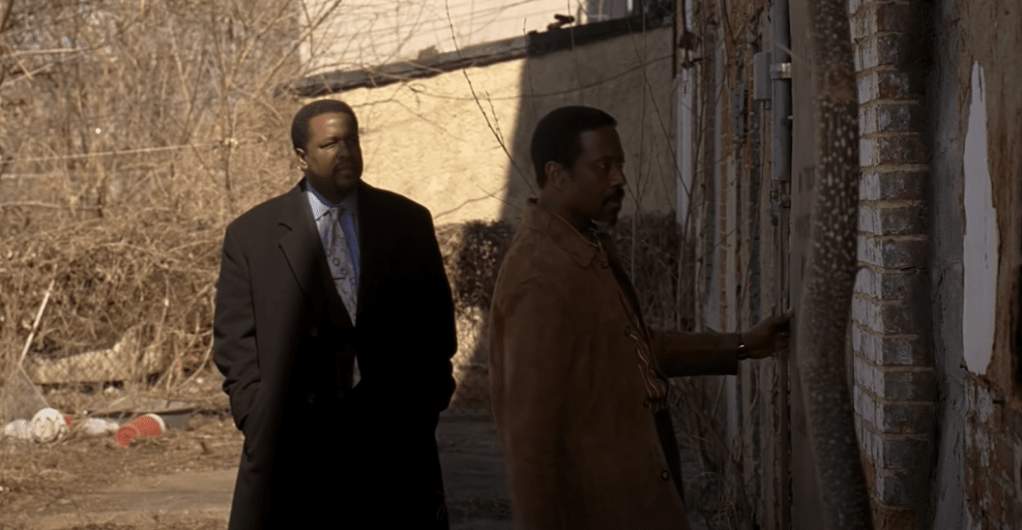
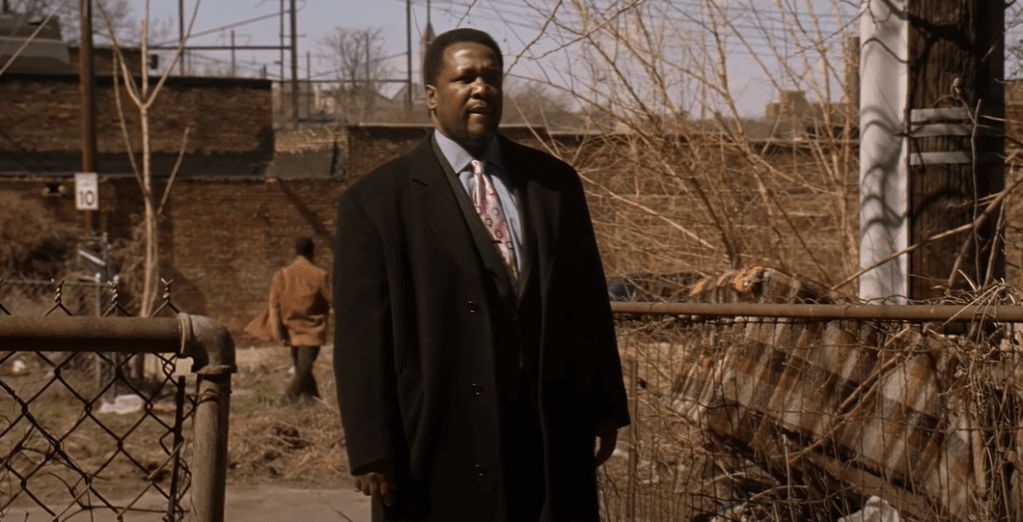
For Freamon, his silence says everything. Walking along with a stick, he looks to be some prospector, stabbing the ground in search of his fortune. And then, once outside the buildings, his attention to the boards and then individual nails beautifully presents how Freamon works: his canvas, city-wide, just moments before is drawn to a single building, and then to a few screw-heads securing the boards into place. Later, when Landsman finds the pair following Freamon’s ‘experiment’ (That Got His Own, season four, episode 12), Freamon is admonished for ‘putting red on the board voluntarily’, and therefore subsequently jeopardising the department’s already poor clearance-rate. However, Freamon’s experiment is, as ever, wonderfully right. As Daniels clarifies with Rawls, ‘Lester Freamon is not in the habit of selling woof-tickets’ (That Got His Own, season four, episode 12).
[1] https://www.theguardian.com/tv-and-radio/2017/aug/14/when-good-tv-goes-bad-how-the-wire-lost-its-spark
 Words on Pages
Leave a comment