The Long Take, or A Way to Lose More Slowly Robin Robertson’s first foray into the novel form is a blistering account of one man’s itinerant journeys throughout post-war America, from 1946 to 1953. The novel’s speaker is the wandering Walker, a veteran of The North Novas, whose harrowing experiences within ‘Normandy, then Belgium, Holland’... Continue Reading →
The Little Drummer Girl: Martin Kurtz
Martin Kurtz is as much a beguiling director as he is a ruthless spymaster, and within John le Carré’s tenth novel, The Little Drummer Girl, the seemingly disparate professions undertake a coalescence through the ‘theatre of the real’: the title given to the performance enacted by an undercover spy. The central narrative of The Little... Continue Reading →
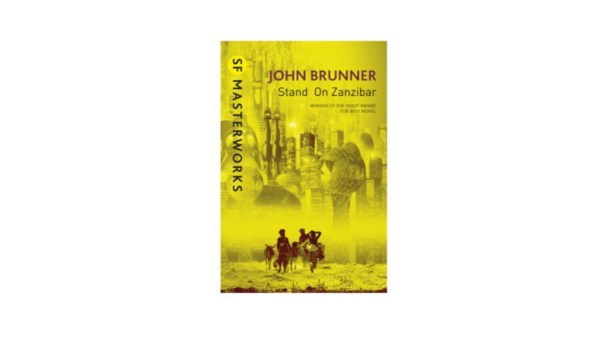
Our chaotic present in John Brunner’s overlooked Stand on Zanzibar (1968)
Picture an overcrowded, technology addicted world where war looms between the United States and a reclusive communist country in the Far East. In the US, Cannabis has been legalised and commodified according to strain and strength, while smoking tobacco is unheard of; entertainment is personalised, living space at a premium, and people live in fear... Continue Reading →
Philip Jennings: My Father — I Want to Ask You
Throughout the six-series of Joe Weisberg’s cold-war spy drama, The Americans, Philip Jennings, a KGB agent for the Soviet Union’s ‘illegals’ programme, is, at once, a committed husband, a devoted father and a proficient spy. Indeed, it is through the potent coalescence of these three titles that Philip’s resolve is challenged and he is subsequently... Continue Reading →
Philip Jennings: Rififi
Within the spy genre, regardless of medium, the theme of identity is an intrinsic aspect to the profile of an operative. For Philip Jennings, as portrayed by Cardiff-born actor Matthew Rhys, the co-protagonist of Joe Weisberg seminal FX spy-series, The Americans, the subject of identity, and its malleability, is a defining characteristic that has shaped... Continue Reading →
William Stoner: A Character Study
An Analysis of John Edward Williams’s Authorial Craft Stoner, John Edward Williams’s third novel, is, in essence, a eulogy: an ode to one man’s quiet life. The titular character of the novel is an academic whose familial origins stem from a ‘small farm in central Missouri near the village of Booneville, some forty miles from... Continue Reading →