True History of the Kelly Gang From the title alone, Victoria-born writer Peter Carey’s seminal novel is casting a false trail; the act of documenting the ‘truth’, the fact, of the Kelly Gang’s origins and then the clan’s eventual downfall is left to the titular outlaw as he delineates his life to his then unborn... Continue Reading →
Shakespeare’s Tragedies
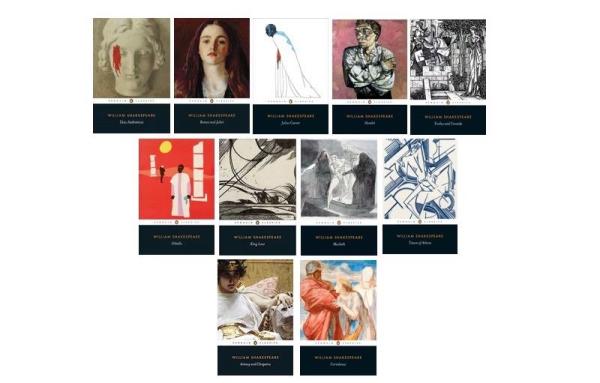
Of the thirty-seven plays attributed to William Shakespeare, eleven have been identified as his ‘tragedies’. Typically with these works, and while an amalgam of multiple genres and tropes, Shakespeare centres these eleven narratives upon an ambitious, often self-reflective, protagonist who is beset with an unavoidable fault or an overpowering hamartia. Their course is plagued by... Continue Reading →
Recommended Read: The Long Take, or A Way to Lose More Slowly
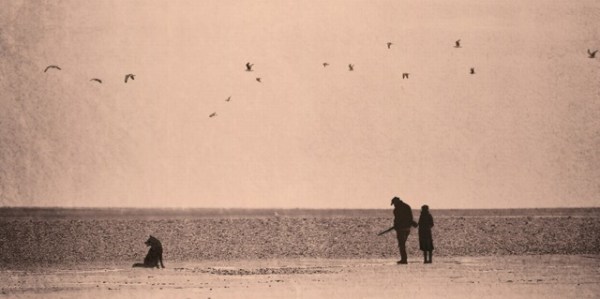
The Long Take, or A Way to Lose More Slowly Robin Robertson’s first foray into the novel form is a blistering account of one man’s itinerant journeys throughout post-war America, from 1946 to 1953. The novel’s speaker is the wandering Walker, a veteran of The North Novas, whose harrowing experiences within ‘Normandy, then Belgium, Holland’... Continue Reading →
Recommended Read: Warlight
Warlight: Michael Ondaatje Michael Ondaatje’s seventh novel, Warlight, is a work of reflection, of finding and constructing a version of the past from fleeting and often incomplete memories. It is an undertaking that the novel’s narrator, Nathaniel, a twenty-eight year old archivist within the Foreign Office of the British intelligence service, cannot help but commit... Continue Reading →
The Little Drummer Girl: Martin Kurtz
Martin Kurtz is as much a beguiling director as he is a ruthless spymaster, and within John le Carré’s tenth novel, The Little Drummer Girl, the seemingly disparate professions undertake a coalescence through the ‘theatre of the real’: the title given to the performance enacted by an undercover spy. The central narrative of The Little... Continue Reading →
Our chaotic present in John Brunner’s overlooked Stand on Zanzibar (1968)
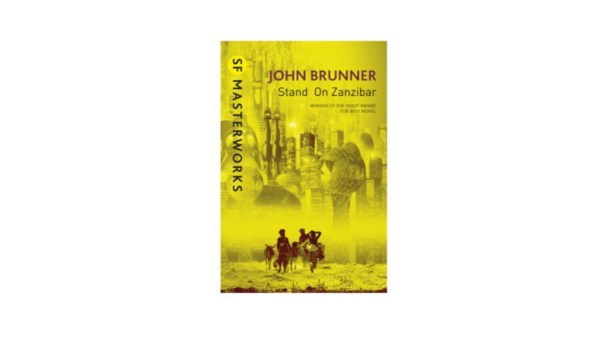
Picture an overcrowded, technology addicted world where war looms between the United States and a reclusive communist country in the Far East. In the US, Cannabis has been legalised and commodified according to strain and strength, while smoking tobacco is unheard of; entertainment is personalised, living space at a premium, and people live in fear... Continue Reading →
Iron & Wine: A Letter for the Archive
Since The Creek Drank the Cradle [2002], Samuel Beam, under the assumed title of Iron & Wine, has released a further five studio albums, the sophomore Our Endless Numbered Days [2004]; the experimental The Shepherd’s Dog [2007]; the pop-induced Kiss Each Other Clean [2011]; the jazz-centred Ghost on Ghost [2013]; and, most recently, the acoustic-echo... Continue Reading →
Five Reads: Historical Fiction
Here, at the beginning this article, it is necessary to outline the parameters within which ‘historical fiction’ is usually defined by. With ‘historical’ denoting a concern with ‘history or past events’[1] and fiction defined as ‘literature in the form of prose, especially novels, that describes imaginary events and people’[2] there has always been an attention... Continue Reading →
Philip Jennings: My Father — I Want to Ask You
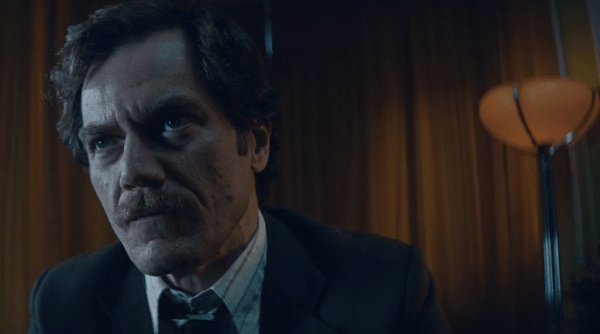
Throughout the six-series of Joe Weisberg’s cold-war spy drama, The Americans, Philip Jennings, a KGB agent for the Soviet Union’s ‘illegals’ programme, is, at once, a committed husband, a devoted father and a proficient spy. Indeed, it is through the potent coalescence of these three titles that Philip’s resolve is challenged and he is subsequently... Continue Reading →
Five Reads: Fictional Families
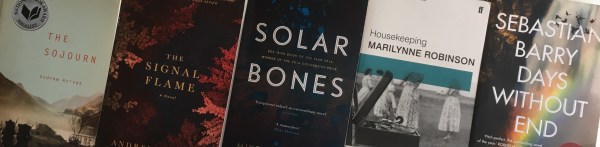
The subject of family has been a principle focus of fiction for centuries and yet our perceptions of the family unit is presently still changing. Below are five recommended reads which centre, either in part or wholly, upon the theme of family, with each of the novels listed below conveying familial unity or discord in... Continue Reading →