
Days Without End is an odyssey: our Odysseus is the Sligo-born Thomas McNulty, a survivor of the Irish famine, whose valiant attempts to endure the formation of America’s western frontier grips and then drags us along his harrowing road towards peace.
The novel, published in 2016, charts the recollections of McNulty as he documents his life alongside his love, John Cole, following his own arrival at the fever-plagued ports of Quebec, Canada. Escaping from starvation, McNulty then enters into a life of ‘soldiering’; initially, McNulty’s service is tethered to his pragmatism: simply put, McNulty was ‘sick of hungering’ (2), having fled the famine which claimed his kin. Subsequently, and alongside Cole, McNulty participates within the violence of the Indian Wars and then, later, the American Civil War: first, as a conscript within the Army’s efforts to exterminate the Native American tribes of the country’s Midwest regions and then as a colonel (144), for the Northern Army’s effort to preserve the Union, respectively.

McNulty, however, despite his ambulatory existence, is an echo of Barry’s preceding protagonists through one uniting attribute: they are all writers, and Thomas McNulty, like his descendants, is drawn to the page. In Barry’s chronicling of the Dunne and McNulty families, the silent voices of these clans echo throughout history: from Annie Dunne’s attempt to preserve the unity of her family (Annie Dunne) to her sister Lilly’s recounting of a youthful voyage to America (On Canaan’s Side); from the institutionalised Roseanne McNulty penning her life with a ‘beautiful biro full of blue ink’ (The Secret Scripture) to the self-exiled Jack McNulty detailing his war experiences and familial guilt (The Temporary Gentleman). Even the correspondences from Private Willie Dunne to his obstinate father and to his love, Gretta Lawlor, record a history: the letters detail the young soldier’s inner-most fears and anxieties surviving a war which he does not fully comprehend. With McNulty, Barry presents an itinerant settled at once in place, and also in his purpose to commit to the page a telling of how he, and his love, John Cole, survived their paired wanderings in order to ‘tell the tale’.
Indeed, while Willie Dunne’s joining of the Royal Dublin Fusiliers is rooted by an issue of self-confidence and insecurity pertaining to his ‘damnable’ height (6), McNulty’s is one born of necessity: for he was ‘sick of hungering’ (2). Having survived the crossing to Canada from Sligo, his family perished to the famine, at the age of thirteen ‘or so’ (29) McNulty arrives at the port of Quebec ‘among the destitute, the ruined’ of his country. Indeed, it is only with stumbling upon John Cole ‘under a hedge in goddamn Missouri’ (3) does McNulty become ‘a human person again’ (30), having deemed himself little more than a ‘human louse’ (29), a member of a race of ‘nothing people’ (148). His fortuitous meeting with Cole leads to a period categorised as their ‘dancing days’ (4), due to their employment under a Mr Titus Noone for his vaudeville dancing show, within the mining town of Daggsville, Missouri. Akin to their later volunteering for the army, the pair, having dismissed the notion of becoming cutthroats through fear of ‘capture and punishment’ (5), take up employment out of necessity, adorning themselves in dresses because they were simply ‘sick of stumbling round’ (5). What follows is a revelation for McNulty: he becomes Thomasina, an identity which he will intermittently return to, and find comfort as, over the next forty years. Remaining under Noone’s employment for the following two years, the pair find a calling, but as ‘the bloom’ wears off Thomasina and Joanna they must take up their old names and resume their ambulatory ways. The indifference held by the army for volunteers, as long as you ‘had all your limbs’, works in favour for the couple, with each receiving the rudimentary provisions of a soldier’s itinerary: payment, a horse, a uniform and food. Once enlisted, McNulty and Cole endure an odyssey through a brutal and unsparing frontier which will forever mark both men. 
In the telling of the tale, McNulty’s narrative is that of an ‘eyewitness account’[1] and so is written in ‘the broken mouthed, broken backed, broken hearted English that Thomas has achieved in his mouth’[2]. Throughout, McNulty’s vernacular is at once laced with his Sligo origins and the varied dialects of the plains through which he journeys; therefore, the prose of the account is a coalescence, a ramshackle amalgam, of his past and present, respectively. In writing his account, McNulty, deliberately or not, begins to decipher his own identity. In his flight from Sligo, the traditions and history of a people, their ‘talk, music, Sligo, stories, future, past’ (29) is all deemed worthless by the famine’s reaping. Once he has left Ireland, McNulty, much like the stateless Willie Dunne, anchored to ‘no country’ (A Long Long Way, 286) himself, is helpless to the diminishing of his national identity; that is until he takes to the page. In his talk at Politics and Prose, Barry finds the language of the novel to be rooted within the subject of identity as McNulty seeks, rather beautifully put, his ‘citizenship in the syntax’[3], as though by telling his story, its author may define his nationality. Within chapter three, when distilling his arrival into the ports of Quebec, McNulty writes as though purging himself of the trauma witnessed aboard the boats:
I crept onto one of those ships in the darkness. I am telling this best I can. It’s long ago, before America. I was among the destitute, the ruined and the starving for six weeks. Many went overboard, that’s how it was.
The captain hisself he died of fever, when we reached Canada we were a ship without a steward. Into the fever sheds with us and that’s where hundreds died. I’m just writing all this down. The point is, we were nothing. No one wanted us. Canada was a-feared of us. We were a plague. We were only rats of people. Hunger takes away what you are. Everything we were was just nothing then. Talk, music, Sligo, stories, future, past, it was all turned to something very like the shit of animals. When I met John Cole that’s who I was, a human louse, even evil people shunned me and the good had no use for me. That’s where I started. Gives an idea of the victory meeting John Cole was. First time I felt like a human person again. And that’s enough of that, I say, I don’t want to say no more. Silence.
I only say it because without saying I don’t think anything can be properly understood. How we were able to see slaughter without flinching. Because we were nothing ourselves, to begin with. We knew what to do with nothing, we were at home there. I almost wasn’t able to say, my father died too. I saw his body. Hunger is a sort of fire, a furnace. I loved my father when I was a human person formerly. Then he died and I was hungry and then the ship. Then nothing. Then America. Then John Cole. John Cole was my love, all my love.
At times, as the excerpt evidences, the novel reads as though McNulty is simply transcribing his speech. Most notably here, for instance, the dialectic variation of the pronoun himself to ‘hisself’ embeds McNulty’s voice within the telling of the tale, as though the writer is voicing the prose, which he then follows, before it is recorded upon the page, and is a variant planted intermittently throughout the narrative. Further to this, McNulty’s language is replete with adages, aphoristic remarks which he terms, at the beginning of chapter three, as the ‘old saw[s]’ (28) by which he holds to. At times, therefore, such adages as ‘hunger takes way what you are’ and then ‘hunger is a sort of fire, a furnace’, while conveying McNulty’s suffering, mimics the nature of discourse: by McNulty intermittently transitioning from the principle story-arc of his testimony to an aphoristic or comparative vignette, he echoes the practices of speech, free-flowing an unrestrained in its delivery. It is a precedent which is briefly alluded to with McNulty’s assessment of Winona’s people: how, like the Irish, the Native American tribes did not document their histories, being that ‘their [the Native tribes] record keeping was about as good as [his] own crowd in Ireland’ (107); with such a parallel drawn, it is evident that McNulty himself heard, rather than read, stories and histories. His own tale now being the first to be documented of his kin.
Further to this, the pace by which he recounts certain vignettes and episodes is portrayed, as previously noted, as though he is purging himself of his past, disclosing its horrors as he might in confession. Within the excerpt, he references his torrid process of recollecting and then recording the period: initially, he speaks as though coerced, with the admission ‘I am telling this best I can’, before then noting the aside that ‘I’m just writing all this down’, before reaching the limit of his tolerance to revisit the time, with the definitive ‘I don’t want to say no more’. To ‘say’ rather than to write; the propensity of his antecedents is evidenced here in, rather ironically, his prose. Grammatically, Barry’s inclusion of inconsistencies further add credence to McNulty’s voice, and his hardship in distilling his itinerant childhood: the asyndetic listing of the ‘talk, music, Sligo, stories, future, past’ of his country is collectively dismissed, rapidly lost along the journey. All points having been lost together. At the excerpt’s conclusion, the syndetic list detailing his flight from Ireland, his father ‘died and [he] was hungry and then the ship’, is then affixed with three successive minor sentences of ‘then nothing. Then America. Then John Cole’. Here, the prose is grounded by its sparsity, its speed of delivery and the erroneous grammar conveys the tumultuous years preceding the years of ‘slaughter’ which followed; his elision of the years which preceded his meeting with Cole remain ambiguous, as though too raw to disclose. He may only write what is bearable to, and the elided conclusion evidences his suffering. Within chapter twelve, McNulty’s notes an attribute characteristic of the Irish: a stoic taciturnity in their refusal to ‘talk about such dark matters’ (147) as the famine’s ravaging or the horrors of the crossing. It seems that McNulty, himself, is no different: McNulty’s fragmented prose fully conveys his inability to fully record his flight from Ireland; ultimately, by the successive sequencing of these years, McNulty’s national identity is altogether lost, and by his unwillingness, his inability, to recollect his arrival within America, Barry has perfectly presented an author’s anguish in simply remembering the past. It seems that most of his people are of a similar mind.
Indeed, McNulty’s idiolect reflects his orphaned state: his prose being an amalgam of the varying dialects of the American plains and the lost discourse of his dead kin. Writing for The Guardian, Alex Clark noted the influence of McNulty’s Sligonian antecedents:
The emigrant Thomas rarely sounds exactly Irish, though the odd word bubbles up: “hames”, as in making a hames, or a mess, of something, or “frocken”, a small berry found on Irish mountainsides, gathered up and sold for dye.[4]
As Clark highlights, McNulty himself does not sound Irish, but rather the traces of Sligo dialect are laced throughout his prose. The language of his kin echo faintly through his prose. Subsequently, in the writing of the account, Barry has forefronted the ambiguity of McNulty’s national identity: is McNulty, an emigrant whose life has been bound in service to his adopted country, now a national? Indeed, McNulty’s position within the narrative, at once its author and its subject, establishes the extent of the subjectivity to his tale. As stated by Barry, the novel’s prose is somewhat amorphous: beginning ‘in a certain sentence structure’[5] before transitioning into a more reflective, individual account when isolated and alone for his later trials and tribulations. Barry himself has noted that the novel ‘tries to track the gradual acquiring of American English as it existed in the 1850s and in the 1860s’[6], and that McNulty, even at the conclusion of his account, ‘doesn’t quite get there’[7], as though he is neither fully divested of his origins nor has he fully assimilated through his language. 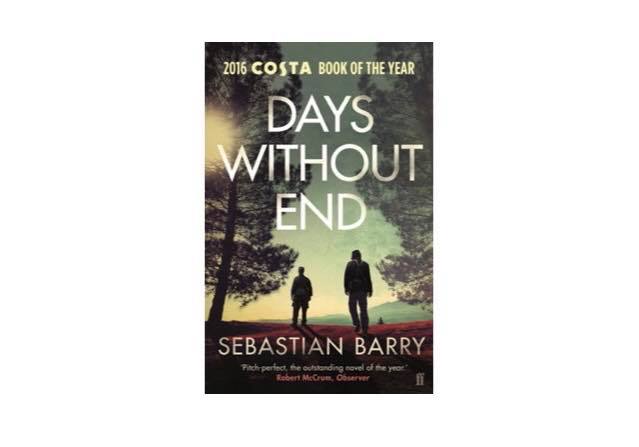
It is during these later years when McNulty asks himself whether or not he may identify as an ‘American’ (274). Ultimately, McNulty doesn’t know, but Barry, however, finds McNulty’s language at this point of the novel to ‘suggest possibly that he is’[8]. Seemingly, by having narrated his history, has McNulty now earned his right to claim himself as an American? McNulty’s prose when detailing the years preceding his first military campaign, his time as a soldier and then his writing of the years succeeding his discharge from D company of the Union army charts an author gradually altering his language, and finding his voice. One noticeable change, following his discharge from the military, is that McNulty, once a member of the collective, then becomes independent from the agendas and demands of the military, and is even hunted by his peers, led by Corporal Poulson, for the crime of desertion. Often, throughout the novel, the sporadic inclusion of the collective pronoun ‘we’ and the singular ‘I’ is utilised for two intentions: first, the variation marks transition point between McNulty’s past, surviving those ‘fearsome days’ (291) and his present ‘self’, now writing his chronicle, respectively, and, secondly, to distinguish McNulty’s perspective from those around him. In reference to the former, within chapter one, McNulty, for instance, is keen to separate his telling of the story from his place within the events as they happened, as he states:
Not that we knew much of that. In these times John Cole was a slight boy as I have laboured to illustrate with his river-black eyes and his lean face as sharp as a hunting dog. I was my younger self.
From the excerpt, McNulty himself is divided, being at once a writer, with him labouring to distil Cole’s aquiline countenance, and his own subject, as his ‘younger self’. It seems from such moments of distinction that McNulty wishes to delineate a simple truth: the author is the ‘eyewitness’ of his own account, but he is no longer the same man at the end of his tale as he was at its beginning. As in the excerpt, McNulty, as is typical of the first chapters, interjects as the teller of the tale, frequently to reiterate the passing of time or to clarify a certain feature of the narrative: here, he notes ‘these times’ and the adjective ‘younger’ when writing of the time eclipsed and stresses the detail Cole’s countenance, respectively. At times, however, the interchangeable presence of collective and singular pronouns does not serve to distinguish McNulty’s past and present self, but rather his position within his own history and the accountability of his actions. McNulty’s intermittent transitions from a single narrative perspective to that of a collective is typically shown when he gives a voice to a group of people: from the paired thoughts and decisions made by himself and John Cole to that of the troop of soldiers alongside himself in war; in such instances, Barry often leaves McNulty’s own thoughts entwined with those of another, inseparable from the larger group. Here, he is subsumed by the collective ‘we’, his involvement in such instances being tethered to that of his companions. At the conclusion of chapter three, McNulty details the deplorable slaughter of a Yurok tribe of women and children:
We saw the shapes of Indians and stabbed them with our bayonets. We worked back and forth through the milling bodies and tried to kill everything that moved in the murk. Two, three, four fell to my thrusts, and I was astonished not to be fired on, astonished at the speed and the horror of the task, and the exhilaration of it, my heart now not racing but burning in my breast like a huge coal. I stabbed and I stabbed. I saw John Cole stabbing, I heard him grunting and cursing. We wanted the enemy stilled and destroyed so that we could live ourselves. Every second I thought I would feel the famous tomahawk split my Irish skull, or the molten bullet pierce my chest. But nothing seemed to happen except our savage grunting and thrusting. We were a-feared to fire our muskets in case of murdering each other. Then all the work seemed done and all we heard then was the crying of survivors, the terrible groaning of the wounded. The smoke cleared and we saw at last something of our battlefield. Then my heart shrank in its nest of ribs. It was just women and children all around us. […] Wearily, wearily, we walked back. The townsmen were standing twenty feet back from the flames. It was still a ferocious turmoil of smoke and fire and resins sparking and spitting like some old painting of hell. The troopers massed together, not talking much yet, watching the flames and watching the townsmen. We didn’t know where we were. We didn’t for those moments know our names. We were different then, we were other people. We were killers, like no other killers that had ever been.
Initially, McNulty recalls the attack as a member of the cavalry, intimating the militaristic approach to the troop’s assault in that ‘we’, they, ‘worked’ through the pack as a unit. From within the din, however, McNulty distils his own perspective: like his fellow soldiers, he, too, works ‘back and forth’ during the attack, the repetition of his confession to having ‘stabbed and […] stabbed’ the shadowed figures of the tribe presents the physicality of the act, as though he is haunted by the rhythm of his charge. Later, once he has come to realise the great threat posed by the tribe was little more than a defenceless nursery, McNulty and his fellow soldiers are bounded and ‘massed’ together as a single collective: at the conclusion of his admission, McNulty, like all of his peers, is lost, debased in his transformation into a killer, a subspecies ‘like no other killers that had ever been’ (38). This being his first engagement with the Indian tribes, McNulty is overawed by the experience, initially ‘astonished’ in equal measure by his luck, a tragic tell-tale in hindsight, and by his propensity for violence. In the wake of the attack, McNulty interjects that, and while not seeking absolution, he stands ‘astonished’ at the sight while ‘others’ wept or rejoiced their actions. Such a personal, individual reading of the scene from McNulty, however, is lost by the chapter’s conclusion: the cavalry seems to become a spectral troop, wraiths who are then ‘dislocated’ from themselves; for the chapter’s final sentences, McNulty coalesces with the soldiers under the collective ‘we’: from this point on, and while McNulty continues to give his own perspective of events, the troop is forever united in their actions against the Yurok tribe: by chapter three’s end, their individuality has been removed by slaughter, as they are ‘massed’ together by their accountability.
Within chapter twelve, Barry’s penchant for portraying a troop of soldiers as a single entity is evidenced once again during McNulty’s service as a corporal for the Union army. However, the ‘native-born soldiers’ are noted for their animosity towards the Irish volunteers, believing the immigrants to be little more than beasts, a race of ‘nothing people’ (148) beyond merit. The rage and ‘anger’ of the Irish brings with it a fear which the Americans, particularly the cantankerous Starling Carlton, deem to be a defining attribute of Ireland’s people. However, during war, with each man amassed within the ‘surge of blue’ (155), the racial distinctions dissipate: the ‘native-born soldiers’ fight alongside Irishmen without issue. During war, nationalistic boundaries are erased, as Barry’s prose deftly realises: due to his previous service under Major Neale, McNulty is entrusted with a position of authority, spearheading a ‘little bunch’ of soldiers against a new enemy: a Confederate force, and a ‘mirror’ of themselves. Here, however, Barry distils the proficiency of an army troop adequately trained with musketry; no longer are the soldiers, McNulty himself included, fearful of friendly fire (37); by comparison, the barbarity of the Yurok slaughter is a distant memory to the survivors. Together, as the forces charge, McNulty again records the repetitive actions of battle, ‘we kneel and load and fire’ and then ‘we load and fire, we load and fire’ (154-155) in order to convey the sheer pace and immediacy of war. The adept precision of the company is distilled through their collective movement, as though, once again, they battle in unison. In contrast, however, the collective ‘we’, here, also conveys their competency, their accomplished ability to fight as one practised body. McNulty’s section of the battery is united, however, not only by their capabilities, but also by their ancestry, with the majority of Union men originating from Ireland, as do the Confederate volunteers, hailing from ‘Irish, English’ (154) descent. Unlike the enemies faced upon the western plains, these men are of McNulty’s ‘kind’ (154), his people. Therefore, once again, McNulty defines himself as another soldier, indistinguishable from those under his command, but now his fellow soldiers are also united by their shared history. The repetition of ‘we’ compounding their entwined national identity further. During such skirmishes, McNulty’s portrayal of battle is one of a united front: all men remain tethered together, regimented, regardless of race. However, their enemy, initially labelled with the sobriquet ‘those Johnny Rebs’, a national personification of the Confederate army, before the name being eventually omitted by McNulty and replaced with the monikers of ‘the Rebs’, ‘the Confederates’ and then ‘the Rebels’, remain separate. Despite the enemy being a ‘mirror’ to his own force, there remains a division between the sides: a shared ancestry with the enemy matters little. During the battle, McNulty once again writes as another body within the mass of the army, another member of the ‘surge of blue’; but here, his position as a soldier is one well established: the attack of the Yurok initiated his merging with the collective and now he records a regimented force victorious against an enemy equal to them. In times of war, the soldiers’ heritages are forgotten, as McNulty and his fellow Irishmen become indistinguishable from the ‘native-born soldiers’ alongside them.
Akin to A Long Long Way, soldiers inhabit a liminal world so wracked with death that the land appears as though pulled from a tale of the underworld. With McNulty narrating vignettes from his ‘fearsome days’ (291) soldiering, Barry exhumes the spirit of Willie Dunne. With McNulty and Dunne, the two men are hollowed by their experiences, even spectral and wraith-like as they near the ends of their services: the former a ‘ghost’ (39) alongside his fellow ‘dislocated’ (39) soldiers in their slaughter of the Native tribes, and the latter a ‘ghost’ and no longer a ‘human person’ (A Long Long Way, 252) having warred through the furrowed fields of Belgium. From chapters four, as an Army soldier, through to the completion of his service in defence of the Union, in chapter sixteen, McNulty is continuously drawing parallels between life and death, as himself and Cole, in their shared experiences of surviving ‘slaughter’ (30), find both states indistinguishable within their liminal standing; from travelling the plains, ‘riding like ghosts through the spectral lands’ (53); furtively hiding their love, ‘slipping about the barracks like ghosts’ (121); to them emaciated ‘like ghosts and ghouls’ (167) by starvation within Andersonville. McNulty’s experiences of warfare forefront such comparisons, and, at times, McNulty’s account is often read as though Death himself, cloaked and hooded, stalks his pages. As a result, McNulty’s ability to survive becomes a defining attribute: his odyssey, with the exception of his ‘dancing days’ and his brief stay at Lige Magan’s Tennessee’s Edenic farmstead, reads as though a testament of equal measure to his endurance and devotion to his love, John Cole. Indeed, in 1851, McNulty is noted for his aptitude for sharpshooting, his ‘beady eye’ (20) distinguishes the young recruit from the ‘three hundred’ strong company. Later, however, McNulty is so appalled by violence that, in what will be his final battle, he does not fire a single bullet. Instead, once he has rescued Winona from the cavalry’s charge, he, while having resumed his title of corporal for a ‘ninety day signing’ (243), separates himself from the ‘body’ of the army (252). Following the slaughter of the Sioux, McNulty is there to bear witness to the eradication of a people:
Seems like it were all the devil that day. Kill them all. Leave nothing alive. Everything was killed. Nothing left to tell the tale. Four hundred and seventy. And when the men were done killing they started to cut. They cut out the cunts of the women and stretched them on their hats. They took the little ball sacks of the boys to be dried into baccy pouches. They severed heads and hacked off limbs so they was not going to no heavenly hunting ground. The troopers came back up the hill lathered in blood and gore. Spattered with tendrils of veins. Happy as demons in the commission of demon’s work. Exultant and shouting to each other. Drenched in a slaughterhouse of glory. Never heard such strange laughter. Big hill-high sky-wide laughter. Clapping of backs. Words so black they were blacker than dried blood. Remorse not a whit. Delight and life perfected. Slaughter most desirable. Vigour and life. Strength and heart’s desire. Culmination of soldiering. Day of righteous reckoning.
And yet in the days going back across the plains there was just deep exhaustion and queer silence. The mules drawing the guns with earnest intent. The mule-skinners herding them on. Troopers who had gathered back their mounts wearily submitting. A gopher-hole tripping up a horse enough to send a trooper falling like a greenhorn. Can’t even eat their grub on the middle stop. Can’t even remember their private prayers. Killing hurts the heart and soils the soul. And Captain Sowell looking as angry as old Zeus and as sick as a poisoned dog. He don’t talk to no one and no one talking to him. The other silent creature be Winona. I keeping her stuck close to me. I don’t trust anyone. What we walked through was the strike-out of her kindred. [262-263]
As previously stated, Barry’s point regarding the novel’s prose beginning ‘in a certain sentence structure’[9] before transitioning into a different style is evidenced here. While the opening sentences retain the clipped, aphoristic prose typical of McNulty’s earlier war writings, he narrates as a witness, abhorred by an act that he himself, almost twenty years earlier, would have enacted. The collective pronoun ‘we’ is omitted; in its place, ‘they’. McNulty’s terse delivery of their actions reads as though a testimony, recording the atrocity in an unflinching, unreserved attestation. The successive adages — ‘Remorse not a whit. Delight and life perfected. Slaughter most desirable. Vigour and life. Strength and heart’s desire. Culmination of soldiering. Day of righteous reckoning’ — is the death kneel, the ‘culmination’ of his years of service. The death of Winona’s kind is inconsequential, trammelled up by maxims of the soldiers’ elation. Now, the collective, the ‘we’, which McNulty assigns himself to is that of his two-member ‘passel’ alongside Winona. The troopers which surround them are suspect, untrustworthy and a threat to him and his cherished ward. But it is here that Days Without End conveys the true confusion of war; behind the slaughter of the Sioux, however, lies the black, savage history of the killers themselves: once the victims of ‘old ancient Cromwell’ (263), cast-out as ‘vermin’ under his cleansing of Ireland, these Irishmen are now the perpetrators of a new cleansing. Such a tragic inversion McNulty finds to be ‘the way of the world’ (264), but it is a world in which McNulty in his rejection of the army’s campaign and Winona may escape if they can reach the sanctuary of Tennessee.
Over the final three chapters — twenty-one through to twenty-three — McNulty introspectively questions his nationality, musing with ‘Am I American’ (274); it is a question posed but one which goes without answer. Having left the army, McNulty’s sole purpose is that of the protection of Winona, ensuring that both he and her return to the uniting figure of their shared lives: John Cole. However, here, upon the return journey eastwards from Wyoming to Tennessee, McNulty’s prose at the novel’s denouement is indicative of his indeterminate identity. Within chapter nineteen, McNulty notes his sense of severance from Ireland; to him, his country is as realised as the ‘shady ghosts’ (248) of his family which intermittently haunt his thoughts. He even finds the town of Sligo, its pronunciation, to be foreign to him, a name ‘even hardly sounded in private thought in a decade of years’ (249), let alone spoken of. To him, Ireland, his ancestors and his history there is mired within death, returning to him only by fleeting moments of ‘clear’ thought. Ireland is now rooted within the past as to be wholly absent from his present. With the exception of the collective pronoun ‘gossoon’ (246) in recollection of his first meeting with the ‘ragged’ (246) countenance of John Cole, McNulty’s prose is absent of Irish dialect. Now, his prose, and as is evidenced throughout, is replete with dialectic Americanisms, all characteristic of the southern states: the pronoun ‘hisself’, the stative verb ‘know’ is often suffixed with an ‘ed’ inflection, the variation in determiners from ‘a’ to ‘an’, the muddling of past and present tense, typified through the incorrect use of the auxiliary verbs ‘is’ and ‘was’. Further to this, these commonalities and trends of McNulty’s language are then coupled with coarse American slang — the compounding of ‘sonofabitch’, for instance, also conveying his dependency upon voice and pronunciation over spelling and grammar accuracy — and a penchant for double negatives. Even though clothed and comforted as Thomasina upon the journey east, McNulty, despite his doubt, may, as Barry himself speculates, label ‘hisself’ an American. His language alone is the testament of his identity; the refracted trace of Irish and his Americanisms coalesce to form McNulty’s discourse: as the past recedes so do his thoughts of Ireland, and, tragically, so does the language of his people as he commits to the page his amalgamated idiolect.
While McNulty’s recollections of war a tormented by the haunting omniscience of Death himself, McNulty may elude the ‘bloody’ booted (42) reaper who has claimed so many of his companions by assuming a new identity as Thomasina; this is not to say that Thomasina is simply a means to escape from war. Instead, it is under his new name that McNulty is reborn as a ‘new person altogether’ (281), and — while having adopted and then abandoned his identity when joining and then leaving, respectively, Mr Noone’s vaudeville dancing show, in 1851, within Daggsville — it is only once he has left the battlefields of Georgia and then later in his flight from Wyoming, does McNulty become and live as Thomasina:
We like mother and child right enough and that’s how it plays. I give thanks for that. Maybe in my deepest soul I believe my own fakery. I suppose I do. I feel a woman more than I ever felt a man, though I were a fighting man most of my days. Got to be thinking them Indians in dresses shown my path. Could gird in men’s britches and go to war. Just a thing that’s in you and you can’t gainsay. Maybe I took the fortune of my sister when all those times ago I saw her dead. Still as a scrap of seaweed. Her thin legs sticking out. Her ragged pinny. I had never seen such things nor suspected there could ever be such suffering. That was true and it will always be true. But maybe she crept into me and made a nest. It’s like a great solace, like great sacks of gold given. My heart beats slowly I do believe. I guess the why is dark as doom but I am just witness to the state of things. I am easy as a woman, taut as a man. All my limbs is broke as a man, and fixed good as a woman. I lie down with the soul of woman and wake with the same. I don’t foresee no time where this ain’t true no more. Maybe I was born a man and growing into a woman. Maybe that boy that John Cole met was but a girl already. He weren’t no girl hisself for sure. This could be mountainous evil. I ain’t read the Book on that. Maybe no hand has ever wrote its truth. I never heard of such a matter unless from us prancers on the stage. In Mr Noone’s hall you just was what you seemed. Acting ain’t no subterfuge-ing trickery. Strange magic changing things. You thinking along some lines and so you become that new thing. I only know as we was tore along, Winona lying on my breast, I was a thorough-going ordinary woman. In my windblown head. Even if my bosom was my army socks stuffed in.
As Thomasina, McNulty finds his true skin: assuming a role akin to a mother of Winona, he may gradually become himself. In the belief that his sister may have ‘crept into’ him, as though her spirit continues to anchor him, nesting within him and forever linking him to his family. Throughout, the presence of family is evident: him now a ‘mother’ to his ward and harbouring the spirit of his kin. Such thoughts are his future and, in one of the fleeting moments of McNulty looking forward, prophetic in his belief that he will forever remain with the ‘soul of a woman’, Barry presents McNulty at peace. Gone are his instructive notes upon how to be a soldier; here, at last, he has eluded, for a time, his past to hopefully reach his future.


Now, with under a month until the publication of Days Without End’s sequel, A Thousand Moons, McNulty’s odyssey of attrition, war, survival and rebirth is succeeding by a new author: Winona, or Ojinjintka. While McNulty’s account of his and Cole survival was a brutal and unrelenting tale, Barry has drawn upon the testimony of the often stoically silent witness of her guardians’ journey to continue the family’s history. As Winona delineates, ‘even when you come out of bloodshed and disaster in the end you have got to learn to live’. While it is true that her adopted family has ‘come out of bloodshed and disaster’, now, it seems, comes the single objective of these survivors: they must now live.
[1] https://www.youtube.com/watch?v=WV0m2kux-2A 25:06
[2] Ibid. 25:31
[3] Ibid. 26:14
[4] https://www.theguardian.com/books/2016/oct/28/days-without-end-by-sebastian-barry-review
[5] https://www.youtube.com/watch?v=WV0m2kux-2A 38:24
[6] https://www.youtube.com/watch?v=WV0m2kux-2A 25:50
[7] https://www.youtube.com/watch?v=WV0m2kux-2A 25:06
 Words on Pages
Leave a comment