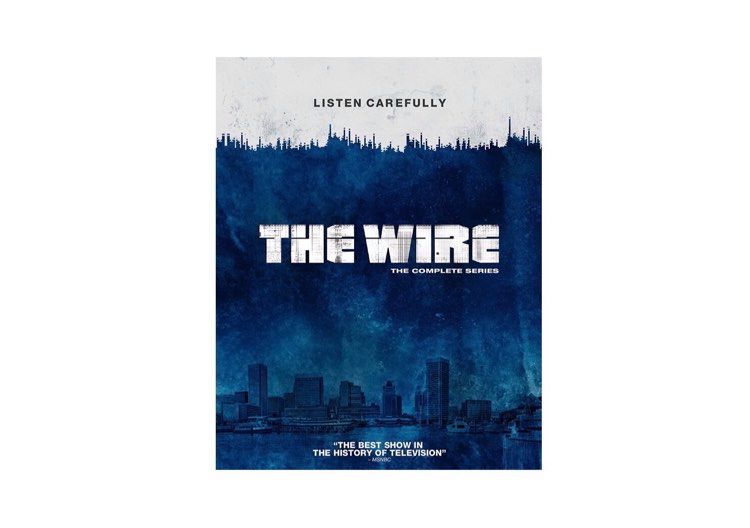
In 2014, David Simon, acclaimed author, screenwriter and producer, stood before an enthralled audience at the London Barbican for The Observer Ideas Festival and delineated the conception by his seminal drama, The Wire. Beyond the disparate ideological assessments levelled at the drama, with a myriad of political, philosophical or societal readings assigned to the work, the kernel of The Wire is its portrayal of ‘self-governance’, of how the collective institutions of a city are interlinked, and threaded together: from the dogged ‘pawn’ drug-dealers of season one to the impoverished middle-school students of Edward J. Tilghman of season four; from the dwindling powers of the Baltimore Stevedores union of season two to the beleaguered city-desk staff of The Baltimore Sun who seek to report with integrity to a dwindling readership of season five; from the police department beset with bureaucratic wrangling to the warring factions of Baltimore’s expansive drug-trade; each collective is intertwined. Indeed, the ‘shared sense’ of societal accountability Simon opined the need for pervades through each and every facet of The Wire’s narrative: if an issue is facing a faction of the listed groups it will either be as a result of or an impending problem for another faction of the list. The matter of governance, either between individuals or collectives, is the lens by which Simon examined the ‘post-industrial city of Baltimore’, his resident city, and by which each character is examined.
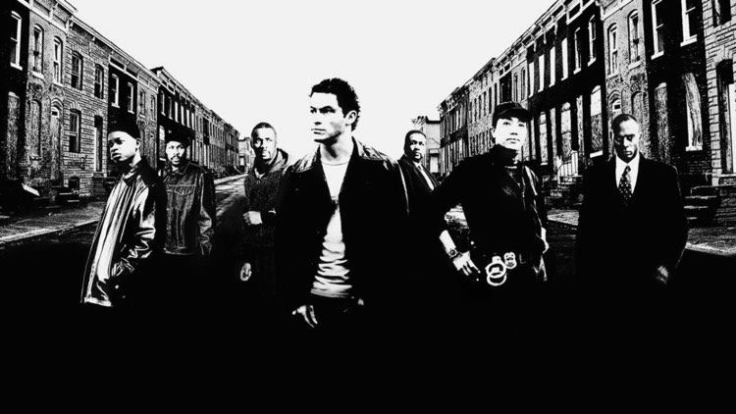
Indeed, while The Wire was a study of political and societal collectives, the piece itself was a product of one, with the drama anchored to the experiences of its creators and principle writers: Simon, an erstwhile city-desk reporter for the Baltimore Sun and acclaimed author of two non-fiction works — the first, Homicide: A Year on the Killing Streets (1991) and the second, co-written with Ed Burns, The Corner: A Year in the Life of an Inner-City Neighbourhood (1997) — and Burns, a veteran of the Vietnam War and former Baltimore homicide detective and public-school teacher turned writer. Under this writing partnership, the pair, though Burns not directly[1], adapted their co-authored work for The Corner, in 2000, for a six-part HBO miniseries; itself a precursor to The Wire in its harrowing depiction of the ruinous effects of the West Baltimore drug-trade through the lives of the Boyd family. Through Simon and Burns’ careers, the sources of The Wire’s sweeping portrayal of the city of Baltimore become evident. In his coverage as a city-desk journalist, reporting issues pertaining to ‘crime, to drug-culture, to schools, to zoning’[2], Simon’s work at The Baltimore Sun, while most pronounced within The Wire’s final season, gives the drama its analytical focus, its investigative quality. Coupled with Ed Burns’s service within the Baltimore Police Department and of the wearying career as a school-teacher and you have a comprehensive overview of a society, and an anchor by which to moor the work’s source. In an interview with Michael Wilson of The New York Times, Burns, speaking upon the pair’s succeeding series Generation Kill (2008), an adaption of Evan Wright’s 2004 book of the same name, recounts the desolate quotidian of an inner-city teacher:
In his first class, 13 of the some 220 students had been shot, two of them twice. “They don’t graduate,” he said. “It’s tough.” He taught for seven gruelling and rewarding years that showed him the flip side of his life as a cop, “being with kids and seeing the problem from a different perspective,” he said, “trying to understand the drug culture, the impact of the drug culture and our responsibility for creating this culture.”
It is an unforgiving reality that The Wire’s fourth season, in its focus upon Edward J. Tilghman middle-school, forefronts through the lives of four perceptive students, each with their own individual hardships, and through the experiences police-officer turned math teacher, Roland “Prez” Pryzbylewski (Jim True-Frost). In truth, Simon and Burns’s trades bring an authentic accuracy to the stories of The Wire. At every point, the pursuit of reality is paramount; the drama is never superfluous in its delivery nor is the drama sensationalistic. Realism is an endeavor constantly striven for and consistently attained. Alongside his duties as head writer, Simon, with Karen L. Thorson, Nina Kostroff Noble, and the late Robert F. Colesberry produced the show, and, under the latter’s tutelage, strove for a ‘documentarian construct’[3] in their portrayal of the city, filming the series in a 4:3 ratio so as to create a naturalistic tone for the drama. Within an essay preceding HBO’s HD remastering of The Wire, Simon deftly spoke of Colesberry’s preference of the 4:3 ‘letterbox’ ratio, and his influence over the drama:
[…] mid-shots became an essential weapon for Bob, and on those rare occasions when he was obliged to leave the set, he would remind me to ensure that the director covered scenes with mid-sized shots that allowed us to effectively keep the story in the wider world, and to resist playing too much of the story in close shots.
Bob further embraced the 4:3 limitation by favouring gentle camera movements and a combination of track shots and hand-held work, implying a documentarian construct. If we weren’t going to be panoramic and omniscient in 4:3, then we were going to approach scenes with a camera that was intelligent and observant, but intimate. Crane shots didn’t often help, and anticipating a movement or a line of dialogue often revealed the filmmaking artifice. Better to have the camera react and acquire, coming late on a line now and then. Better to have the camera in the flow of a housing-project courtyard or squad room, calling less attention to itself as it nonetheless acquired the tale.
In the beginning, we tried to protect for letterbox, but by the end of the second season, our eyes were focused on the story that could be told using 4:3, and we composed our shots to maximize a film style that suggested not the vistas of feature cinematography, but the capture and delicacy of documentarian camerawork. We got fancy at points, and whatever rules we had, we broke them now and again; sometimes the results were a delight, sometimes less so. But by and large, Bob had shaped a template that worked for the dystopian universe of The Wire, a world in which the environment was formidable and constricting, and the field of vision for so many of our characters was limited and even contradictory.
Indeed, with Colesberry’s framing permitting the narrative the ‘intimate’ and personal tether between observer and observed, the scale of Simon’s scope would remain fast to the individual. Due to the reduced ratio, ‘mid-shots’ were utilised, placing the characters and the environments which surround them within the same frame, and became the principle, if not the characteristic, shot synonymous with The Wire. As a result, for the remastering of The Wire, lengthening the frame to a 16:9 widescreen, Simon has been, and while supporting the project, characteristically even-handed in his critique of the rerelease, finding:
There are scenes that clearly improve in HD and in the widescreen format. But there are things that are not improved. And even with our best resizing, touch-ups and manoeuvre, there are some things that are simply not as good. That’s the inevitability: This new version, after all, exists in an aspect ratio that simply wasn’t intended or serviced by the filmmakers when the camera was rolling and the shot was framed.
Personally, having not watched HBO’s remastering, there is a fear of the drama losing that documentarian aspect it has been exalted for. The handheld, intimate quality is a defining attribute of The Wire and to see the alterations, even though undertaken and completed with the guiding ‘notes and concerns’ of Simon and the series’s filmmakers, there is, within me, an apprehension to revisit The Wire through a contemporary reworking. This is written not to malign nor excoriate the release; in truth, I do intend watch the remastered release. The fact that this sizeable challenge, and in complete respect to the original series, has been so expertly undertaken is a feat in and of itself. But it is written, rather, to convey the importance of the 4:3 ratio in understanding how The Wire achieved its naturalistic and vivid dissection of its subject. As Simon has noted, with the characters ‘field of vision’ so limited to their immediate predicaments and tribulations, Colesberry’s approach was one completely dialled-in to his subject matter.
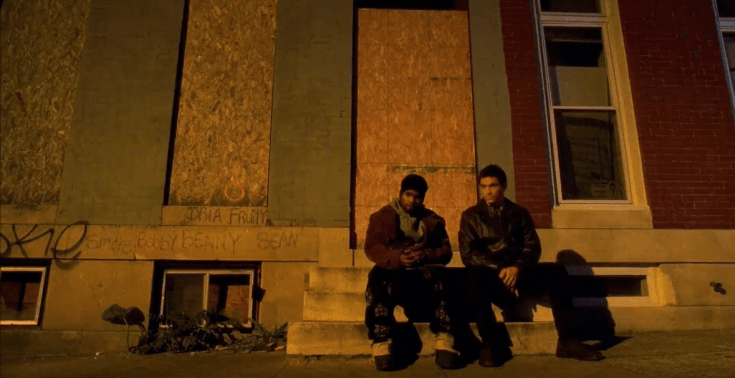
 Beyond the drama’s filmic qualities, the language of The Wire further elevated the drama, with the work of acclaimed crime-novelists George Pelecanos — The Turnaround (2008), The Way Home (2009) and The Man Who Came Uptown (2018) —, Richard Price —Samaritan (2003), Lush Life (2008), The Whites (2015) — and Dennis Lehane — The Kenzie-Gennaro Novels (1994-2010)—, to name a few, featured throughout the series. Working with Simon and Burns, the series’s dialogue was a rare amalgam of true to word dialect and true to word characterisation. Take for instance an excerpt from the opening dialogue of the pilot episode, The Target, teleplay by David Simon, in which the dogged homicide-detective James “Jimmy” McNulty (Dominic West), the series’s pertinacious protagonist, interviews a friend (Kamal Bostic-Smith) of a murdered thief:
McNulty: So, your boy’s name is what?
Witness: Snot.
McNulty: You called a guy “Snot”?
Witness: Snotboogie, yeah.
McNulty: “Snotboogie.” He like the name?
Witness: What?
McNulty: Snotboogie.
The witness shrugs.
McNulty: This kid whose mama went to the trouble of christening him Omar Isaiah Betts? You know, he forgets his jacket so his nose starts running, and some asshole instead of giving him a Kleenex, he calls him Snot. So, he’s “Snot” forever. Doesn’t seem fair.
Witness: Life just be that way, I guess.
McNulty: So, who shot Snot?
Witness: I ain’t going to no court. The motherfucker hadn’t put no cap in him, though.
McNulty: Definitely not.
Witness: He could’ve whopped his ass, like we always whopped his ass.
McNulty: I agree with you.
Witness: He go and kill Snot. Snot been doing the same shit since I don’t know how long. Kill a man over some bullshit. Am saying, every Friday night we are in an alley behind the Cut Rate rollin’ bones, you know, I mean all the boys from around the way. We roll till late.
McNulty: Alley craps game, right?
Witness: Like every time, I mean Snot. He would fade a few shooters. Play it out until the pot’s deep. Snatch and run.
McNulty: What, every time?
Witness: Couldn’t help hisself.
McNulty: Let me understand you: every Friday night, you and your boys would shoot craps, right? And every Friday night, your pal Snotboogie he would wait until there was cash on the ground and grab the money and run away? And you let him do that?
Witness: I mean, we’d catch him and beat his ass, but ain’t nobody never go past that.
McNulty: I gotta ask you: if every time Snotboogie would grab the money and run away, why did you even let him in the game?
Witness: What?
McNulty: Snotboogie always stole the money. Why did you let him play?
Wintess: Got to. This is America, man.
Immediately, within media res of the investigation, a forensic team works before the onlooking pair, Simon introduces the vernacular The Wire, preparing the audience for the nature of discourse depicted throughout the drama. However, the vernacular of the streets, while openly present, is subtly addressed by Simon’s use of McNulty: to begin with, the dialogue between McNulty and the witness is replete with interrogatives as the latter, akin to the audience, begins to find his footing to, firstly, the victim’s identity, and, then, the events of the murder. Addressed first, is the initial obstacle of a nickname is tackled. The Wire’s cast are either identified by a patronymic — police officers McNulty, Bunk, Freamon, Daniels, Greggs, Herc and Carver, to name a few — or by a sobriquet, or nickname, for instance, Reginald “Bubbles” Cousins, Duquan “Duckie” Weems, or Dennis “Cutty” Wise. Here, through McNulty’s puzzlement at Betts’s moniker of “Snotboogie”, Simon is establishing the simple origins of such nicknames, where both Christian and surname are omitted and replaced by a single handle: the origin is left ambiguous, as in “Bubbles”; is a slang term, as in “Duckie”, meaning feces, pertaining to a person’s attributes; or is in reference to a location, as “Cutty”, which relates to the character’s sentencing to fourteen years within Maryland State Penitentiary, known locally as “The Cut”. As the series progresses, such handles are commonplace, and to become attuned to such variation is integral to the drama. The brief anecdote, only surmised by McNulty rather than confirmed by the witness, roots the episodic structuring of McNulty’s investigation: beginning with the deceased’s Christian name, McNulty then pieces together what happened to the victim for him to be bequeathed the cognomen; McNulty then questions the victim’s legacy, how Bett’s being left with the name ‘forever’ seems almost unjust. Once McNulty reaches his purpose, questioning as to ‘who shot Snot?’, the tone of the peaceable exchange shifts to one of indignation through, both, the friend’s aversion to becoming a witness and the contempt he holds towards the cruelty of killing his friend — the dichotomy facing the police at every crime scene, a witness too fearful to testify through terror of reprisal. The colloquial exchange, littered with conversational discourse markers — ‘So’, ‘You know’, ‘Let me understand you’, and ‘I gotta ask you’ — grounds the dialogue alongside the jargon and idioms of the street. Without McNulty’s distillation of the Friday night game, the witness’s references to ‘rollin’ bones’, ‘around the way’, ‘shoot craps’ and ‘shooters’ would be indecipherable to most. At times, McNulty’s frequent use of the conjunction ‘so’ serves as a means to direct the listener, as McNulty goes on to repeat, to translate, the witness’s responses. Simon’s consistent inclusion of tautology within the scene allows the audience to understand the scene, to ease the viewer into the coded language of such exchanges. This is the key by which some, by no means all, of the dialectic variations can be navigated by. To understand The Wire is to listen to it. Over time, the language becomes limpid, the guesswork itself being an integral component of the drama. Ultimately, while the conclusive adage of ‘this is America’ justifies Snotboogie’s inclusion within the dice game, as well as tersely summarising the nature of the street ‘game’, it is McNulty’s rewording of the game’s events which establishes another principle focus of The Wire: the deconstruction and decoding of language.
As is evidenced within the excepted lines, The Wire’s dialogue is a keenly recorded depiction of vernacular variation and the nature of conversation. For instance, the misuse of tense, particularly the interchangeable inclusion of the primary auxiliaries ‘do’ and ‘does’, ‘was’ and ‘were’; the tautological pairings of modal auxiliaries ‘might’ and ‘could’; the shortened adverbial phrase ‘most def’; and the frequent use of double negatives, as in ‘I ain’t going to no court’ from above. It is not that these dialectical variations are inherently specific to The Wire, but the frequency of their use is. Beyond these variations, the jargon of the disparate collectives and spheres is also a prominent attribute of discourse, a feature Margaret Talbot in her article Stealing Life for The New Yorker, in 2007, elucidated:
Viewers of “The Wire” must master a whole argot, though it can take a while, because the words are never defined, just as they wouldn’t be by real people tossing them around. To have “suction” is to have pull with your higher-ups on the police force or in City Hall; a “redball” is a high-profile case with political consequences; to “re-up” is to get more drugs to sell. Drugs are branded with names taken from the latest news cycle: Pandemic, W.M.D., Greenhouse Gas. “The game” is the drug trade, although it emerges during the course of the show as a metaphor for the web of constraints that political and economic institutions impose on the people trapped within them. And, in one memorable neologism, a penis is referred to as a “Charles Dickens.”[4]
As delineated by Talbot, such neologisms, in their repeated use, are gradually inferred rather than immediately revealed. While McNulty serves as the interlocular within The Target, he is not present for every exchange. The deconstruction undertaken by the audience is central to the narrative; frequently, as in One Arrest (season one, episode seven), the detectives of the Barksdale detail explicate an intercept over the wired payphones of the low-rise projects. Beginning with an initial recording — ‘’Low man scrapped, yo. He all the way down. But we going to start fresh on the latest tomorrow, down from up North’ — the detectives are, at first, at a loss to the code, as the caller intended:
Freamon: Listen again.
Caller: ‘Low man scrapped, yo.’
Freamon: “Low man,” meaning the low-rise pit.
Caller: ‘He all the way down.’
Freamon: ls down to scraps on the last package.
Caller: ‘But we going to start fresh on the latest tomorrow down from up North.’
Freamon: Tomorrow, he’ll start fresh on the latest package.
Carver: Damn, how y’all hear it so good?
Eventually, the guesswork becomes definitive. Once segmented, Freamon, with the isolated phrases of ‘low man’, ‘scraps’ and ‘fresh’, may translate the message to the bewildered detectives. The motif of code-breaking, of listening to conversations and discerning its meaning, is not only a challenge facing the detectives. The patience exhibited by Freamon and Pryzbylewski, here, is required when listening to the exchanges between characters. Deciphering such discourse is one of the unique and immersive attributes of The Wire. Indeed, the epigraph of the first season, ‘listen carefully’, is not simply a mantra adhered to by the Barksdale-detail’s detectives.
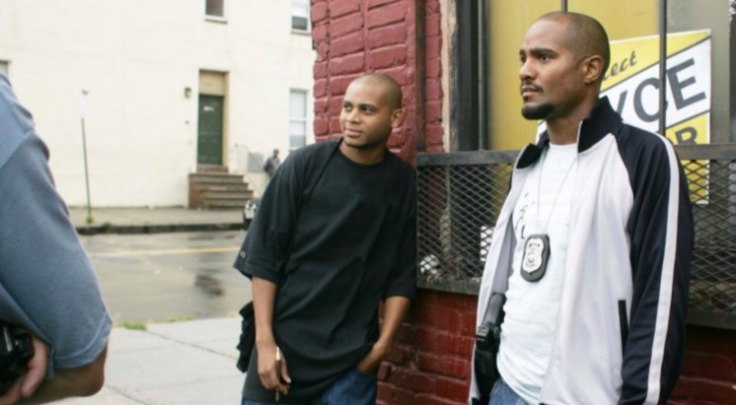
Further to the prevalence of neologisms and ciphers, the adages and aphorisms uttered by these characters serve, as in many instances, as indicators of the tentets of the drug’s trade, or ‘the street’. Often, unspeakable crimes are justified behind the maxim ‘the game is the game’: furthermore, a lengthy incarceration, as served by Dennis “Cutty” Wise, (Time After Time, season three, episode one) is diminished behind the notion that the prisoner only serves ‘two days’, as is reiterated by Roland “Wee-Bey” Brice (Hassan Johnson), ‘the day you go in and the day you come out’. However, the indomitable stick up artist Omar Little’s (Michael K. Williams) adage, called out to a wounded Brice, that if ‘you come at the king, you best not miss’ (Lessons, season one, episode eight) has bled into the lexicon. Its use, referring to the inevitable reprisal and wrath of an avenging ‘king’, with Little assailing both Anton “Stinkum” Artis (Brandon Price) and Brice for the murder and mutilation of his boyfriend, Brandon Wright (Michael Kevin Darnall).
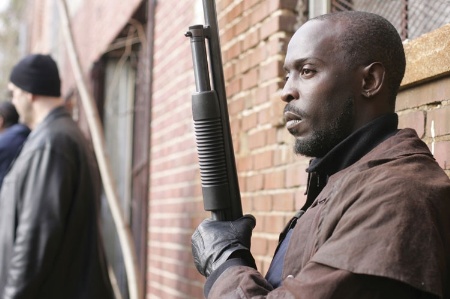
Excised from the context, the epigraph has been most commonly repurposed for sports metaphors — having heard the phrase uttered by Mark Petchey during the 2014 French Open when commentating upon a match played by then four-time and defending champion Rafael Nadal and the challenger’s attempts to outplay the Spaniard. Such epigraphs preface each episode often as means to succinctly encapsulate the narrative of the single episode. Again, these phrases[5] are another facet of the discourse. However, once viewed retrospectively, these excised lines have a broader importance. When reading through the compiled list it is possible to see the holistic thematic threads of each season, as though each excised line, when drawn together, creates a patchwork or overview of the season’s principle focus: from the streets of season one, the dock-workers of season two, the political spheres of season three, the school system of season four, to the news-desks of season five. These epigraphs are typically a means to establish a particular motif, theme or subject that, in some capacity, will impact each and every character. Like a needle to the patchwork, the epigraph interweaves and threads the seemingly disparate narratives together to form the whole.
Principally, and as previously noted, the matter of governance unites all seasons together. As a newspaperman, Simon’s reporting frequently examined the inadequacies of society’s institutions, noting the ‘excess of corruption’ and the ‘excess of hubris’[6] having often dictated the policies of such organisations. For an ‘Under the Influence’ interview for The Criterion Collection, Simon eulogises Stanley Kubrick’s (1957) masterful adaption of Humphrey Cobb’s Paths of Glory, and speaks of the film’s influence upon The Wire. From the film, Simon notes the ‘machinations’ of Brigadier General Paul Mireau (George Macready), jeopardising the lives of his division in his quest for glory, as an evident source of the bureaucratic wranglers of The Wire, with Major General Georges Broulard (Adolphe Menjou) and Brigadier General Mireau ‘weird cousins’ to Commissioner Ervin Burrell (Frankie Faison) and Major William Rawls (John Donman), respectively. Simon’s critical attention to the repercussions of the selfish self-preservation of such functionaries is what he tethers his principle objective to in his examination of how ‘power routes itself through systems’[7]. The machinations of these people are typically what leaves the police department beset under statistics, what reduces the school systems to an underfunded resource and what ultimately leads a newspaper to become sensationalist and unscrupulous. Subsequently, with his heart alongside ‘middle management’ within the chain of command, the principle characters of The Wire are those beleaguered lieutenants and their detectives, brutal gangsters and their underlings, and editors and their aspiring reporters who are confined to the workings of their interlinked systems. As a result, the drama documents the cyclical habits and structures of these stagnant institutions, and how the individual is either subsumed or ostracised by their collective.

One of the most evident instances of mirroring, if you will, is shown through police major Howard “Bunny” Colvin (Robert Wisdom) and detective McNulty’s separate mutinous work, the latter, with the nickname “bushy top”, having served as patrolman under the former. Colvin, in attempt to outmaneuver the debilitating and systemic ‘stats’ game enforced by lickspittles Burrell and Rawls, enacts his own contingency plan: three zones, locally known as “Hamsterdam”, a mispronunciation of the Netherlands’ capital, are set-up within three derelict districts of West Baltimore for dealers and users to conduct their trade with minimal police intervention. It is a scheme which permits community outreach, time for quality policing, and a 14% decreased crime-rate; conversely, the ploy is evidently s short-term solution, a ‘tactical deployment’ without adequate deployment nor an end-goal. His decision to electively ‘ignore’ (Reformation, season three, episode 10) is a course taken out of frustration and exasperation with an ineffective method of policing. As a result, season three’s attention to the construction of “Hamsterdam” encapsulates Simon’s sympathies with middle-management: in a bid to solve a persistent and wide-reaching collective problem, the individual, in this instance the stalwart Colvin, is forced to fall upon their sword, whetted and honed by the very men he served.
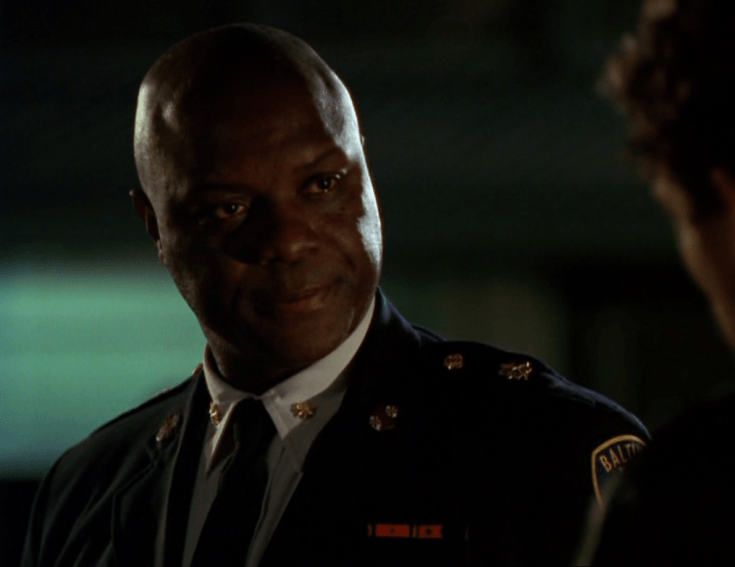
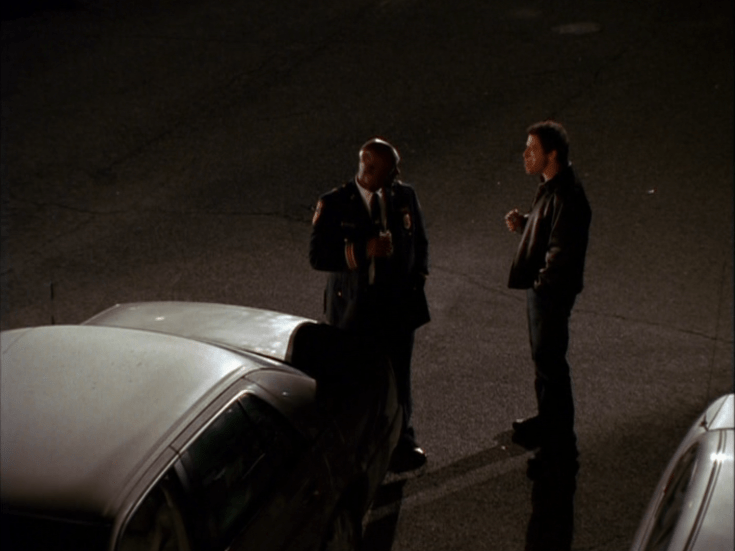
To Colvin, his “Hamsterdam” deployment, was undertaken because, as he expresses to McNulty, ‘it felt right’ (Mission Accomplished, season three, episode twelve) to him, regardless of the disciplinary outcome. As erstwhile protégé and mentor discuss a recent case in which Colvin, in his last act of police work, provided the name of a confidential informant, he chastises McNulty for his corner cutting, including the name of the deceased informant within the warrant in order to ‘tighten up the PC’. Colvin, however, despite his consternation in hearing of his acolyte’s insubordination, is defenseless to McNulty’s riposte: reminding the major of having ‘cut a few’ himself. Unbeknownst to both men, McNulty is charted upon a similar course to the outcasted Colvin. The cycle being set to continue.
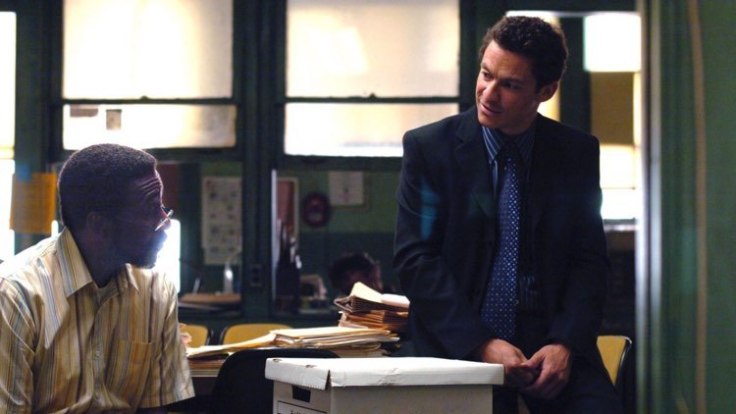
For McNulty, while typically seen as an anarchic egotist, his act of defiance comes as a result of a personal endeavour. A journeyman and the department’s prodigal son, McNulty is rerouted back to the impoverished homicide department under the belief of being assigned to a major-crime investigation; as a response, McNulty devises a scheme to draw the stricken department’s attention back to drug-kingpin Marlo “Black” Stanfield (Jamie Hector). In an echo of Colvin’s “Hamsterdam” stratagem, McNulty plots and shoulders a gambit, but, in place of the major’s response to the force’s draconian adherence to a statistics game, it is for City Hall to actually fund the department; the plan, unlike its enacting, is simple: to give Baltimore a serial killer. While not taking up the role himself, McNulty begins to manipulate crime scenes, linking several deceased homeless-men, dead of natural causes, as ‘ribbon jobs’ (-30-, season five, episode ten). From the funding diverted to McNulty’s ‘case’, McNulty and his accomplice, the erudite Lester Freamon (Clarke Peters), channel the subsidies into a clandestine wire-tap operation for major-crimes. It is the devil’s-work, with complications, such as unknowing detective being assigned to the ruse and a copycat killer, ultimately haunting McNulty. This is a detective, akin to his erstwhile mentor, driven through an ambiguous sense of self-importance or in altruistic aid of the floundering department, as he opines to a horrified William “The Bunk” Moreland (Wendell Pierce):
McNulty: Marlo’s an asshole! He does not get to win, WE get to win! This case doesn’t go away just ’cause the bosses can’t find the money to pay for it! These are fuckin’ murders! Ghetto murders, but still! I came back outta the Western to work this case ’cause they said it would be worked. I came back out on a promise, and they’re gonna keep that promise… whether they know it or not.
(Not for Attribution, season five, episode three)
Here, McNulty’s actions are tethered to his effrontery at the department’s rescinding of its promise to him: beyond his personal slight, he acts out of rebellion against the ‘bosses’ and their disregard for the twenty-two murders committed by the ruthless Stanfield organisation. McNulty’s subterfuge, itself, evidences his frustration both towards the toil borne by the department and then towards his own crusade. Ultimately, these ‘ghetto murders’, to him, still count, despite their impact upon an assigned clearance rate. Note, the collective pronoun ‘we’ is omitted and replaced by the singular ‘I’, and so the ‘we get to win’ eventually centres upon himself and his anger at having come ‘back’ to homicide. To McNulty, and as akin to Colvin, a case ‘doesn’t go away’, it remains a crime regardless of the lack of resources. This is not to exalt McNulty’s altruism, but rather to show how, amid the dirge of cutbacks and austerity, Simon portrays the desperate measure shouldered by an individual and the toil borne by them against the system.
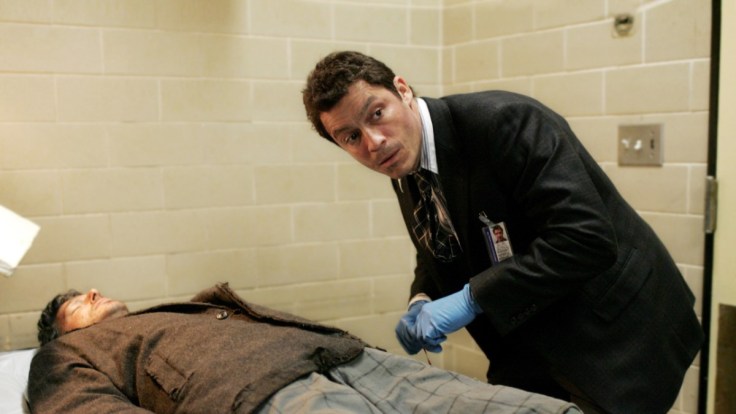
Within each season of the series, an individual strives to break the chain of the command that their institution or collective is beholden to: from D’Angelo Barksdale’s (Larry Gilliard Jr.) bid to escape the trade of his kin, to Roland “Prez” Pryzbylewski’s attempt to break from the rigid curriculum that has stifled the pedagogy of his fellow teachers. And it is by our perspective of these people that we see The Wire’s portrayal of self-government, of how, as Simon stated, ‘power routes itself’. Of the interlinking vignettes which The Wire is structured from, one single moment stands out from the rest for its examination of the selfishness and individualism inherent within such systems.
During the final exchange between McNulty and the obsequious Baltimore Sun reporter, Scott Templeton (Tom McCarthy), the former denounces the unscrupulous ambition of Templeton, fabricating sources and stories to McNulty’s original falsehood of the serial-killer targeting Baltimore’s homeless. During his chastisement, McNulty confesses his own deceit in order to reveal Templeton’s lies. It is a concise, powerful scene shared between two liars: one, a detective desiring to solve an ongoing, buried murder investigation, and the other, an ambitious journalist wishing to ascended beyond his station. Pride and ambition coalesce. In their entwined exploitation of an original lie, McNulty and Templeton’s selfish machinations emboldens them both with the power of resources and the power of fame, respectively. It is an irony which highlights the varying reasons for someone to break the chain of command, be it through exasperation or ego. By the end of the scene, one is attempting to absolve himself while the other is left reeling from humiliation, but still resolved to continue his pretence. Here, Simon conveys the interlinked ‘tribe[s]’ of The Wire; in this instance, two people from underfunded institutions act unscrupulously and unethically with the ramifications bugeoning and escalating far beyond their control. either to their detriment or to their gain.
While many of the detectives declare that they are ‘just police’, The Wire itself was never as simple as this declaration of character, as Simon has repeatedly iterated. As the excerpted lines from the series’s first episode, The Target, evidence, The Wire’s attention was drawn to quotidian interactions, conversations between people who shared a moment, a profession or even a life within a city. Scenes would bring a dogged detective and a mourning witness together to talk over the identity and sobriquet of the latter’s murdered friend and it was through such vignettes that The Wire created an interlinking story in which the city of Baltimore was its uniting thread. The Wire is ‘The Greatest Series Ever Made’ because it transcends the medium itself. In its examination of self-governance, Simon’s note to the audience of The Observer Ideas Festival regarding the need to uphold collective responsibility is channeled through The Wire. It seems a fitting close in these times of uncertainty:
[…] Personal freedom and personal liberty without a collective responsibility, without a shared sense that you are part of a society and that you owe it to society to participate fully and to seek utilitarian solutions to society’s problems that’s just selfish, that’s just bad citizenship, that’s a recipe for a second-rate society.
What The Wire set out to achieve was to record and document a society from the ground up, analysing the issues facing not just one American city, but all cities. And to do so while tethered to realism. Even the music of the drama is naturalistic. The diegetic soundscape even furthers the audience’s immersion. Indeed, with the exception of each season’s closing montage, the soundtrack of The Wire is that of the rhythms of the city: a song played from a car stereo system, the discourse between two people, the distant sound of a siren emanating from a distant street, the ringing of an unanswered phone. Not only did The Wire achieve this realism, but it distinguished itself as more than just a ‘cop show’ in the process. With his and the staff’s naturalisitc approach to writing the drama, with the narrative presented through the quotidian exchanges between people, the subtly of The Wire’s chronicling of a plagued city, particularly its language, can be misinterpreted as isolating, even initially insurmountable. But the challenge is the greatest rewards. This article, in its attempt to document The Wire’s importance as a drama, may have only gleaned the surface of the drama’s significance; people far more attuned to the issues raised within its narrative have written far more succintly and compently then I have here. But, if this engenders someone to watch The Wire then it has achieved its purpose. All I ask is that you listen carfeully.
Footnotes
[1] https://www.nytimes.com/2008/07/06/arts/television/06wils.html
[2] https://www.youtube.com/watch?v=ZYXNdELqCe4
[3] https://davidsimon.com/the-wire-hd-with-videos/
[4] https://www.newyorker.com/magazine/2007/10/22/stealing-life
[5] https://thewire.fandom.com/wiki/Epigraphs
[6] https://www.youtube.com/watch?v=FR9Kc7U4mzE&t=110s
[7] Ibid.
 Words on Pages
Leave a comment